10/16/2026
Hawaiian Corals React Differently to Ocean Heat
Research reveals species and environment shape coral resilience to warming oceans
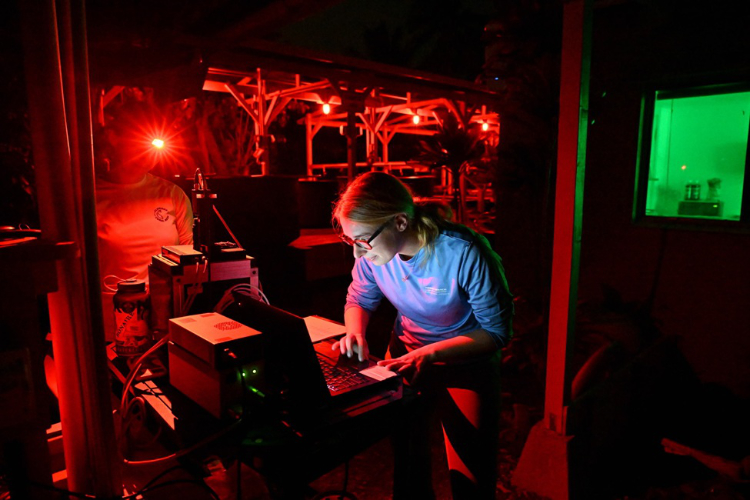
Researchers from Florida Atlantic University’s Harbor Branch Oceanographic Institute and the University of Hawaiʻi examined how two common Hawaiian reef-building corals respond to ocean heat. The researchers compared Montipora capitata, or rice coral, and Porites compressa, or finger coral, from two neighboring Oʻahu bays with different environmental conditions: warmer, sheltered Kāneʻohe Bay and cooler, more exposed Kailua Bay. In laboratory experiments, coral fragments were subjected to controlled heat stress, and researchers measured changes in photosynthetic efficiency to assess their thermal tolerance.
The study, published in Scientific Reports, found that the corals did not respond to heat in the same way. P. compressa from the cooler, more exposed Ulupaʻu area showed significantly greater thermal tolerance than P. compressa from Kāneʻohe Bay and, than M. capitata from either location. The findings suggest that both species and environmental history can influence how corals respond to warming oceans, providing new insight into coral resilience as marine heat events become more frequent and intense.
“Our findings highlight that coral resilience to ocean warming is not uniform, even among species living in close geographic proximity,” said Joshua D. Voss, Ph.D., senior author and research professor at FAU Harbor Branch. “As reefs around the world face more frequent and intense marine heat events, understanding which corals can tolerate that stress – and why – will be critical for protecting and restoring reefs. What works for one species or population may not work for another, so conservation strategies need to account for both the biological and the environmental diversity that exists within coral reef ecosystems.”