Graduate Neuroscience Training Program

Neuroscience GRADUATE Program

Neuroscience has reached an extraordinarily exciting stage. Disciplines such as physics, biology, genetics, chemistry, psychology, anatomy, medicine, computer science, biomedical engineering, and neuroengineering, to name a few, are now powering discoveries at a rapid pace that reveal the basis of how we learn, think, remember, love and dream. These discoveries provide hope to millions with brain disorders that better diagnoses and treatments are within reach.

The Stiles-Nicholson Brain Institute developed and oversees the interdisciplinary Neuroscience Graduate Program (NGP) that unites scientists, educators and students across multiple Colleges and Departments where neuroscience faculty pursue their research, as well as the internationally-recognized research institute, Max Planck Florida Institute for Neuroscience, into a one of a kind training opportunity for those in the early stages of their neuroscientific careers.

We are looking for bright, motivated students who have an inquisitive mind and a passion for neuroscience research. Work alongside world-renowned faculty who are utilizing novel techniques to perform cutting-edge research in cellular, molecular, and biomedical neuroscience; sensorimotor, cognitive, and behavioral neuroscience; and computational neuroscience and neuroengineering. At Florida Atlantic we believe that celebrating and valuing diversity and inclusivity generates innovative education, inspired curricula, high-quality research, effective problem-solving, and general creativity, by establishing an environment in which all students can achieve their potential.
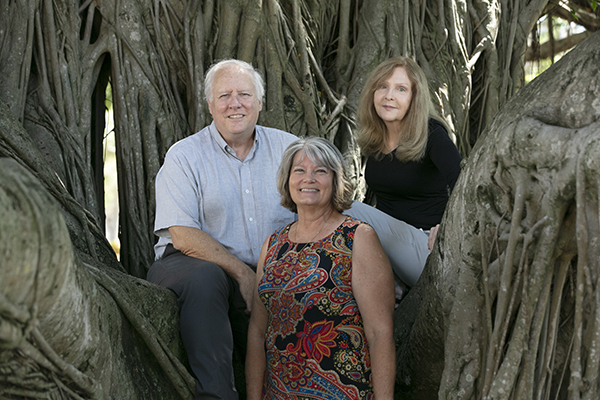
Program Directors Neuroscience Graduate Program Directors
Randy Blakely, Ph.D., Executive Director Stiles-Nicholson Brain Institute (SNBI), Kathleen Guthrie, Ph.D., Assistant Director SNBI and Director of Neuroscience Graduate Program, and Linda Petersen, Neuroscience Graduate Program Coordinator
SPOTLIGHT STORIES

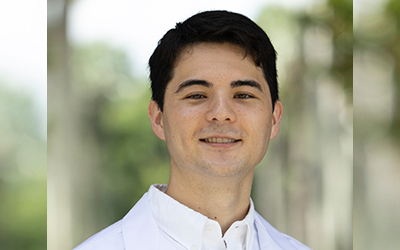
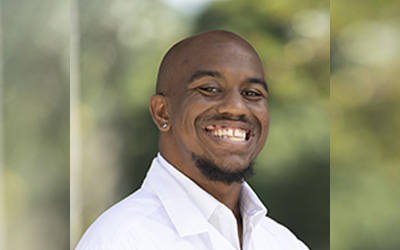
Michael Robinson

Diversity in Science ~ Michael earned the McKnight Doctoral Fellowship! This fellowship was created for students pursing doctorate degrees at Florida universities to build equity, diversity and inclusion for under representation of African American and Hispanic populations for those in pursuit of a career in research and teaching at a college or university level.

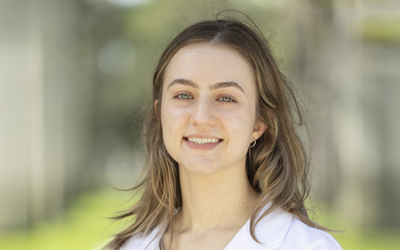
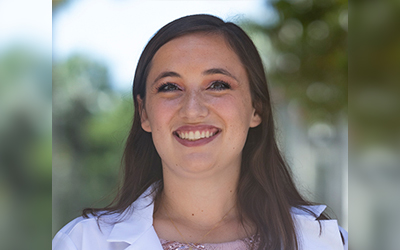
Kaylee McMillian

"I’m currently conducting research in Dr. Irem Koruku’s lab, where we are preparing to investigate how executive function develops in preschool-aged children using behavioral coding methods. The lab focuses on how environmental and contextual factors shape executive function. I’m particularly interested in how early cognitive skills—such as attention, self-control, and working memory—emerge and develop, especially in children facing challenges like ADHD, developmental delays, and educational inequalities."

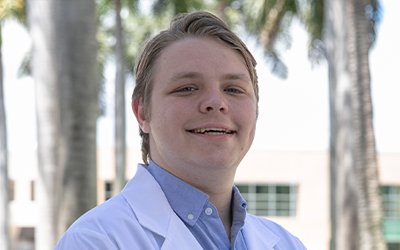
Mason Martin

"Researching the development and application of genetically encoded glutamate sensors in the labs of Dr. Lin Tian Max Planck Florida Institute for Neuroscience (MPFI) and Dr. Randy Blakely. In the Tian lab, I am using techniques in molecular and cellular biology to optimize a glutamate sensor for in vivo applications."

Tessa Dallo

"I am using zebrafish as a model organism in Dr. Laura Fontenas’ lab. I am investigating glial migration at the interface of the central nervous system and peripheral nervous system to elucidate potential demyelinating pathologies and gain a better understanding of myelination mechanisms."

Dan VanZant

"My primary research interests are using large language models to automate model validation in computational neuroscience. For the validation analysis I am focused on drosophila connectomics data and augmenting the connectomics tool ‘FlyBrainLab’. I am also working with the National Drug Early Warning System on a NIH training grant to predict substance abuse trends by using machine learning on data scraped from online drug discussion forums."

Aidan McDonald

"In the lab of Dr. Gregg Fields, I am investigating the function of protease MT5-MMP and its products in Alzheimer's disease. We are also interested in using our cellular and mouse models to explore the role of MT5-MMP's binding partner HTRA1 in neurodegenerative disease."

Contact

Linda Petersen

Neuroscience Graduate Program Coordinator
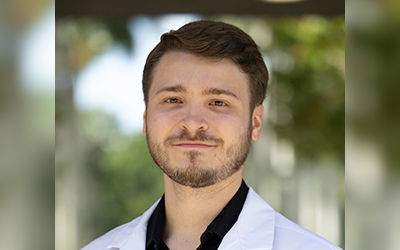
Linda Petersen
Email: lpetersen@fau.edu
FAU Stiles-Nicholson Brain Institute
Bldg. SE 43, Room 103A
777 Glades Road, Boca Raton, FL 33431
Boca Raton Campus