Student Achievement Council Marks Enduring Legacy Through Annual Research Symposium
Thursday, May 14, 2026
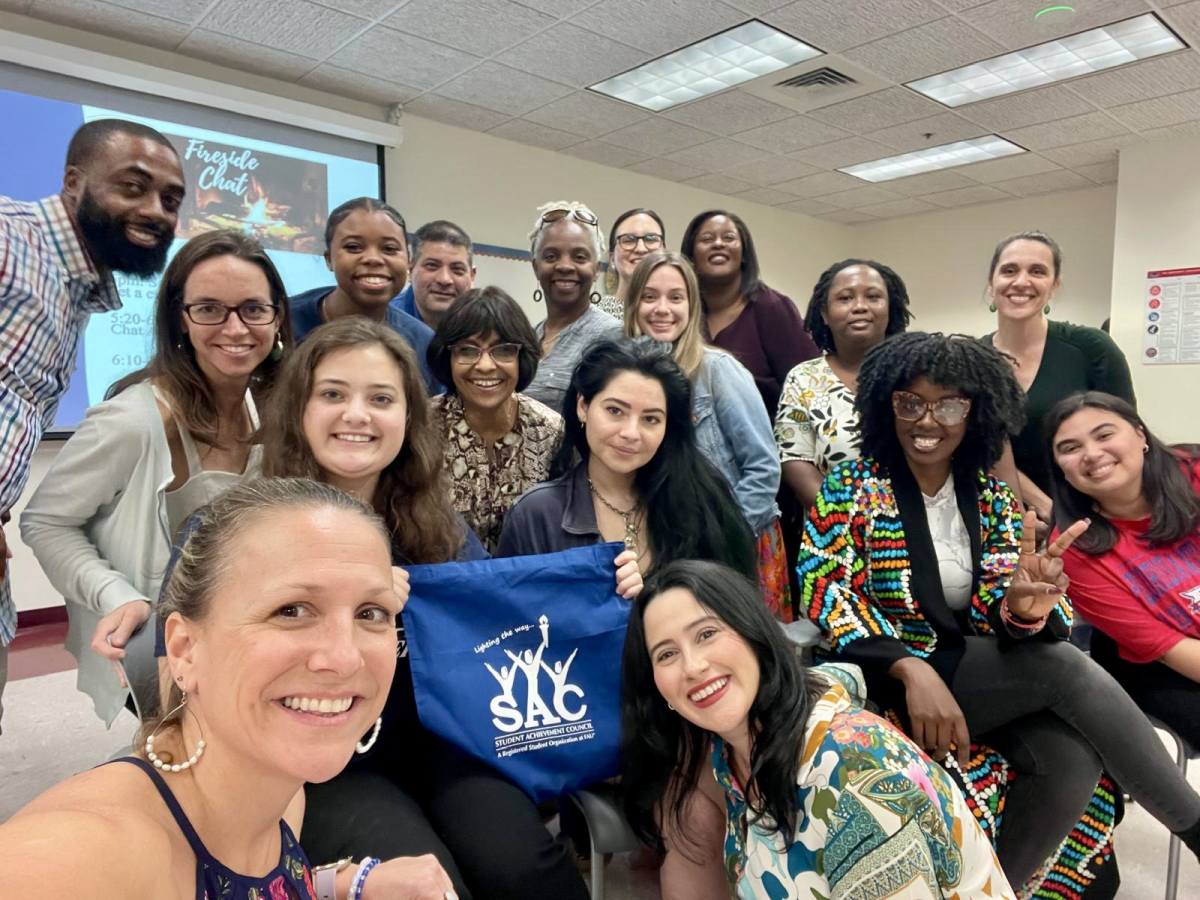
The Student Achievement Council (SAC) at Florida Atlantic University brought together past and present scholars for its annual research symposium, an event that highlighted a long-standing tradition of student-led inquiry while reflecting the organization’s continued impact now in its 26th year.
Since its founding in 2000, SAC has fostered a strong culture of student engagement within the College of Education, with the research symposium taking shape in the early years and continuing as a cornerstone event for more than two decades. That long-standing tradition positioned the event as both a celebration and a chance to reflect on the symposium’s enduring impact on student scholarship.
The symposium opened with a welcome from SAC President Erica Cheva and was hosted by Vice President Danielle Brown, whose organizational prowess and focused efforts guided the day’s robust agenda.
A lively panel of former SAC presidents, including Joanne Bamdas, Ph.D., Lydia Bartram, Ph.D. and Paul Massy, Ph.D., followed, with each sharing how their involvement with the council helped shape careers across academia, community engagement and digital innovation. Bamdas, now at the Louis and Anne Green Memory and Wellness Center, described the symposium as a formative experience that continues to inform her work with students and community partners. Bartram, who later served as both president and faculty advisor, reflected on the adaptability she developed through SAC leadership, while Massy, now associate director of digital learning innovation at Texas Southern University, described SAC as a “launchpad” for his growth as a scholar and leader.
Their reflections underscored SAC’s broader role within the College as a student-led organization that connects students, faculty and leadership while supporting key initiatives such as the research symposium and the Distinguished Teacher of the Year award, which is organized and selected by SAC students. During the event, students also recognized Alex Field, Ph.D., as the 2026 College of Education Distinguished Teacher of the Year. Through participation on the executive committee, students gain hands-on experience organizing events, collaborating across perspectives and contributing to decisions that shape the College.
Dilys Schoorman, Ph.D., a professor in the College of Education who has advised SAC across multiple cohorts, said the organization’s longevity reflects its emphasis on meaningful engagement. “The council gives students sustained opportunities to lead, collaborate and contribute to the life of the college,” Schoorman said. “It’s not about résumé lines—it’s about developing the skills, judgment and relationships that define effective educators and scholars.”
Panelists also discussed how research has evolved, from increased access to global scholarship to the growing role of technology, while emphasizing that foundational skills—clear questions, collaboration and critical thinking—remain central. Their advice to students was consistent: seek mentors, publish and present early, collaborate widely and pursue opportunities that broaden perspective.
The symposium also featured current scholarship, including a presentation by Rebecca Nelson, Ph.D., recipient of the Dissertation of the Year Award. Nelson’s research examined the Safe and Sound Protocol, an intervention designed to support trauma recovery through nervous system regulation. Her findings showed meaningful reductions in trauma symptoms and improved physiological functioning, highlighting the potential to strengthen engagement in therapy.
Throughout the program, students presented their research in concurrent sessions, gaining feedback from peers and faculty. During breakout sessions, participation remained strong, reflecting continued enthusiasm for student scholarship.
SAC’s impact extends beyond a single event. Alumna Rachayita Shah, Ph.D., who served as vice president and membership chair, credits the organization with providing real-world experience in leadership and collaboration. “These experiences deepened my understanding of higher education and helped me recognize my potential as a leader,” Shah said, noting that the relationships she built through SAC helped shape her long-term professional goals.
In closing remarks, Interim Dean and Professor Charles Dukes, Ph.D., Ed.D., reflected on the broader purpose of scholarship, emphasizing research as a way to illuminate complex challenges and expand understanding. “A single study is a spark, a line of research is a light source,” Dukes said. “The purpose of your work is to help others see more clearly.”
As SAC looks ahead, it continues to focus on creating meaningful opportunities for students to engage, lead and contribute to a strong and lasting academic community.