
Operation Red-White-Blue Advances Veteran-Centered Mental Health Research
Thursday, May 14, 2026
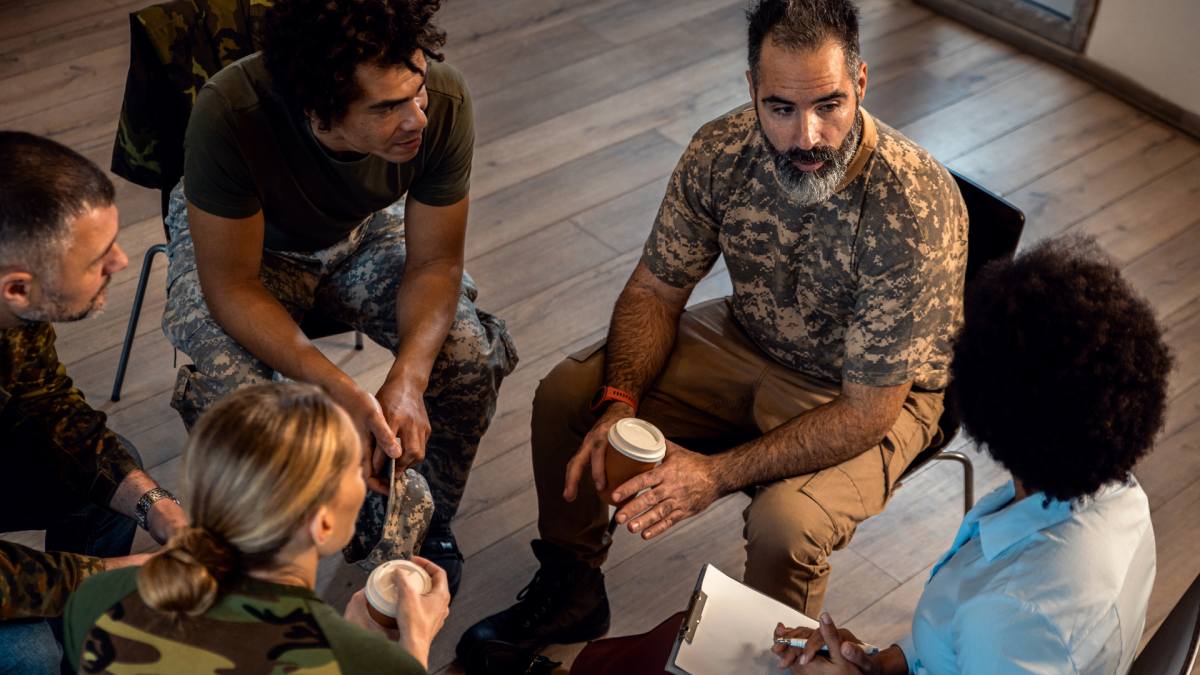
One in five U.S. veterans experiences a mental health condition, yet many face persistent barriers to care such as stigma, misunderstanding and limited access to specialized services. Addressing these barriers requires clinical expertise and a partnership with patients. This approach frames Operation Red-White-Blue, a community-engaged research initiative led by Florida Atlantic University researchers that fosters collaborative partnerships between veterans and civilian mental health providers.
Funded by a two-year Patient-Centered Outcomes Research Institute (PCORI) Eugene Washington Engagement Award, Operation Red-White-Blue brought together veterans and civilian mental health providers to co-develop strategies that improve access to veteran-centered mental health care. The project, spanning 2021–2023, emphasized patient-centered outcomes research and comparative effectiveness research by fostering collaboration, shared leadership and mutual learning.
Researchers Ayse Torres, Ph.D., associate professor in the College of Education’s Department of Counselor Education and the College of Engineering and Computer Science's Department of Biomedical Engineering, and Cheryl A. Krause-Parello, Ph.D., associate vice president for research in the Division of Research and professor in the Christine E. Lynn College of Nursing, employed a participative action research framework. Veterans and providers worked in rotating dyads, participated in monthly meetings, hosted 10 community forums and a National Veteran-Centered Mental Health Care Summit.
Over the course of the project, more than 600 people, including veterans, families, clinicians, researchers and community partners, engaged in dialogue centered on trust-building, cultural competency and the realities of military reintegration. These conversations informed the development of a Veteran-Centered Mental Health Research Agenda addressing stigma reduction, military cultural competency and co-occurring mental health conditions.
Rather than viewing veterans solely as recipients of care, the initiative positioned them as co-creators of knowledge. Shifting this perspective emphasized the value of lived experience in shaping research questions, interventions and policy-relevant outcomes.
The Operation Red-White-Blue model demonstrates how community-engaged scholarship can produce actionable insights while strengthening research capacity among community partners and academic institutions. As universities continue to emphasize impact-driven research, this project offers a scalable framework for advancing mental health care.