
Extended Job Coaching Model Shows Promise for Long-term Employment Outcomes
by Anne Fennimore. Ph.D | Tuesday, Mar 17, 2026
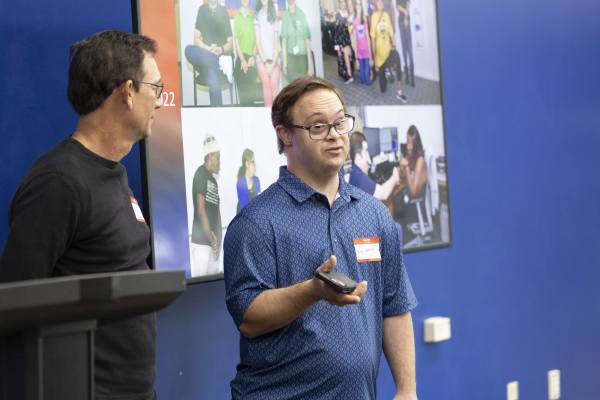 Researchers in the College of Education’s Special Education department examine the effectiveness of extended, wraparound job coaching in supporting long term employment outcomes for individuals with intellectual disabilities in their recent book chapter, Using an Extended Job Coaching Model for Gaining and Maintaining Employment. Drawing on a case study from the Academy for Community Inclusion’s (ACI) own practices, authors Kelly B. Kearney, Ed.D., BCBA D, assistant professor, Brianna J. Miller, Ph.D., instructor, Angelica Downey, Ph.D., instructor, and Gwendolyn C. Carey, Ed.D., instructor and associate director of ACI, present an Extended Job Coaching Model designed to support students not only in securing employment but also in maintaining and advancing in their careers beyond graduation.
Traditional job coaching approaches often taper off once employment is obtained. In contrast, the Extended Job Coaching Model provides continuous, individualized support throughout a student’s enrollment and for up to five years following program completion. The emphasis is placed on sustained engagement, career mobility, and adaptability as workplace expectations evolve. Both employees and employers benefit from extended coaching, because it supports workplace consistency, reduces turnover and promotes greater independence in real-world employment settings.
Students with intellectual disabilities continue to face high rates of unemployment and underemployment, underscoring the need for support that extends beyond initial job placement.
“Employment success for individuals with intellectual and developmental disabilities doesn’t end with a job offer,” Kearney said. “Sustained, individualized coaching is critical for helping graduates navigate workplace expectations, pursue advancement and remain meaningfully employed over time.”
By embedding job coaching within postsecondary programs and continuing services after graduation, the model addresses gaps that often contribute to job loss or limited career progression. As colleges and universities across the country expand accessible postsecondary education programs, extended job coaching offers a scalable and evidence informed framework for improving employment outcomes and enhancing quality of life for graduates with intellectual disabilities.