

Certificate in Early Childhood Environmental Education
The Certificate in Early Childhood Environmental Education provides an opportunity for students to earn a specially designed 12-credit certificate.
Contact Information
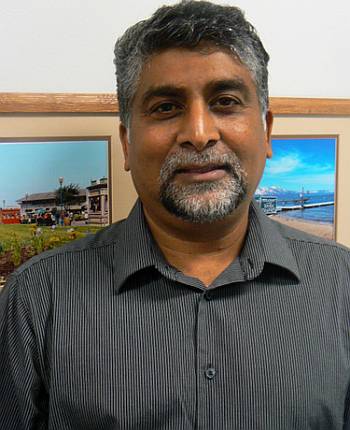
Yash Bhagwanji
Associate Professor
Department of Curriculum and Instruction
Office Location: ED 47 - 330
The Certificate in Early Childhood Environmental Education provides an opportunity for students to earn a specially designed 12-credit certificate. This certificate's unique focus prepares individuals to develop innovative programs and to guide children's environmental interest. The specialized coursework encompasses foundations of early childhood environmental education to exploring natural habitats and community engagement.
This certificate's unique focus prepares individuals to develop innovative programs and to guide children's environmental interest. The specialized coursework encompasses foundations of early childhood environmental education to exploring natural habitats and community engagement.
Program Overview
Consult the FAU Course Catalog for course descriptions and other details.
Advising
An advisor will be assigned upon acceptance into the program.
CORE COURSES – 9 Credits |
|---|
| EEC 4237 Exploring Natural Habitats as a Curriculum for Young Learners (in-person) (3 credits) (Spring Semester) |
| EEC 4020 Found. of Early Childhood Env. Education (online) (3 credits) (Summer Semester) |
| EEC 4404 Comm. Engage. in Early Child. Env. Educ. (online) (3 credits) (Fall Semester) |
ELECTIVE – Select One Course (3 Credits) |
|---|
Environmental Education Courses (Recommended First) |
| EDG 4044 – Survey of Current Environmental Issues through Service Learning (3 credits) |
| EDG 4045 – Civic Engagement through Environmental Service Learning (3 credits) |
| EEC 4322 – Effective Practices in Early Childhood Environmental Education (3 credits) |
| SCE 3442 – Principles and Methods of Environmental Education (3 credits) |
| SCE 4350 – Principles and Methods: K–9 School Science (3 credits) |
Bachelor of Early Care and Education (BECE) Courses (Recommended for BECE Students)Students enrolled in the Bachelor of Early Care and Education (BECE) are encouraged to consider these electives, as they complement the BECE curriculum while also satisfying the certificate elective requirement. |
| EEC 4303 – Creative Arts for Young Children (3 credits) |
| EEC 4623 Foundations and Practical Applications of Play-Based Learning for Young Children |
Additional Approved ElectivesThe following courses are also approved electives for the certificate and provide students with opportunities to strengthen their understanding of environmental science, natural sciences, sustainability, health, geography, and related disciplines. |
| ANT 2511 – Introduction to Biological Anthropology (3 credits) |
| AMH 3630 – American Environmental History (3 credits) |
| AST 2002 – Introduction to Astronomy (3 credits) |
| BSC 1005 – Life Science (2 credits) plus BSC 1005L – Life Science Lab (1 credit) |
| BSC 1010 – Biological Principles (3 credits) |
| BSC 1011 – Biodiversity (3 credits) |
| BSC 2085 – Anatomy and Physiology I (3 credits) |
| CHM 1020C – Contemporary Chemical Issues (3 credits) |
| CHM 2032 – Chemistry for Health Sciences (3 credits) |
| CHM 2045 – General Chemistry I (3 credits) |
| ESC 2000 – The Blue Planet (3 credits) |
| ETG 2831 – Nature: Intersections of Science, Engineering, and the Humanities (3 credits) |
| EVR 1001 – Environmental Science and Sustainability (3 credits) |
| EVR 2017 – Environmental Science and Society (3 credits) |
| EVS 4021 – Critical Thinking in Environmental Science (3 credits) |
| GEA 4275 – Human–Environmental Interactions in South Florida (3 credits) |
| GEO 4280 – Water Resources (3 credits) |
| GEO 4300 – Biogeography (3 credits) |
| GLY 2010C – Physical Geology/Evolution of the Earth (4 credits) |
| GLY 2100 – The History of the Earth and Life (3 credits) |
| GLY 3730 – Coastal and Marine Science (3 credits) |
| MET 2010 – Weather, Climate and Climate Change (3 credits) |
| NUR 3183 – Food, Nutrition and Health (3 credits) |
| OCE 4006 – Marine Science (3 credits) |
| PCB 3674 – Evolution (3 credits) |
| PHY 2048 – General Physics I (3 credits) |
| PHY 2053 – College Physics I (4 credits) |
| PSC 2121 – Physical Science (3 credits) |
| URP 2051 – Designing the City (3 credits) |
| URP 4403 – Sustainable Cities (3 credits) |
| URP 4420 – Environmental Planning Methods (3 credits) |
Fulfill BECE elective requirements
The 9-credit core courses of the certificate program count toward the BECE elective requirements and represent an additional benefit for students in the BECE program. Students have the option of counting one or more of the core courses as a BECE elective without enrollment in the certificate program. Students from other majors may also benefit by completing one or more of the core courses, as well as the certificate program, as part of their elective requirements. Please reach out to your advisors about these elective opportunities prior to enrollment in the courses.
How to Apply
Current FAU students and non-students are invited to contact Prof. Bhagwanji (ECEE Program Coordinator) for information and free tuition available for ECEE courses or certificate program. He can be reached at ybhagwan@fau.edu. Preschool and elementary school teachers, school directors, parents, and staff providing services related to fostering children's well-being in healthcare, family, and social services are invited to join our innovative program.
Tuition Support
Tuition support may be available to students without other sources of financial aid. Current FAU students and new non-degree students may also be eligible for SEEK Scholarship if employed at private and public schools with Children’s Services Council of Palm Beach County contracts. Non-degree seeking students may be eligible for grant-funded scholarship, but it is not guaranteed.