Postdoctoral Fellows
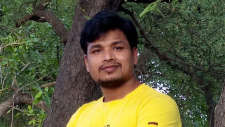
Manas Jagdev, Ph.D.
Mentor: Srinivasa Subramaniam, Ph.D.
Email: mjagdev@fau.edu
Manas Kumar Jagdev, Ph.D., is a postdoctoral fellow in the laboratory of Dr. Srinivasa Subramaniam at Florida Atlantic University. He obtained his Ph.D. from the Institute of Life Sciences, Utkal University, India, where he used X-ray crystallography to study the structure and function of plant and mycobacterial Clp chaperone systems involved in protein quality control. His current research focuses on the structural basis of ribosome-associated mechanisms in Huntington’s disease (HD), particularly ribosome stalling and translational dysregulation driven by mutant huntingtin (mHTT). He also investigates the structural organization of protein complexes involving Rhes, SLC4A7, mHTT and associated proteins that contribute to intercellular propagation of HD pathology, using high-resolution cryo–electron microscopy to define their roles in disease progression.
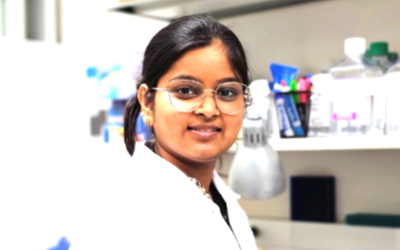
Anuradha Kesharwani, Ph.D.
Mentor: Srinivasa Subramaniam, Ph.D.
Email: akesharwani@fau.edu
Anuradha Kesharwani is a postdoctoral researcher in Dr. Subramaniam Lab, studying the molecular and cellular mechanisms underlying neurodegeneration, with a focus on Huntington’s disease. Her work dissects how mutant huntingtin (mHTT) propagates between cells via tunneling nanotubes (TNTs), uncovering fundamental principles of intercellular disease spread. She also explores the neuroinflammatory signaling pathways, particularly cGAS–STING, in driving neurodegenerative processes. She integrates cell-biological and in vivo approaches, including primary neuron and iPSC-derived models, co-culture systems, and others to identify cell-type–specific pathways involved in disease progression and therapeutic targeting. She is committed to advancing translational neuroscience research and contributing to the development of effective strategies for neurological disease intervention.
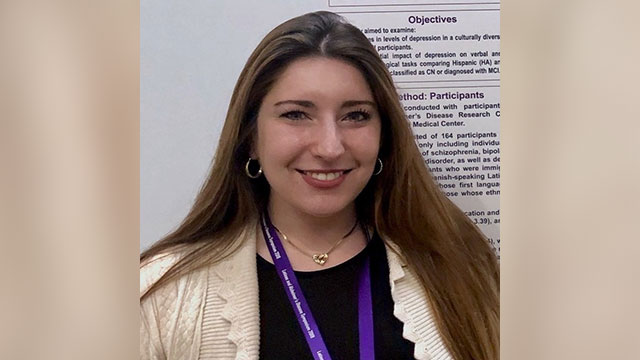
Merike Lang, Ph.D.
Mentor: Mónica Rosselli, Ph.D.
Merike Lang, Ph.D., is a post-doctoral research fellow in the Neuropsychology lab of Mónica Rosselli, Ph.D., at Florida Atlantic University. Merike is investigating neuroprotective effects of bilingualism on normal and abnormal aging. She has published research on cultural differences, AD-related biomarkers and the influence of depression on cognitive function.

Juan Lopez, Ph.D.
Mentor: Rodrigo Pena, Ph.D.
Juan was raised in South Florida and trained under Rod Murphey, Ph.D. for six years. His work looks at synaptogenesis and the genetic control of synaptic proteins called gap junctions. Juan's current work applies computational neuroscience to create a model of the Giant Fiber System in Drosophila that replicates signal transduction of the rapid escape reflex.
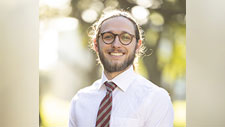
Dan Nemeth, Ph.D.
Mentor: Ning Quan, Ph.D.
Email: nemethd@fau.edu
Nemeth is a postdoctoral fellow in the lab of Ning Quan, Ph.D., in Florida Atlantic’s Schmidt College of Medicine. Nemeth received his doctorate from The Ohio State University (OSU) where he researched unique and cell-type specific signaling pathways associated with prolonged infection and persistent neuroinflammation. At OSU, he focused his research on how the immune receptor, Interleukin-1 Receptor (IL-1R1), contributes to the bicellular communication between brain vasculature and resident immune cell of the brain, microglia, during prolonged inflammation. Nemeth’s current research utilizes transgenic mouse models created by the Quan lab to discover the function of neuronal IL-1R1 and to understand the contribution of IL-1R1 signaling in epilepsy.
Alexandra “Aly” Paz, Ph.D.
Mentor: Nicole Baganz, Ph.D.
Email: paza2018@fau.edu
Alexandra “Aly” Paz is a postdoctoral fellow working with the Advancing STEM-Community Engagement through Neuroscience Discovery (ASCEND) program at Florida Atlantic Stiles-Nicholson Brain Institute. Paz earned her doctorate in Integrative Biology in Neuroscience from Florida Atlantic University. Her interest in neuroscience stems from a curiosity about the connection between neurological processes and animal behavior. Paz discovered her passion for neuroscience education while volunteering for the ASCEND program. Now a full-time member of the ASCEND team, Paz supports the program’s communication and community outreach efforts, unraveling the complexities of neuroscience to inspire young people to take an interest in STEM.
Lindsey Pugh
Mentor: Kevin Darby
Lindsey Pugh is a postdoctoral fellow in the Lifespan Cognition lab of Kevin Darby, Ph.D., at Florida Atlantic University. She received her doctorate at FAU where she investigated the emotional aspects of eyewitness memory (specifically focused on the weapon focus effect) and the confidence-accuracy relationship of suspect identifications. Lindsey's current research focuses on modeling the time-course of retrieval processes for gist and verbatim memory representations by implementing response deadlines and mouse tracking techniques.
Claire A. Rice J.D., Ph.D.
Mentor: Corinne Lasmézas, D.V.M., Ph.D.
Email: ricec@health.fau.edu
Affiliation: Charles E. Schmidt College of Medicine Department of Clinical Neurosciences, David and Lynn Nicholson Center for Neurodegenerative Disease Research, FAU Stiles-Nicholson Brain Institute
Claire A. Rice is a postdoctoral fellow in the lab of Corinne Lasmezas, DVM, Ph.D., David and Lynn Nicholson Center for Neurodegenerative Disease and the Schmidt College of Medicine Department of Clinical Neurosciences. Rice received her J.D. from the University of Florida and her Ph.D. in experimental psychology in neuroscience from Florida Atlantic University. Her doctoral research focused on the underlying causes and therapeutic treatments for memory impairment associated with severe mental illness. This led to a patent application for a new therapeutic approach for schizophrenia involving selective modulation of Kca2.2, Kca2.3 subtypes of calcium-activated potassium channels. In her current work, Rice provides key expertise in behavioral research and therapeutic interventions aimed at halting memory loss and other neurological symptoms of neurodegenerative disease, including Alzheimer's, Parkinson’s, and ALS.
Thamires Righi, Ph.D.
Mentor: Andrea Cippitelli, Ph.D.
Email: trighi@health.fau.edu
Thamires Righi is a postdoctoral fellow in Dr. Cippitelli’s laboratory at the Florida Atlantic University Schmidt College of Medicine. During her Ph.D., she conducted research in the field of neuropsychopharmacology, focusing primarily on the following topics: stress-induced alcohol abuse during adolescence; physical exercise; and the involvement of glial cells, the CRF system, and autophagy following chronic ethanol exposure and physical exercise during abstinence. Her main research approaches include behavioral testing, substance use disorder (SUD) and the use of a broad range of molecular techniques to investigate gene and protein alterations associated with these disorders. Currently, her research focuses on the management of substance use disorders through pharmacology and drug discovery, cognitive impairment, post-traumatic stress disorder, as well as the investigation of pain disorders, including migraine.