
Biology and Lifestyle Intersect to Help People Stay Healthier with Age
Some people just seem to age better than others. While one 70-year-old is outside hiking, another with Parkinson’s disease needs a walker to move across the room.
“Why does someone develop a neurodegenerative disease, but others do not?” said Corinne Lasmézas, DVM, Ph.D., director of the David and Lynn Nicholson Center for Neurodegenerative Disease Research at Florida Atlantic University’s Stiles-Nicholson Brain Institute (SNBI).
The goal of researchers in the Program for Resilient Aging is to gain a better understanding of what sets healthy older people apart from those who develop neurodegenerative diseases. That knowledge could help everyone increase their resiliency and experience improved outcomes in their later years.
Lasmézas is studying a metabolite called nicotinamide adenine dinucleotide (NAD), a molecule that is essential for generating energy. Its levels decrease with age in humans. “What we show is that when you bring back NAD to the levels they were in a younger cell, you also increase resiliency,” she said. “The neurons are not susceptible anymore to attack by toxic proteins.”
Initially, her work focused on diseases caused by infectious protein clumps called prions. Other neurodegenerative diseases, while not infectious, are also caused by toxic protein clumps. These aggregates shut down vital machinery in neurons, and restoring NAD levels allows cells to make energy again to perform critical functions. Currently, her teams at Florida Atlantic and at a company she founded are trying to more fully understand why NAD decreases with age and in neurodegenerative diseases and how to restore its levels safely and effectively to make people more resilient.
The NAD research dovetails well with the work of Henriette van Praag, Ph.D., associate professor of biomedical science at the Charles E. Schmidt College of Science and the SNBI. She studies neurogenesis, or the development of brand-new neurons in adults, and how lifestyle factors such as nutrition, exercise and stress affect this process. Curiously, these factors influence NAD levels.
Van Praag’s work shows that exercise helps new neurons form in the hippocampus, a region essential for learning and memory. “If you put mice on a running wheel, the number of adult-born neurons will double or triple, and not just in young animals,” she said.
The mice perform better on learning tasks and are less anxious. Van Praag also found that when mice exercise, their muscles can release factors into the circulation that reach the brain and promote adult neurogenesis and neural plasticity. Thus, training the body can help enhance and maintain brain resilience.
“I think we’re living in a really key moment where researchers have advanced tremendously in the field of brain health and disease, but what’s needed is to put that together,” Lasmézas said.
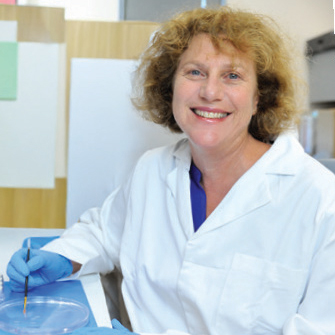
Muscle health offers a promising new approach to combating Alzheimer’s disease (AD). That’s what Henriette van Praag, Ph.D., research partners at Florida Atlantic University’s Stiles-Nicholson Brain Institute and collaborators discovered in a recent study published in the journal Aging Cell.
The study uncovered a surprising connection between muscle health and AD, specifically a protein called Cathepsin B (Ctsb). Previous research showed that this protein is released from muscle during exercise and is linked to improved cognitive function in mice and humans, and that ablation of Ctsb in mice results in memory deficits. In the current study when Ctsb was expressed in muscle of mice engineered to develop Alzheimer’slike symptoms, the AD mice did not develop memory loss and their brains continued to create new neurons in the hippocampus, which is the brain area associated with learning and memory.
This approach did not reduce the plaques and inflammation that characterize AD brains, however, patterns of brain proteins relevant to learning and neuroplasticity looked more like those of healthy mice, which suggests muscle Ctsb expression could offer new mechanisms for tackling this deadly condition.
“Our study is the first to show that expressing Cathepsin B specifically in muscle can prevent memory loss and maintain brain function in a mouse model of Alzheimer’s disease,” said van Praag, co-author. “Our findings suggest that modulating muscle Ctsb through gene therapy could slow down or reverse memory decline by promoting brain cell growth, and restoring protein balance across the muscle, blood and brain.”