New Advanced Imaging Technology Offers Researchers a Novel Approach to Studying Brain Diseases
Advanced neuroscience research requires cutting-edge tools that allow scientists to test more complex research questions and explore new perspectives of the brain.
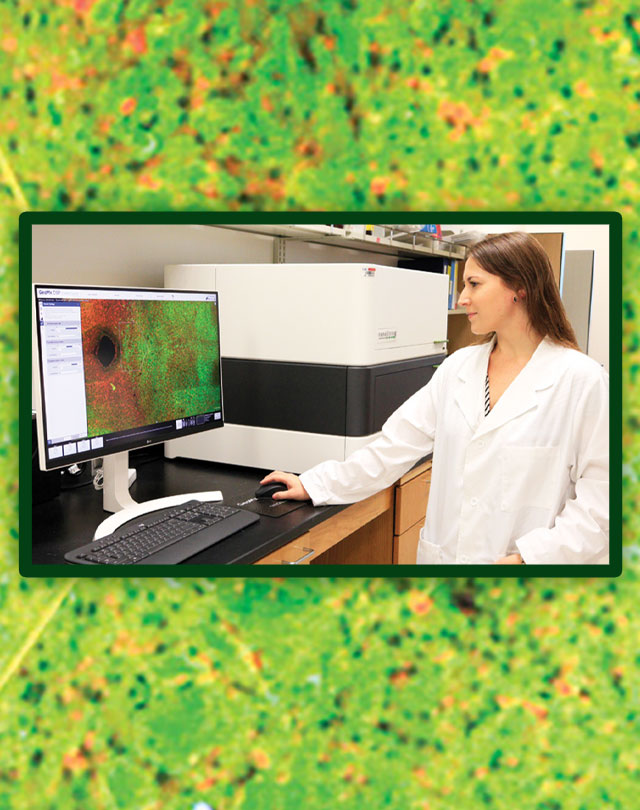
Florida Atlantic University recently acquired a novel digital technology (proprietary of NanoString, a Bruker company) that provides researchers a more comprehensive image of brain cells and how they respond to certain changes in their environment. The GeoMX Digital Spatial Profiler (DSP) allows researchers to profile changes on a molecular level in unique cellular populations. Tissue is often made up of more than one cell type and understanding how each type of cell changes in response to a mutation, a drug or an environmental stimulus can aid scientists’ ability to target specific cell populations that are implicated in the development of diseases.
“The faculty at the Stiles-Nicholson Brain Institute are interested in delineating how specific mutations, as well as inflammation and drugs, can alter how a cell functions within the brain,” said Paula Gajewski- Kurdziel, Ph.D., a research assistant professor and project manager of the GeoMX DSP.
The technology allows a user to select up to three different cell types within a tissue to visualize and collect samples from. These samples contain macromolecules called ribonucleic acid (RNA) from the inside of the cells, which can indicate the types of changes the cells are making and be used to find novel, targetable molecular structures that could provide new avenues for treatment of various conditions and diseases.
“Our faculty and researchers are using this information to assess the impact of inflammation in distinct brain regions, as well as mutations related to autism spectrum disorder,” Gajewski- Kurdziel said.