Animal Modeling Helps Unlock the Neurobiology of Addiction
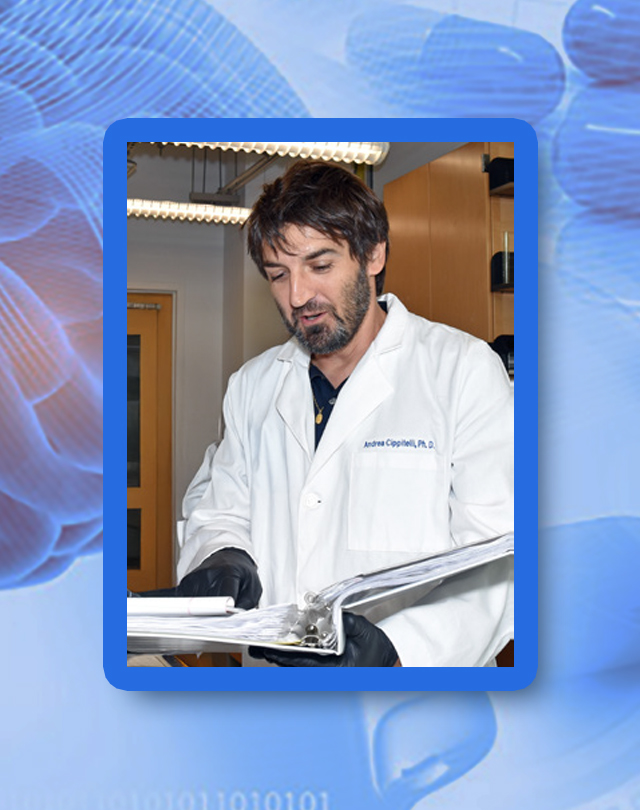
Andrea Cippitelli, Ph.D., who brought his expertise in animal modeling of drug abuse disorders to Florida Atlantic University in 2018, will continue that work as an assistant professor in the Department of Biomedical Science at the Charles E. Schmidt College of Medicine.
Cippitelli completed his graduate work in pharmaceutical sciences at University of Camerino, Italy, before coming to the United States for a postdoctoral fellowship at the National Institute on Alcohol Abuse and Alcoholism in Bethesda, Maryland.
There, he joined the lab of Markus Heilig, MD, Ph.D., a prolific scholar of the neurobiology of alcoholism, and learned about techniques to study alcoholism in animal models.
Cippitelli came to Florida Atlantic in 2018 as a research assistant professor in the Department of Biomedical Science. Since then, he’s been the principal investigator or co-investigator on several grants awarded by the National Institutes of Health, the Department of Defense and other sources. His recent funding awards have supported work exploring therapies for methamphetamine use disorder, cocaine use disorder and alcoholism comorbid with post-traumatic stress disorder.
A primary example of this work is a 2022 study on PPL-138, a recently identified compound with high affinity for opioid receptors and fewer side effects than other opioid analgesics. Cippitelli used an animal model that mimics the binge pattern typical of human cocaine use to show that the compound reduces self-administered cocaine intake in rats. PPL-138 also lowered cocaine seeking in an animal model of relapse. He’s now exploring the safety of the compound, as well as its therapeutic potential for methamphetamine and alcohol use disorders.
"This compound is very promising," he said. "It is pretty interesting and is a very effective drug in decreasing cocaine use disorder."
Cippitelli also has experience with cannabinoid research from his doctoral dissertation. More recently, he was awarded a grant to study the effect of cannabidiol in an animal model of migraines. These intense headaches and their associated symptoms are a leading cause of disability but are still poorly understood.
For that study, the results of which were published in the journal Pain, Cippitelli and his collaborators came up with a relatively new model of chronic migraine that worked well in female mice. Their findings suggest that cannabidiol can be effective both as a preventive tool and as a treatment for headaches, as well as effective in preventing chronic migraine.
That funding was provided by the Consortium for Medical Marijuana Clinical Outcomes Research, which awarded Cippitelli another grant in 2021 to study the mechanism of action of cannabidiol in decreasing migraine disorder.
Despite his recent forays into cannabinoid and migraine studies, Cippitelli sees himself as a drug addiction researcher.
"I work with virtually all drugs of abuse," he said. "I am deeply involved in this research of modeling and finding new therapies for these disorders."