Dr. Lucia Carvelli, Ph.D.
In our lab we study the mechanism of action of drugs of abuse such as amphetamine and cocaine. Specifically, we investigate how these drugs alter the chemical and electrical transmission at the dopaminergic synapses. We focus our studies on the dopaminergic neurons because they are among the main types of neurons that form the reward system. Moreover, dopamine which is synthetized and stored in the dopaminergic neurons, is the major neurotransmitter released in the brain when animals are treated or self-administer drugs of abuse.

Dr. Lucia Carvelli
Associate Professor of Neuroscience
PhD, Pharmacology, The Mario Negri Institute for Pharmacological Research
BS, University of Calabria
Our lab seeks to understand the role of the dopaminergic system in addiction and pathological disorders such as ADHD and Parkinson's disease. Chronic exposure to drugs of abuse causes several cellular and behavioral adaptations such as tolerance, sensitization and as well as long-term effects that can be transmitted to the offspring via epigenetic mechanisms. Our main goal is to understand the mechanism of action of drugs of abuse that ultimately generate addiction.
Currently I am teaching Science of Addiction. This is a course designed as an advanced course for undergraduate students and graduate students. Using addiction as a theme, we cover basic principles of pharmacology, pharmacokinetics, biochemistry, electrophysiology and genetics. Moreover, we discuss the psychological/social aspects of addiction.
In the spirit of "mens sana in corpore sano", Latin for "a healthy mind in a healthy body", I like to exercise and cook.

Dr. Supender Kaur
Amphetamine is a psychostimulant that acts on the dopaminergic system and increases dopamine release. Chronic exposure to this drug is reported to induce epigenetic changes, but the mechanisms underlying this phenomenon are unknown. My project is focused on understanding the effects of amphetamine exposure and decoding the mechanisms responsible for epigenetic changes. Because of these heritable changes, the alterations in transcriptomic levels will help to work out the pathway amphetamine uses to induce long-term effects. C. elegans is mostly used for these studies because of several conserved pathways across species. Moreover, the simplicity of the nervous system, particularly the dopaminergic system which is the main target of amphetamine, makes it a suitable model for this study.

Dr. Tao Ke
I joined the Carvelli lab following my postdoctoral research on dopaminergic neurotoxicity of methylmercury in Dr. Michael Aschner lab at Albert Einstein College of Medicine. In the Carvelli lab, I am studying the effects caused by long-term exposure to the psychostimulants, such as amphetamine. I use C. elegans model and in vitro cell cultures to identify the epigenetic mechanisms implicated in the long-term effects caused by amphetamine in the dopaminergic neurons.
-
Prolonged Amphetamine Exposures Increase the Endogenous Human Dopamine Receptors 2 at the Cellular Membrane in Cells Lacking the Dopamine Transporter.
Nawaratne V, et al. Among authors: carvelli l. Front Cell Neurosci. 2021. PMID: 34512264 -
Prolonged Amphetamine Treatments Cause Long-Term Decrease of Dopamine Uptake in Cultured Cells.
Ferdous N, et al. Among authors: carvelli l. Neurochem Res. 2020. PMID: 31883055 -
Caenorhabditis elegans as an in vivo Model to Assess Amphetamine Tolerance.
Torres Valladares D, et al. Among authors: carvelli l. Brain Behav Evol. 2020. PMID: 33831863 -
Swimming Induced Paralysis to Assess Dopamine Signaling in Caenorhabditis elegans.
Kudumala S, et al. Among authors: carvelli l. J Vis Exp. 2019. PMID: 31009010 -
Silencing of Syntaxin 1A in the Dopaminergic Neurons Decreases the Activity of the Dopamine Transporter and Prevents Amphetamine-Induced Behaviors in C. elegans.
Lanzo A, Safratowich BD, Kudumala SR, Gallotta I, Zampi G, Di Schiavi E, Carvelli L.
Front Physiol. 2018 May 22;9:576. doi: 10.3389/fphys.2018.00576. eCollection 2018. -
Glial Expression of the Caenorhabditis elegans Gene swip-10 Supports Glutamate Dependent Control of Extrasynaptic Dopamine Signaling.
Hardaway JA, Sturgeon SM, Snarrenberg CL, Li Z, Xu XZ, Bermingham DP, Odiase P, Spencer WC, Miller DM 3rd, Carvelli L., Hardie SL, Blakely RD.
J Neurosci. 2015 Jun 24;35(25):9409-23. doi: 10.1523/JNEUROSCI.0800-15.2015. -
The Epigenetic Mechanisms of Amphetamine.
McCowan TJ, Dhasarathy A, carvelli l.
J Addict Prev. 2015;2015(Suppl 1). doi: 10.13188/2330-2178.S100001. Epub 2015 Feb 9. -
Amphetamine activates/potentiates a ligand-gated ion channel.
carvelli l.
Channels (Austin). 2014;8(4):294-5. -
Amphetamine potentiates the effects of β-phenylethylamine through activation of an amine-gated chloride channel.
Safratowich BD, Hossain M, Bianchi L, carvelli l.
J Neurosci. 2014 Mar 26;34(13):4686-91. doi: 10.1523/JNEUROSCI.3100-13.2014. -
β-Phenylethylamine requires the dopamine transporter to increase extracellular dopamine in Caenorhabditis elegans dopaminergic neurons.
Hossain M, Wickramasekara RN, carvelli l.
Neurochem Int. 2014 Jul;73:27-31. doi: 10.1016/j.neuint.2013.10.010. Epub 2013 Oct 23. -
Amphetamine activates an amine-gated chloride channel to generate behavioral effects in Caenorhabditis elegans.
Safratowich BD, Lor C, Bianchi L, carvelli l.
J Biol Chem. 2013 Jul 26;288(30):21630-7. doi: 10.1074/jbc.M113.484139. Epub 2013 Jun 17. -
SLC6 transporters: structure, function, regulation, disease association and therapeutics.
Pramod AB, Foster J, carvelli l., Henry LK.
Mol Aspects Med. 2013 Apr-Jun;34(2-3):197-219. doi: 10.1016/j.mam.2012.07.002. -
Molecular mechanisms of amphetamine actions in Caenorhabditis elegans.
carvelli l., Matthies DS, Galli A.
Mol Pharmacol. 2010 Jul;78(1):151-6. doi: 10.1124/mol.109.062703. Epub 2010 Apr 21. -
Dopamine transporter/syntaxin 1A interactions regulate transporter channel activity and dopaminergic synaptic transmission.
carvelli l., Blakely RD, DeFelice LJ.
Proc Natl Acad Sci U S A. 2008 Sep 16;105(37):14192-7. doi: 10.1073/pnas.0802214105. Epub 2008 Sep 3. -
Vigorous motor activity in Caenorhabditis elegans requires efficient clearance of dopamine mediated by synaptic localization of the dopamine transporter DAT-1.
McDonald PW, Hardie SL, Jessen TN, carvelli l., Matthies DS, Blakely RD.
J Neurosci. 2007 Dec 19;27(51):14216-27. -
Optimized synthesis of AMPA receptor antagonist ZK 187638 and neurobehavioral activity in a mouse model of neuronal ceroid lipofuscinosis.
Elger B, Schneider M, Winter E, carvelli l., Bonomi M, Fracasso C, Guiso G, Colovic M, Caccia S, Mennini T.
ChemMedChem. 2006 Oct;1(10):1142-8. -
A genetic screen in Caenorhabditis elegans for dopamine neuron insensitivity to 6-hydroxydopamine identifies dopamine transporter mutants impacting transporter biosynthesis and trafficking.
Nass R, Hahn MK, Jessen T, McDonald PW, carvelli l., Blakely RD.
J Neurochem. 2005 Aug;94(3):774-85. Epub 2005 Jun 30. -
Dopamine transporters depolarize neurons by a channel mechanism.
carvelli l., McDonald PW, Blakely RD, DeFelice LJ.
Proc Natl Acad Sci U S A. 2004 Nov 9;101(45):16046-51. Epub 2004 Nov 1. -
Glial activation and TNFR-I upregulation precedes motor dysfunction in the spinal cord of mnd mice.
Mennini T, Bigini P, Cagnotto A, carvelli l., Di Nunno P, Fumagalli E, Tortarolo M, Buurman WA, Ghezzi P, Bendotti C.
Cytokine. 2004 Feb 7;25(3):127-35. -
PI 3-kinase regulation of dopamine uptake.
carvelli l., Morón JA, Kahlig KM, Ferrer JV, Sen N, Lechleiter JD, Leeb-Lundberg LM, Merrill G, Lafer EM, Ballou LM, Shippenberg TS, Javitch JA, Lin RZ, Galli A.
J Neurochem. 2002 May;81(4):859-69. -
Transgenic SOD1 G93A mice develop reduced GLT-1 in spinal cord without alterations in cerebrospinal fluid glutamate levels.
Bendotti C, Tortarolo M, Suchak SK, Calvaresi N, carvelli l., Bastone A, Rizzi M, Rattray M, Mennini T.
J Neurochem. 2001 Nov;79(4):737-46. -
Increased peripheral benzodiazepine binding sites and pentraxin 3 expression in the spinal cord during EAE: relation to inflammatory cytokines and modulation by dexamethasone and rolipram.
Agnello D, carvelli l., Muzio V, Villa P, Bottazzi B, Polentarutti N, Mennini T, Mantovani A, Ghezzi P.
J Neuroimmunol. 2000 Sep 22;109(2):105-11. -
Amphetamine-induced loss of human dopamine transporter activity: an internalization-dependent and cocaine-sensitive mechanism.
Saunders C, Ferrer JV, Shi L, Chen J, Merrill G, Lamb ME, Leeb-Lundberg LM, carvelli l., Javitch JA, Galli A.
Proc Natl Acad Sci U S A. 2000 Jun 6;97(12):6850-5. -
Biochemical and pharmacological evidence of a functional role of AMPA receptors in motor neuron dysfunction in mnd mice.
Mennini T, Cagnotto A, carvelli l., Comoletti D, Manzoni C, Muzio V, Rizzi M, Vezzani A.
Eur J Neurosci. 1999 May;11(5):1705-10.
Lucia Carvelli| Stiles-Nicholson Brain Institute| 5353 Parkside Drive, RF 104| Jupiter, FL33458| 561.799.8115| lcarvelli@fau.edu
Contact us
MAIN OFFICE
Florida Atlantic Stiles-Nicholson Brain Institute
Jupiter Campus
Room 201F, MC-22
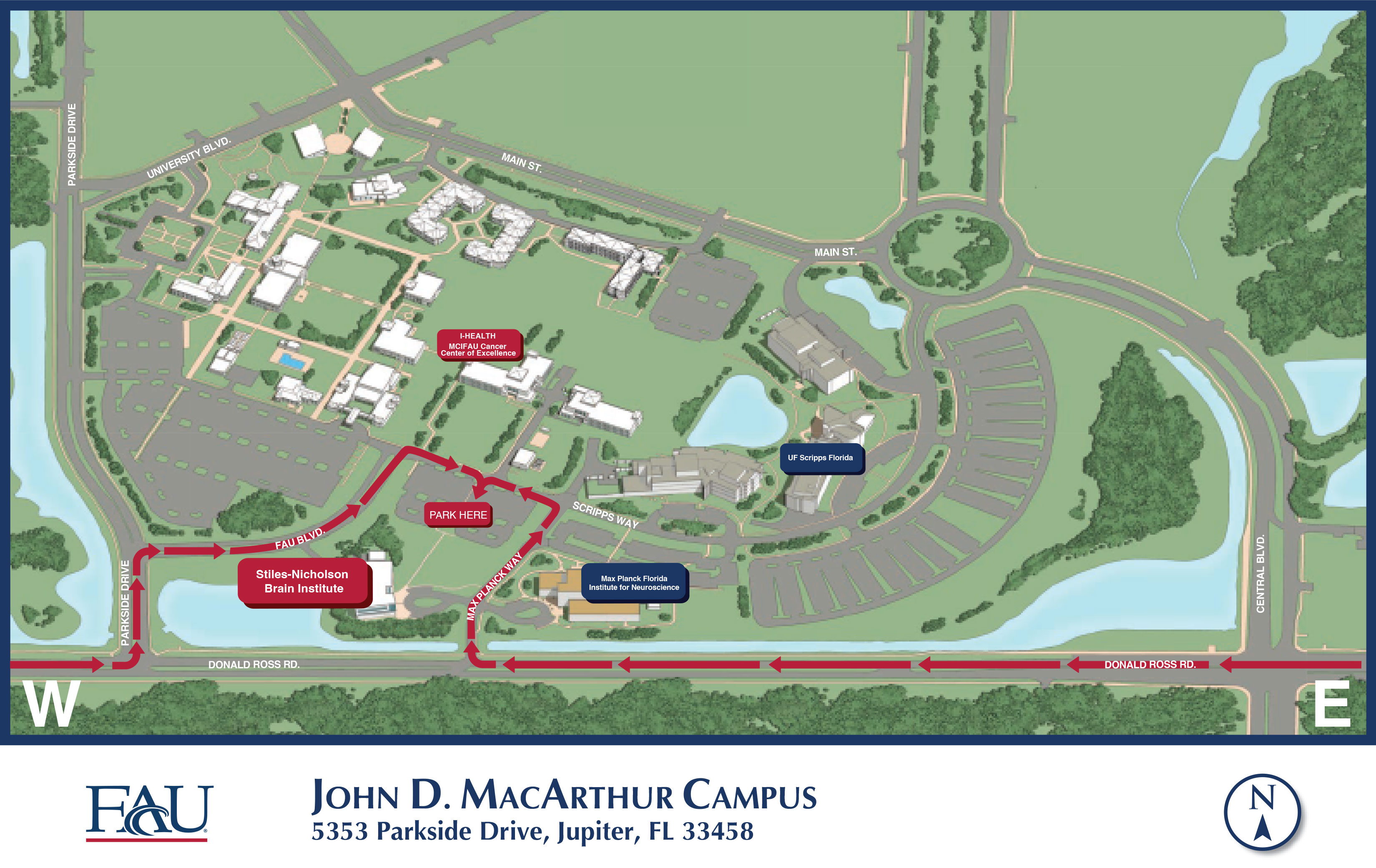
5353 Parkside Drive, Jupiter, FL 33458
Phone: 561.799.8100
EDUCATION OFFICE
Florida Atlantic Stiles-Nicholson Brain Institute
Boca Raton Campus
Room 103A, SE-43
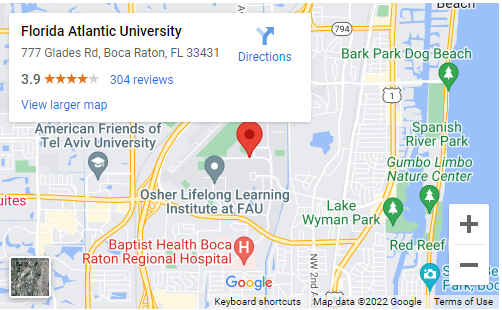
777 Glades Road, Boca Raton, FL 33431
Phone: 561.297.4989