Meet the Team
Lisa Wiese
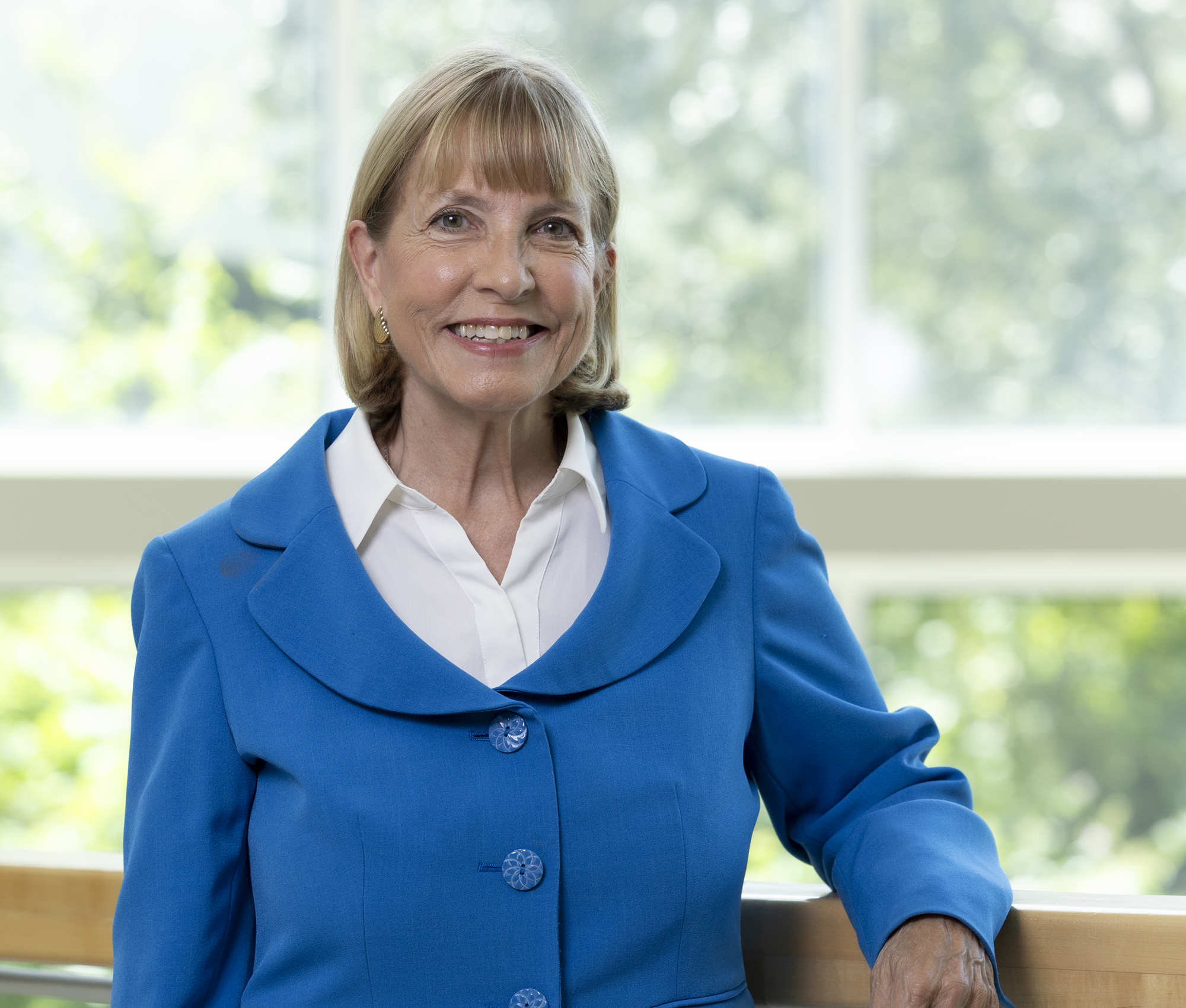 Dr. Lisa Wiese received her M.S. in Nursing from the University of Virginia, her Ph.D. in Nursing from Florida Atlantic University, (where she is an Associate Professor), and a post-graduate certificate in Epidemiology and Biostatistics from Drexel University. She is board-certified in Advanced Public Health Nursing, Gerontological Nursing, and Rural Health Nursing. Dr. Wiese is the recipient of over 5 million dollars in funding from the National Institutes of Health and Florida Department of Health. She was selected as a 2021 Hartford Distinguished Educator in Gerontological Nursing and 2023 Fellow of the Gerontological Society of America. Dr. Wiese serves on the Florida State Health Improvement Plan taskforce, and co-launched a new Rural Health Disparities workgroup of the Alzheimer’s Association Diversity/Disparities PIA of ISTAART. She was selected to attend the first annual Alzheimer’s Association Interdisciplinary Summer Research Institute (2021). This workgroup's investigation into global rural health disparities was recently published in the Alzheimer's and Dementia journal. Dr. Wiese's community-based participatory research in the Glades, Florida region, is led by a multidisciplinary group of local faith-based health educators. This powerful collaboration of community partners, launched through state and federal funding, and now sustained by Palm Health Foundation, is focused on empowering rural, older racially/ethnically diverse adults to age in place through dementia awareness, detection, and management. The construct of determining “What Matters Most” to rural residents, based on Boykin and Schoenhofer’s “Nursing as Caring” framework, guides Dr. Wiese’s work. Her most recent funding, to address health concerns of Lake Okeechobee residents, is an outcome of this philosophy.
Christine Williams
 Dr. Christine L Williams received her MS in Adult Psychiatric Nursing from Rutgers University, Doctor of Nursing Science from Boston University, and a post-graduate Psychiatric Nurse Practitioner certificate from Florida Atlantic University. She is board-certified in Psychiatric – Mental Health Nursing. She is Multi Principal Investigator on two NIA research grants including a five-year award titled “The Role of Air Quality and Built Environment in Social Isolation and Cognitive Function among Rural, Racially/Ethnically Diverse Residents at Risk for Alzheimer's Disease.” Her work focuses on mental health and cognitive function among older adults and their families.
Diane Cook
 Diane Cook is a Regents Professor and a Huie-Rogers Chair Professor in the School of Electrical Engineering and Computer Science at Washington State University. Dr. Cook received her B.S. from Wheaton College, and her Ph.D. from the University of Illinois, respectively. Her research focuses on machine learning, data mining, mobile applications for health monitoring and intervention, and smart environments. Over the past fifteen years, Dr. Cook has designed machine learning-driven smart environment and mobile technologies that provide health monitoring and assistance. She is a fellow of the IEEE, FTRA, and AIMBE. Dr. Cook will lead the design and evaluation of software to collect smartwatch data and analyze the relationship between behavior and cognitive health for this proposed study.
Diana Mitsova, PhD
 My research focuses on the use of geographic information systems, and spatial and statistical analysis to understand the interactions between the built and natural environments and inform sustainable urban planning and environmental practices. My research has been funded by the National Science Foundation (CMMI # 1541089, #2028968), Federal Emergency Management Agency/ Florida Department of Emergency Management, the Florida Sea Grant, The Nature Conservancy, USGS, the Kresge Foundation, the National Park Service, and Collaborative Sciences Center on Road Safety (CSCRS) (National UTC). My early publications contributed towards the understanding of historical and projected patterns of urban growth, open space conservation, and focused on environmental planning and modeling using geographic information systems and interactive computer simulation. My NSF-funded research contributed to the development of a computational platform for probabilistic assessment of infrastructure interdependencies during extreme events to advance knowledge of highly complex behaviors of interdependent infrastructure systems and their resilience. My research has also focused on topics related to sea level rise vulnerability, climate adaptation and mitigation planning, shoreline stabilization, and health effects of climate change. I am a lead author of a book titled Geospatial Applications for Climate Adaptation Planning (2019, Routledge/ Taylor & Francis Group). The book (co-authored with Dr. Ann-Margaret Esnard) examines concepts related to climate adaptation planning, the fundamentals of using geospatial technologies in climate vulnerability assessments, and the formulation of mitigation and adaptation strategies. The book presents case studies as well as many examples from a diverse international group of scholars and entities in the public and private sectors.
Sheryl Magzamen
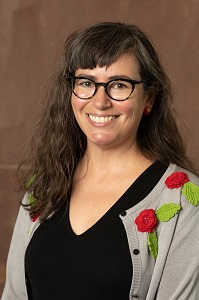 Sheryl Magzamen is an Associate Professor in the Department of Environmental and Radiological Health Sciences at Colorado State University and an Associate Professor of Epidemiology at the Colorado School of Public Health. She is an epidemiologist, with a focus on the relative contribution of social factors and environmental exposure on chronic disease, with specific attention to respiratory health. Living and working in the Mountain West, her research program investigates the health effects of wildfire smoke exposure and has expanded to include quantification of smoke from landscape fires and health effects from agricultural fires. Through her collaborations, she has expanded her research on health effects of air quality to include cognitive impairments in older adults as well as adverse outcomes in pregnancy and early childhood. Sheryl received her PhD in epidemiology from Berkeley and holds an undergraduate degree in biology from Cornell.
Juyoung Park
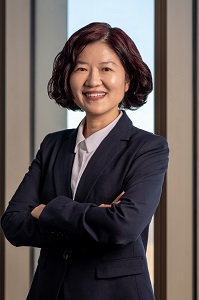 Dr. Juyoung Park, PhD, MSW, is a Professor in the College of Nursing, University of Arizona (UA ). She also serves as Associate Director of the Brain Digital Technology Laboratory within the UA College of Nursing. Recognized as a Fellow of the Gerontological Society of American Health Science Section, Dr. Park earned a doctorate in Social Work from the University of Maryland, Baltimore. Her areas of expertise focus on nonpharmacological chronic pain management.
As a geriatric social work faculty, she has conducted survey or intervention studies for older adults who were socially isolated, lacked social support and social network, and were depressed due to physical limitation associated with chronic pain or ADRD. She has conducted studies on family caregivers’ burden, pre-loss grief, and depression and social support in order to reduce caregiver burden and improve psychological well-being.
Dr. Park has inte¬grated social work perspectives into nonpharmacological chronic pain management for older adults by conducting innovative research, identifying effective and safe interventions, and providing a framework to develop a practice model of nonpharmacological pain management targeted to older adults, their caregivers, and health care providers in the field of aging. Her research ranges from opioid medica¬tion misuse to telehealth-based mind-body interventions (e.g., online chair yoga) and home-based remotely supervised transcranial direct current stimulation (tDCS) as a nonpharmacologi¬cal approach for older adults with chronic pain. Her research agenda on nonpharmacologi¬cal interventions has expanded to explore their effects on Alzheimer’s disease and related dementias to reduce use of psychotropic medications for managing behavioral and psychological symp¬toms of dementia and improve cognitive function and chronic pain.
Dr. Park has been the PI or CO-I on research funded by National Center for Complementary and Integrative Health, the National Institute on Aging, John A. Harford Foundation, and U.S. Bone and Joint Initiative. She has authored or co-authored numerous publications in peer-reviewed journals and had presented at many national and international scientific conferences.
Lilah Besser
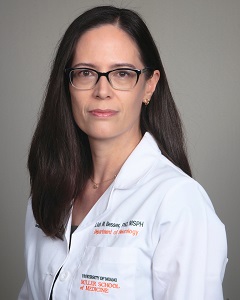 Dr. Besser is a Research Assistant Professor in the Comprehensive Center for Brain Health at University of Miami’s School of Medicine. Her research program investigates the intersections between neighborhood built and social environments, healthy aging, and brain health. She is principal investigator on two NIA-funded studies on neighborhood greenspace and brain aging and on an Alzheimer’s Association funded study on neighborhood segregation and longitudinal change in brain health outcomes. The overarching goal of Dr. Besser’s work is to provide evidence for community environments that can be promoted to help maintain cognitive function into older ages, reduce dementia risk, and allow for aging in place, particularly for historically disadvantaged populations.