STARS Launches at FAU Jupiter
by Chelsey Matheson | Friday, Aug 08, 2025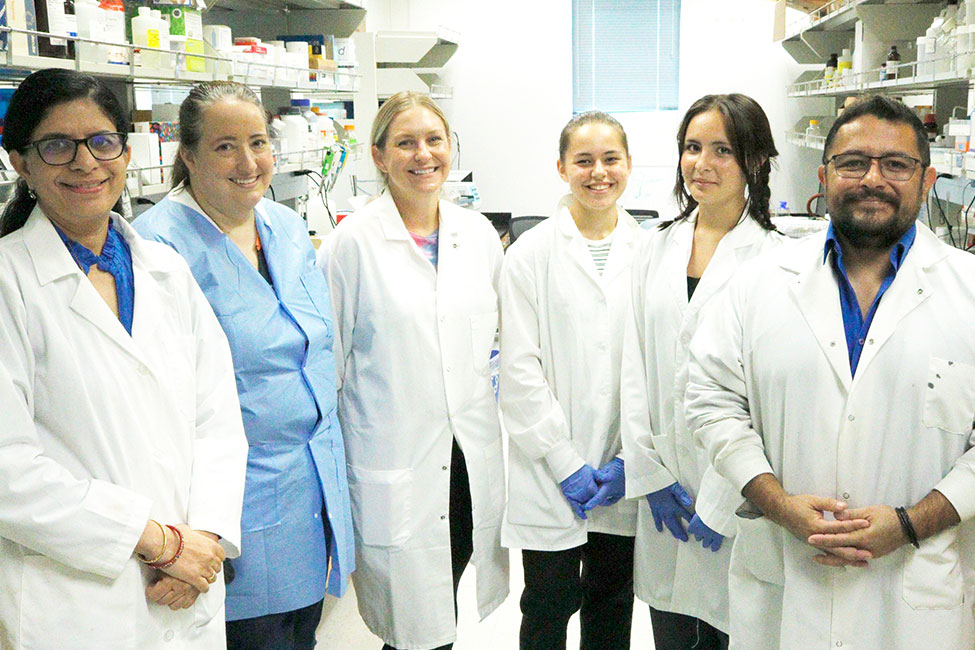
This summer, Florida Atlantic University Charles E. Schmidt College of Science’s Center for Molecular Biology and Biotechnology (CMBB) piloted a new program to introduce high school students and their teachers to advanced biotechnology research.
The first cohort of the new Scientific Training and Advancement of Research in Schools (STARS) program was hosted on Florida Atlantic’s John D. MacArthur Campus in Jupiter for two weeks of immersive, hands-on laboratory workshops and lectures led by FAU faculty and researchers. The group was composed of two teachers and two students from Jupiter High School.
“Through STARS, we hope to create a unique learning experience that inspires scientific curiosity for both students and educators,” said Shailaja Allani, Ph.D., director of the CMBB and research assistant professor in the Charles E. Schmidt College of Science’s Department of Chemistry and Biochemistry. “Fostering young talent is essential for future innovation in biotechnology, and scientific discovery more generally.”
STARS was led by Allani and Oscar Rivera, a Ph.D. student in the Integrative Biology program, affiliated with CMBB. The workshops introduced core molecular biology skills, including techniques used in recombinant DNA technology, which forms the basis of many biotechnology applications. Topics included DNA isolation, purification, gene cloning, and Western blot analysis, all of which are essential methods in laboratory research. Students and teachers worked side-by-side to analyze genetic material following molecular biology protocols, while gaining experience with high-tech lab equipment and data interpretation.
The hands-on nature of the workshops made the concepts tangible and accessible. Rodrigo Pena, Ph.D., assistant professor in the Schmidt College of Science, and Casey Spencer, Ph.D., assistant professor in the Harriet L. Wilkes Honors College, provided additional neuroscience-focused sessions, expanding the range of topics explored during the two-week experience. Participants were guided step-by-step through each technique in an atmosphere that invited open dialogue and questions.
A highlight of the program was a lecture about the history of biotechnology from Herbert Weissbach, Ph.D., professor emeritus, Department of Biological Sciences, Charles E. Schmidt College of Science, and founding director of CMBB. Weissbach is an internationally recognized expert in the field of biotechnology and Florida Atlantic’s only National Academy of Sciences Member. He launched CMBB in 1997 with a vision to produce a talented workforce to build Florida’s biotech industry.
“I have to pinch myself to realize that I have this incredible opportunity,” said Ashley Gonano, one of the participating teachers.
This year’s STARS program was an initial proof of concept with a goal of scaling it to include a larger cohort of students and teachers and to open the opportunity to more schools in the surrounding area, Allani explained. To achieve this will require sustainable funding.
“By empowering one teacher and one student at a time, we are building the foundation to inspire the next generation of scientists and educators,” Allani said. “With additional support, we can reach even more.”
Learn more about the CMBB at Florida Atlantic’s Schmidt College of Science at www.fau.edu/science/cmbb.
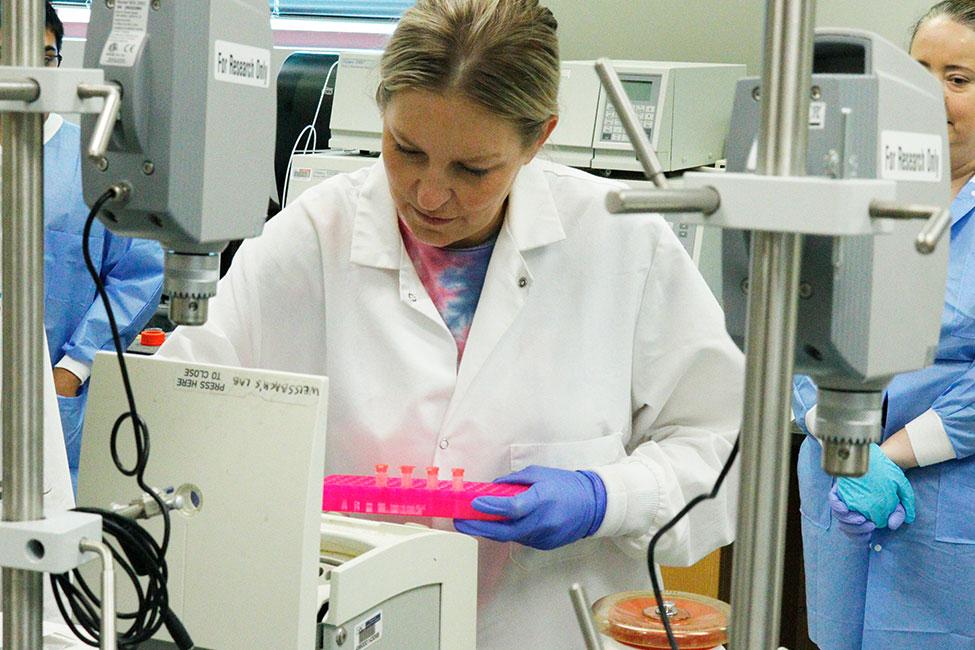
Ashley Gonano, a science teacher at Jupiter High School, was one of four participants in the STARS pilot program.
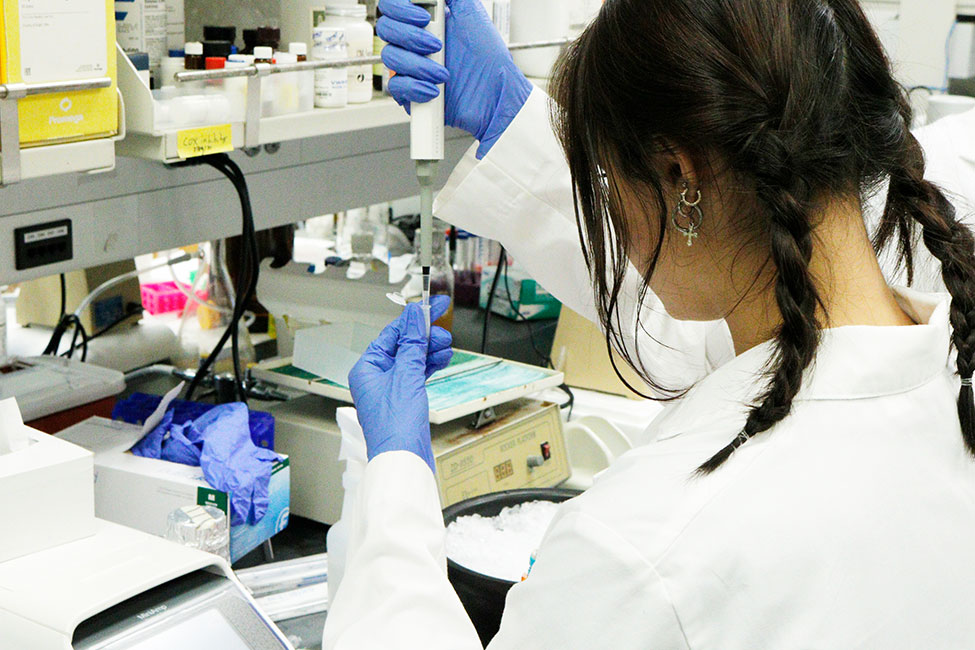
Nadya Reumann, a student at Jupiter High School, learned essential methods in laboratory research alongside her high school teachers.