News Archive
June 07, 2024
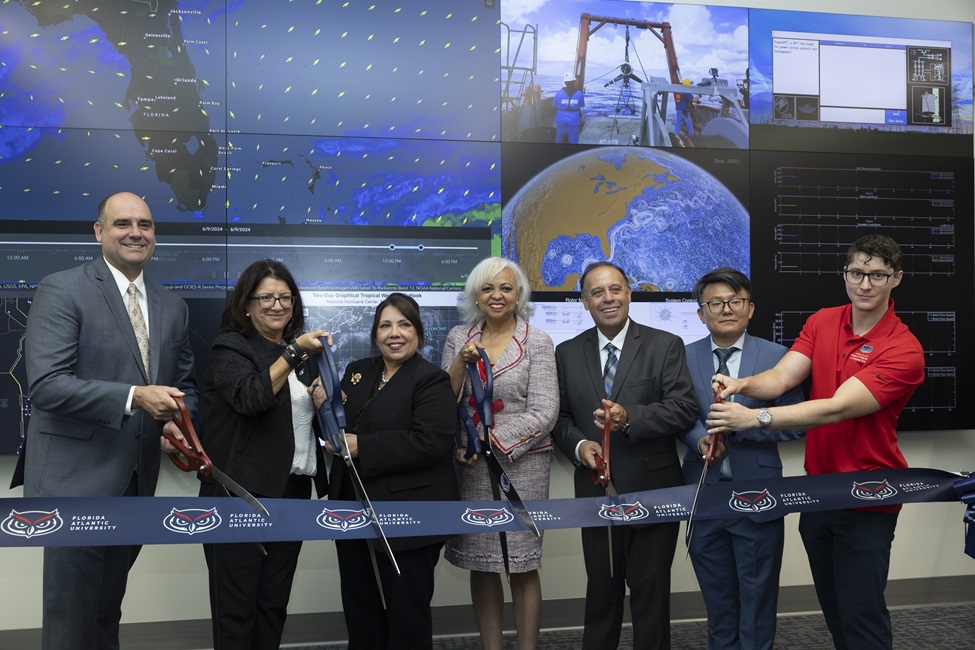
Florida Atlantic University College of Engineering and Computer Science (COECS) and Florida Power & Light Company (FPL) officially unveiled the newly established “FPL Center for Intelligent Energy Technologies” (InETech)...

April 25, 2024
Cross Country Healthcare and FAU's Christine E. Lynn College of Nursing have launched the fourth annual Future of Nursing Survey that reveals nursing perspectives on AI and compassionate care.

April 08, 2024
Microsoft’s new artificial intelligence tool, Copilot, can now be used with your FAU account. Through conversational interaction, FAU users can leverage Copilot’s AI to assist with numerous tasks, all while keeping your...
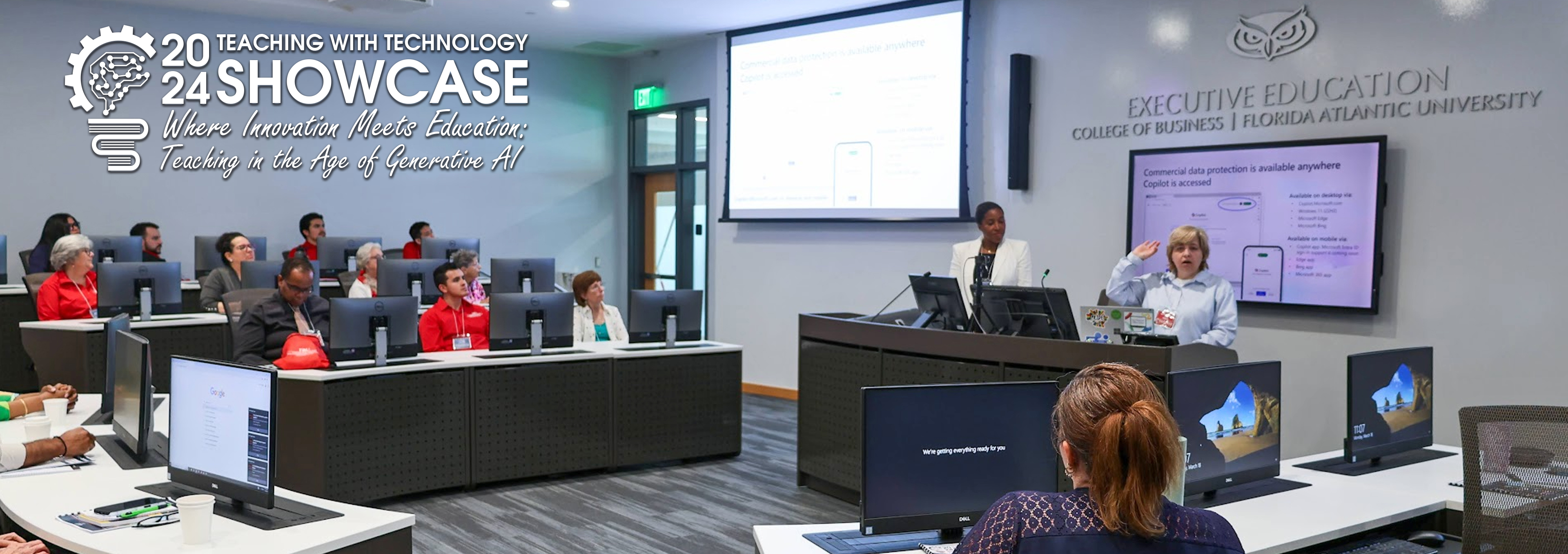
Florida Atlantic’s Teaching with Technology Showcase highlights Teaching in the Age of Generative AI
March 22, 2024
FAU hosted its annual Teaching with Technology Showcase, with this year's theme being "Where Innovation Meets Education: Teaching in the Age of Generative AI."
March 21, 2024
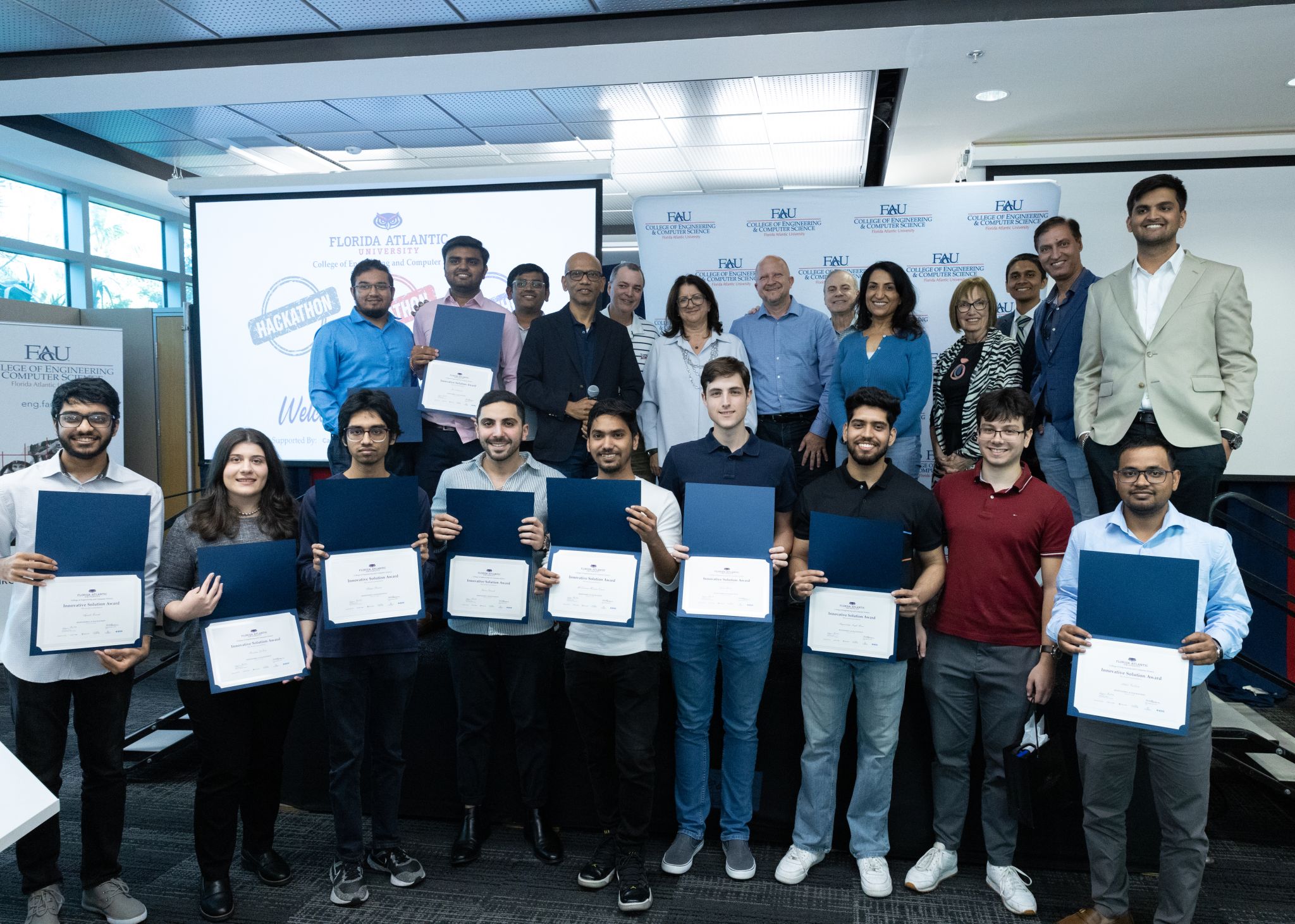
What a delight to celebrate our NRT trainees winning a spotligt at the AI Hackaton event hosted by the College of Engineering & Computer Science. This event was organized as part of a series of activities to celebrate Engineers...
February 21, 2024
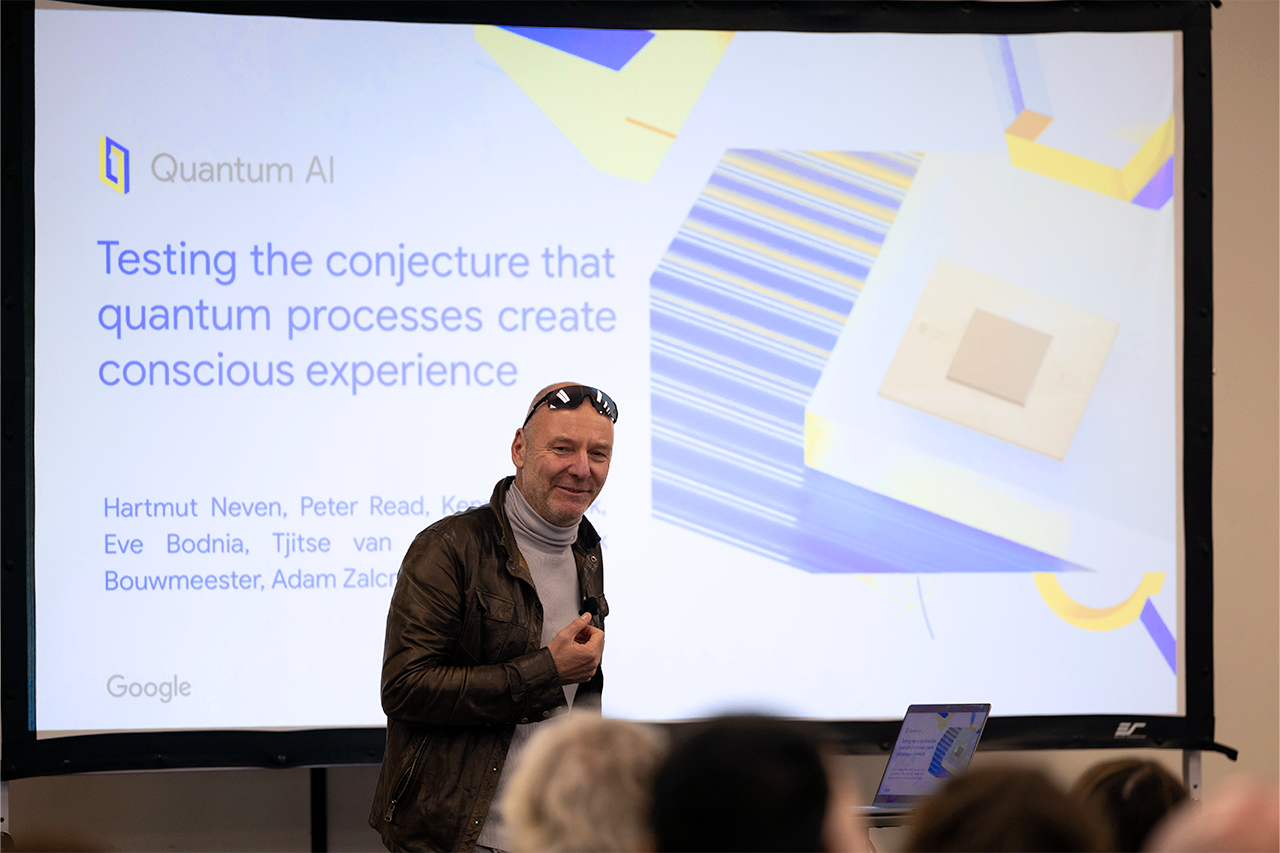
Florida Atlantic’s Center for the Future Mind hosted the second annual Mindfest conference in February 2024. The theme for Mindfest 2024 was Digital Physics, Chatbot Epistemology, and the Future of AGI.

January 31, 2024
Medicare is sporadically compromised by fraudulent insurance claims. These illicit activities often go undetected, allowing full-time criminals and unscrupulous health providers to exploit weaknesses in the system. Last year,...
January 26, 2024
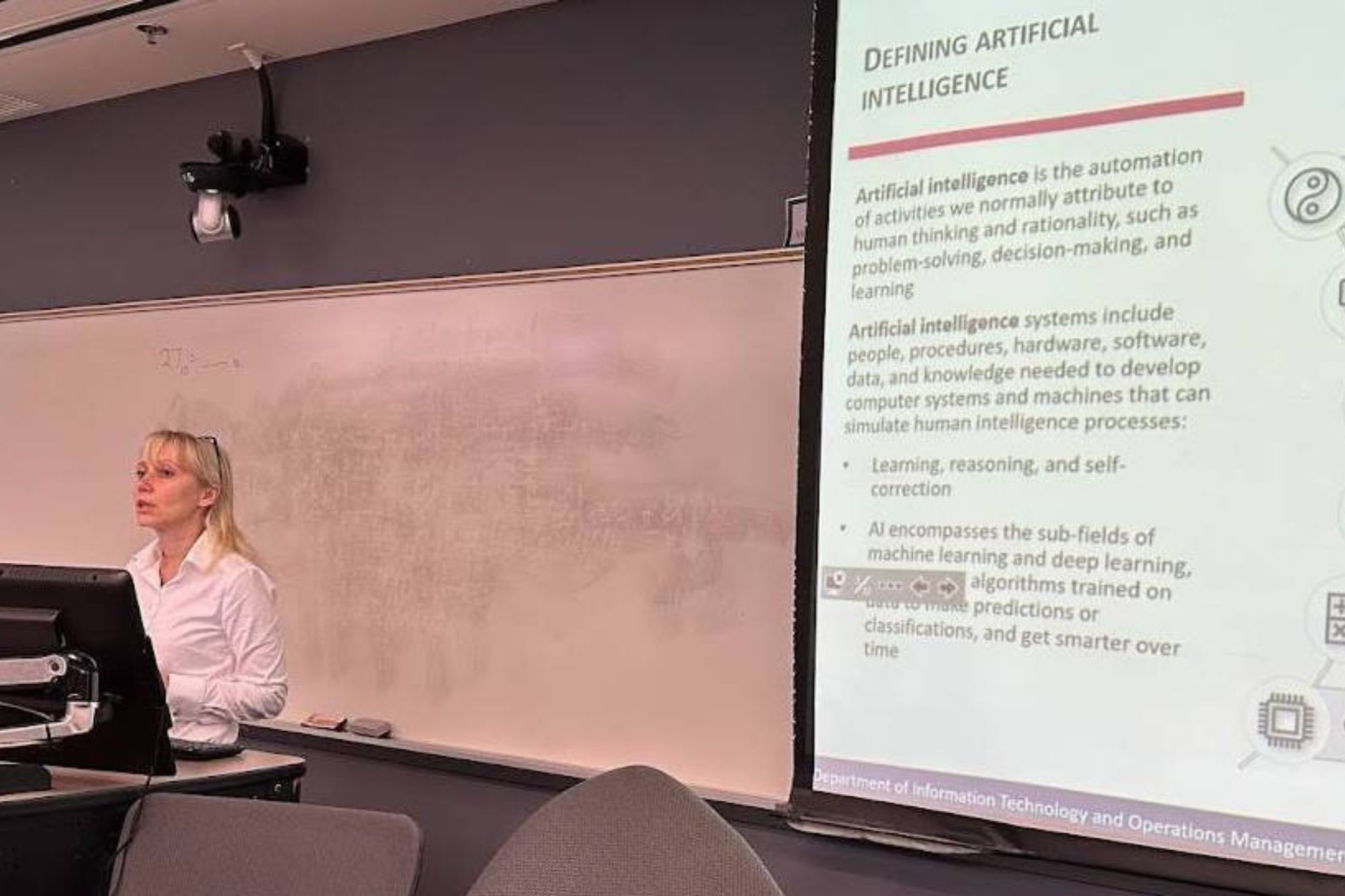
On January 26th, 2024, we had a lecture given on cybersecurity by Dr. Nataliia Neshenko from the College of Business on “Transforming cybersecurity with artificial intelligence”. She defined what Artificial Intelligence...

January 04, 2024
Florida Atlantic University’s Center for the Future Mind will host Mindfest 2024: Digital Physics, Chatbot Epistemology, and the Future of AGI on Thursday, Feb. 1 and Friday, Feb. 2 on FAU’s Boca Raton campus at 777 Glades...
December 13, 2023
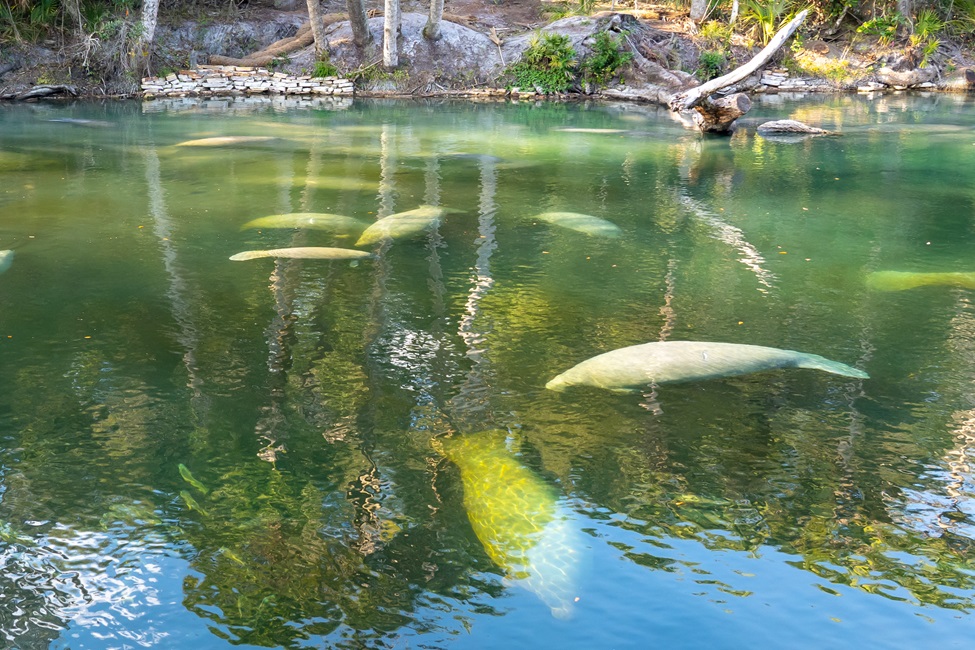
Manatees are endangered species volatile to the environment. Because of their voracious appetites, they often spend up to eight hours a day grazing for food within shallow waters, making them vulnerable to environmental...