Home / Anthropology / Anthropology
+ Larger Font | + Smaller Font

In Anthropology It's ALL About Research

Here Are Some of the Things Being Studied at FAU:
(Scroll To The Sections For Archaeology, Biological (Physical) Anthropology and Cultural Anthropology)


ARCHAEOLOGY


ca

Catherine Smith

The Belle Glade [Florida] culture is one of the most understudied populations in North America.  I am completing a skeletal analysis of the three excavations of Belle Glade Mound using strategies and software incorporated into recent literature on addressing fragmentary and commingled remains.  Using new techniques and software will provide additional ways to glean information from poorly preserved sites and provide data about a population of which little is known about.


br

Brittany Reneau

I am studying the geoarchaeology of Coastal Ecuador.  Geoarchaeology is a new focus in the field of archaeology which combines techniques of geography, geology and other earth sciences to better understand archaeological finds.  Geoarchaeology focuses on the natural processes involved in forming a site and the effects natural processes have had on a buried site and its artifacts.    I will focus on the natural processes that led to the formation of many terraces in the area to get a better understanding of whether or not they were built up by previous occupations and to understand what the area was used for.  In conjuction with looking at the cultural material excavated from the sites, looking at the sediment will allow me to discern if any organic material is present and determine the pH of the sediment to answer questions about preservation of cultural material  and what the origins of the sediment were.


Dr. Arlene Fradkin

My major area of expertise is zooarchaeology, the study of animal bone and shell remains recovered from archaeological sites.  As a branch of environmental archaeology, this discipline is directed toward understanding the dynamic relationship between past human populations and the natural and social environment in which they lived. 


Crystal Geiger

My research interests center on historical archaeology, and particularly themes of continuity in frontier sites. The collection for my thesis is from a known historic campsite, circa 1890's, in downtown Ft. Lauderdale, Fl. I am interested in looking at the interplay of market forces and environmental realities in the early social and economic development of Ft. Lauderdale. Through an analysis of the cultural materials and the documentary evidence, I hope to reach an understanding of the complexities and anxieties of early frontier life in South Florida


ctb

Dr. Clifford Brown

Most of my research and experience in archaeology focuses geographically on the culture area called Mesoamerica, which encompasses central and eastern Mexico, Belize, Guatemala, El Salvador, and western Honduras.  Recently, I began survey and excavations in northwest Nicaragua.  My research interests include the origins of civilization, particularly the emergence of inequality and social complexity; ceramic analysis; lithic analysis; and the application of quantitative methods in archaeology, especially fractal analysis.


BIOLOGICAL (PHYSICAL) ANTHROPOLOGY


ai

Ailissa Leroy

I am a second year graduate student.  Evolutionary anthropology is the basis of my research.  I aim to re-evaluate the current taxonomy of individuals in Cercopithecus mitis, the Blue Monkey gorup of the Congo's Lomami River Basin.  I am particularly interested in phylogenetic relationships wtihin the Blue Monkey gorup, meaning how each individual is genetically related.


 sm

  Steven McPhee

I study the behavior of non-human primates as it relates to environment in unique ecosystems.  I am interested in combining field research and molecular techniques to better understand evolutionary pressures placed on old world monkeys in Central Africa.  My current research involves using camera traps to study the behavior and ecology in the newly announced lesula monkey (Cercopithecus lomamiensis) at the future Lomami National Park in the Democratic Republic of the Congo.  By investigating questions of density, home range, group size, social behavior, activity patterns and hunting pressures, we can attain better protection for lesula and the unique environment in which it lives.


 lr

Lana Ruck

I am interested in tracking the progression of cognitive abilities within the genus Homo, particularly focused on brain lateralization.  I intend to trace the progession of brain laterization via proxies in the paleoarchaeological record, and understand what selective pressures caused handedness and tool manufacture, the increased specialization of right and left halves of the brain, and even language.  I will focus on a small sample of hominid fossil evidence, such as stone-flaked tools or Homo brain endocasts.  By studying these items, we can glean information about handedness and brain lateralization and eventually cross-compare other fossil data to generate trends over time.


Sarah Lynn Redding


My interest is the variation of cervical vertebrae across human populations and the application of this knowledge within the areas of language evolution and forensic anthropology.  I have researched the possibility of physical adaptations within humans for musical abilities and will further my research while collecting measurements on cervical vertebrae from museums across the US and Europe.


Dr. Douglas Broadfield

My research focuses on the evolution of the human brain.  My approach is to examine all forms of evidence.  The primary method of looking at human brain evolution is to look at the human fossil record.  My second area of research involves comparative neuroanatomy, which involves direct comparison of the brains of humans to other primates.  Of the greatest importance here is what we can learn from the brains of our closest living relatives, chimpanzees.  With access to a large collection of ape brains we are beginning to understand where changes in the brain may have occurred since the last common ancestor of chimps and humans. 


CULTURAL ANTHROPOLOGY


cp

Carlyn Porter

My research falls under the realm of medical anthropology, using a biocultural approach.  I study how culture influences which substances we consume, whether for nutritional or medicinal purposes, and ultimately how those substances can change our physiology.  Currently, I am working on a biocultural analysis of caffeine intolerance looking at the cultural factors that impact the pharmacokinetics of caffeine.  My interest in the interactions between biology and culture also encompasses the use of medicinal plants, pharmaceutical drugs, as well as how these treatments correspond to cultural categories of illness.


rl

Ricardo Leveratto Sabogal

Anthropology has been my passion ever since I realized that I want to understand more about who we are and why we humans do inhuman things.  I am interested in surfing culture, social justice, altruistic sentiments, unnecessary suffering, and the popular ideas of immortality, spirituality, love, goodness, and honesty.  Additionally, I am very interested in the relationship between quantum mechanics and witchcraft, M theory and magic, music lyrics and anthropology, oneiric fantasy and the possibility of possibility.  I did fieldwork in the Andes in Peru, in the Amazonia jungle, on the north coast of Peru, and in Italy.  The product of this research is a series of books published by two Peruvian universities.  Finally, my current research project is about individualism and loneliness among the elderly in Florida.


sa


Sacha Franklin-Jeune


I am a cultural anthropologist whose interest lies in alternative medicine and food theories. My vocation would be to combine the best of the two worlds of medicine, natural and conventional; I see much potential if both worlds combined their efforts instead of competing against one another. During my undergraduate career, I wrote a thesis called "More than just a cup of tea," where I discuss the values modern-day tea enthusiasts have towards tea. For my master thesis, I hope to expand on this project by looking into other areas of tea culture such as different regions of tea drinking and the economics of tea.


Dr. Max Kirsch

Most of my work as an anthropologist has been economic and political anthropology, globalism, the anthropology of work and the anthropology of gender, as well as human rights and issues of peace and justice.  In doing this, my focus contains questions of the meaning and generation of theory and their consequences on the analysis of local populations in global settings, as well as the analysis of the individual in society. 
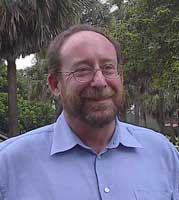


Adam Slotnick

My research focuses on physical culture.  My approach is to study physically active populations looking for the interplay of cultural, psychological and biological factors which produce healthy outcomes.  This knowledge will be used to create applied solutions for health promotion. My other areas of research are food culture and popular culture representations of both physical and food culture.


Matthew Gardner

Although my thesis involves the application of fractal analysis on Maya artwork to gain quantitative measures of previously qualitative work, I find it difficult to focus on just one subject.  I also like to research in methods and the study of food.  For the FAU Anthropology Department's Florida Public Archaeology Network-Southeast Center I am working on a project that integrates learning about Floridian history with its food use, showing how past peoples created and combined the materials that comprised their subsistence.


Dr. Michael Harris

My work in anthropology is motivated by my interest in making anthropology relevant to contemporary social problems.  In general, I am most interested in how anthropology can be used to address such disparate issues as health and disease patterns, inequality, and environmental degradation.  Most of my work has focused on the human-environment interaction, particularly examining how people use land in subsistence practices, how access to land changes over the course of a household’s life cycle, and through inheritance practices.  From this basic focus on land use, my research extends out to economic and political processes as well as issues of health and illness (especially childhood disease and mortality).


Privacy Policy | University Regulations and Policies | Emergency Information | Get Help | Contact Us

An Equal Opportunity/Equal Access Institution
© Copyright 2013. Florida Atlantic University.
Florida Atlantic University
 Last Modified 12/12/12