
Researchers Find New Bacteria in Stranded Florida Pygmy Sperm Whales
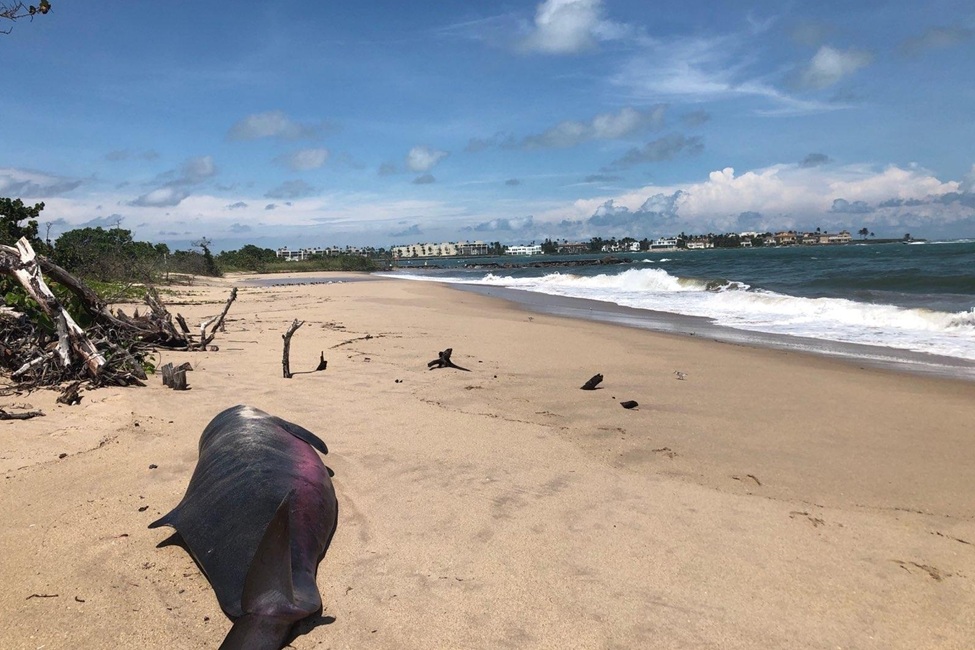
A stranded pygmy sperm whale on a beach in east Florida in 2020. (Stranding response conducted under a stranding agreement between NMFS and FAU Harbor Branch under the authority of the MMPA.)
Study Snapshot: Pygmy sperm whales are elusive, deep-diving marine mammals that are rarely observed alive, so much of what scientists know about them comes from stranded individuals – particularly along the southeastern U.S. In a new study published in the Journal of Wildlife Diseases, FAU Harbor Branch Oceanographic Institute researchers analyzed more than two decades of stranding data and discovered three previously unknown genotypes of Helicobacter bacteria in the whales’ stomach tissues. These newly identified strains, named Kogia Helicobacter 1, 2 and 3, mark the first documented occurrence of these specific bacteria in pygmy sperm whales.
By examining tissue samples from stranded whales between 1999 and 2020, scientists used histopathology, molecular diagnostics, and DNA sequencing to detect spiral-shaped bacteria associated with visible gastric disease, including ulcers, inflammation and fibrosis. While Helicobacter was not determined to be the direct cause of death in the affected whales, all infected individuals showed signs of gastrointestinal damage, raising questions about the bacteria’s role in long-term health. The findings expand scientific understanding of this little-known species and highlight how much remains undiscovered about microbial life in the ocean and its potential impact on marine mammal populations.
Pygmy sperm whales are rarely encountered free-swimming. Most scientific knowledge about them has come from stranded individuals – especially along the southeastern coast of the United States, where these whales strand more frequently than nearly any other large marine mammal species.
These stranding events have revealed common health issues in this species like stomach ulcers, often linked to Helicobacter bacteria, a type of bacteria that lives in the stomach and intestines of many animals, including whales and humans.
With more than two decades of data on stranded pygmy whales, researchers from Florida Atlantic University’s Harbor Branch Oceanographic Institute and their collaborators have identified three previously unknown genotypes of Helicobacter bacteria living inside these elusive marine mammals.
The study, published in the Journal of Wildlife Diseases, represents the first documented occurrence of these unique Helicobacter genotypes – now designated Kogia Helicobacter 1, 2 and 3 – in pygmy sperm whales. The findings not only expand our understanding of this poorly known whale species but also raise new questions about the broader impacts of microbial pathogens on ocean health.
“Helicobacter bacteria have long been associated with gastrointestinal disorders in humans and other animals, including chronic gastritis, ulcers, and even gastric cancer,” said Annie Page, D.V.M., Ph.D., senior author, an associate research professor and clinical veterinarian at FAU Harbor Branch. “To find novel strains of these bacteria in a deep-diving whale species is intriguing.”
Between 1999 and 2020, FAU Harbor Branch responded to 59 pygmy sperm whale strandings, and post-mortem examinations were conducted on 80% of these. In four separate cases, researchers observed spiral-shaped, “spirilliform” bacteria embedded in stomach tissues. Using a combination of histopathology, molecular diagnostics and DNA sequencing, the team retrospectively analyzed these tissues and identified novel genotypes of Helicobacter previously unknown to science.
“Two of the genotypes, Kogia Helicobacter 1 and 2, are genetically similar to known Helicobacter species previously found in other cetaceans – such as dolphins and porpoises – and in humans,” said Wendy Marks, corresponding author and a research coordinator of the marine wildlife veterinary medicine and research lab at FAU Harbor Branch. “But Kogia Helicobacter 3 belongs to a more divergent lineage, which emphasizes the possibility that there are far more undiscovered bacteria in the ocean than we realize.”
In one whale, both Kogia Helicobacter 1 and 3 were detected in forestomach tissues.
“All four whales that tested positive for Helicobacter had visible gastric pathology,” said Page. “We saw signs of gastritis, gastric ulcers, fibrosis and nematode infestations. In one case, there was also colitis, which suggests that the infection may not be limited to the stomach. While Helicobacter wasn’t listed as the cause of death in any of the whales, these lesions raise questions about its role in gastrointestinal disease.”
Since their initial discovery in marine mammals in 2000, Helicobacter species have been reported in multiple cetacean species globally. In some cases, the bacteria have been associated with lethargy, appetite loss, regurgitation, gastric ulcers and stomach inflammation – symptoms that mirror those observed in infected humans.
“Whales, like humans, appear to be susceptible to certain microbial infections that we’re only beginning to understand,” said Marks. “If chronic Helicobacter infections are causing health issues in these animals, it could have implications not only for individual whale health, but for entire populations – especially for species that are already vulnerable.”
The study represents a multidisciplinary collaboration between researchers at FAU Harbor Branch; the University of Florida’s College of Veterinary Medicine; Colorado State University; and Marine Mammal Pathology Services.
“This research underscores the value of long-term marine mammal stranding response programs,” said Page. “Without the ability to study these stranded animals over decades, we never would have discovered these bacteria. Every whale tells a story, and sometimes that story leads us into entirely new scientific territory.”
Study co-authors are Jessy Castellanos-Gell, Ph.D.; Steven Tillis, Ph.D.; James F.X. Wellehan, D.V.M., Ph.D., DACZM; and April Childress, all with the College of Veterinary Medicine, University of Florida; Nicole Pegg, FAU Harbor Branch; David Rotstein, D.V.M., Marine Mammal Pathology Services; Sushan Han, D.V.M., Ph.D., Diagnostic Medicine Center, Colorado State University; and Steve Burton, director, stranding and population assessment, FAU Harbor Branch.
The work was made possible through funding from the Florida State Specialty License Plate Program under the “Protect Florida Whales” grant, administered by the Harbor Branch Oceanographic Institute Foundation.
-FAU-
Tags: harbor branch | science | research | faculty and staff