
FAU Study: Tiny Windows in Petals Shape the Environment Inside Flowers
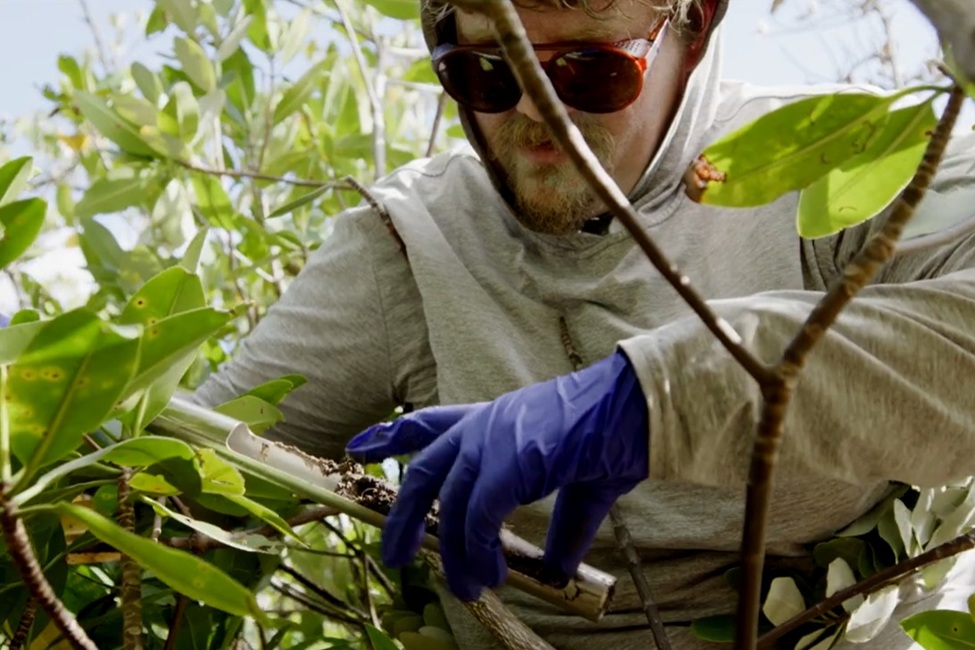
Jacob Francis, Ph.D., an assistant professor in FAU’s Department of Biological Sciences and lead principal investigator on the project.
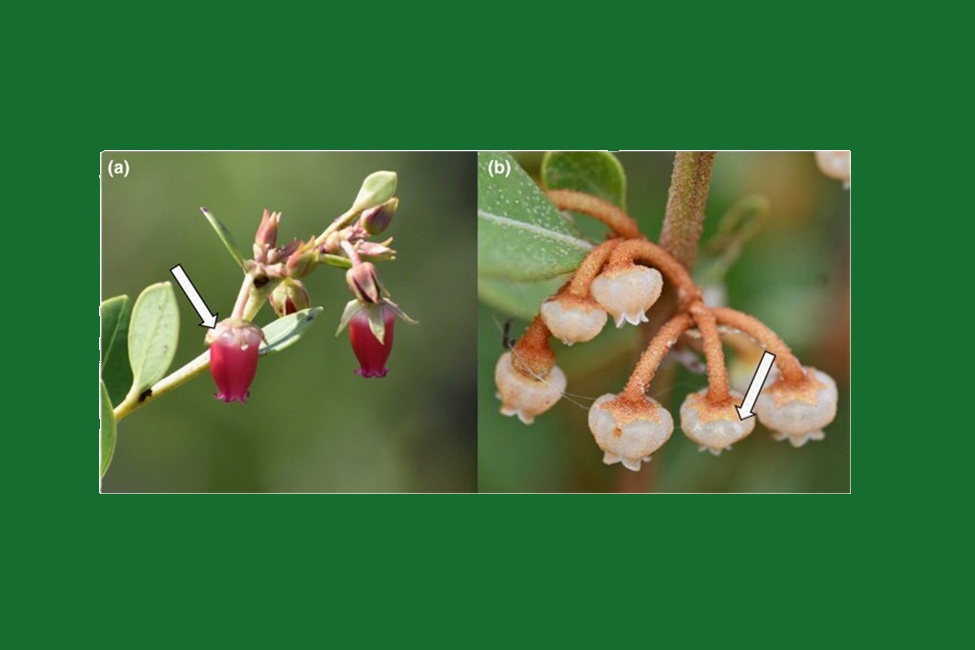
Study Snapshot: Researchers from Florida Atlantic University’s Charles E. Schmidt College of Science examined how semi-translucent sections, or “windows,” in flower petals influence the light, temperature and microbial communities inside flowers. The researchers studied two flowering blueberry relatives native to the southeastern U.S., Lyonia lucida and Lyonia fruticosa, both of which are found throughout Florida, and whose flowers contain these windows. They measured petal light transmission, internal and external floral temperatures, and the abundance of yeasts, molds and bacteria inside the flowers.
The study, published in the journal New Phytologist, found that petal windows transmitted more ultraviolet and infrared radiation than pigmented tissue. Researchers uncovered a complex interaction where infrared radiation directly warmed Lyonia lucida flowers more than L. fruticosa, and reduced molds across both species. In a separate experiment they found that warmer flowers had lower bacterial loads. The findings suggest that petal traits can influence microbes by shaping the microclimates inside flowers, adding another dimension to their role in attracting pollinators.
Flowers may look simple from the outside, but inside, they can create their own miniature environments. Research from Florida Atlantic University, published in New Phytologist, offers a new look at how the influence of petal color and light can shape the microscopic world inside a flower. The study shows that translucent “windows” in some flower petals can alter the light and heat entering a flower, changing its internal temperature, and influencing the microbes that live there.
“Flowers have microclimates, and just like the ecosystems we see around us every day, they have distinct temperatures and humidities,” said Jessica Williams, first author and an integrative biology doctoral student in the Department of Biological Sciences in FAU’s Charles E. Schmidt College of Science. “For the last 150 years we have studied how floral color impacts attractiveness to pollinators, but our work shows that this color can impact floral microbiomes via microclimatic shifts.”
The researchers studied two distant cousins of blueberries native to the southeastern United States, Lyonia lucida and Lyonia fruticosa, both of which are found throughout Florida. Their flowers have semi-translucent sections of their petals, as do many other members of the blueberry and heath family, Ericaceae.
“Looking closely at these flowers, we were struck by these ‘windows,’” said Jacob Francis, Ph.D., an assistant professor in FAU’s Department of Biological Sciences and lead principal investigator on the project. “A friend first drew his attention to similar petal structures more than a decade ago on a snowy mountain top in California. Since then, I haven’t been able to stop wondering: Why are these petals translucent? Could they warm flowers and impact the microbes living in flowers?”
To test this decade-old hypothesis, Williams and a collaborative team from the Francis lab measured temperatures inside and outside flowers; quantified culturable yeasts, molds and bacteria; and used small-scale spectrometry to determine how much ultraviolet and infrared radiation (IR) passed through different portions of the petals. They found that flowers with high IR-transmitting windows tended to have less mold in them, while flowers that transmitted more UV light – which is used to sterilize surfaces in healthcare and manufacturing – did not consistently harbor fewer microbes.
Instead, the interaction of light and temperature emerged as the key factor. Warmer flowers generally harbored fewer microbes, and IR transmission increased floral temperature in Lyonia lucida, the species where the team observed the strongest relationship between IR and mold abundance.
On the other hand, the story was less clear in Lyonia fruticosa. It did not warm more under intense IR light.
“What excites me is that these two species bloom together in the same place, yet act very differently,”
said Francis. “One fit our prediction that windows warm flowers and influence microbiome; the other left us with more questions. The variation in what these traits do in different species is what’s beautiful about the natural world to me. There will always be more to learn by looking carefully at flowers.”
Microbes living in flowers are more than incidental inhabitants. Floral microbial communities can influence nectar characteristics and potentially affect interactions between flowers and their pollinators. The findings raise the intriguing potential that a feature as small as a translucent patch on a petal may have longer reaching ecological consequences.
The study was supported in part by research conducted at Archbold Biological Station, a leading nonprofit biological field station for ecological research and conservation in Florida. Francis and his team are part of one of several budding collaborations between Florida Atlantic and Archbold’s research programs. Francis and his research team were among the first to use Archbold’s newly completed NSF-funded Core Laboratory facility. The new laboratory is meant to support Archbold’s rich tradition of field-based with the tools needed for microscopy, molecular and microbial ecology, and tightly controlled bioassays.
“Our new indoor laboratory space supports the outdoor research. Rather than researchers bringing field samples all the way back to their home labs, the new facility allows visiting researchers to ‘bring their lab to the field,’ so to speak. This is exactly the sort of project it was designed to support,” said Aaron David, Ph.D., program director of plant ecology and associate research biologist at Archbold.
According to Francis, this project would not have been possible without Archbold’s support.
“Lyonia grows all over the state, but the unique combination of rich natural history knowledge and modern facilities make Archbold the only place we could have gotten this done,” said Francis.
This work offers a new perspective on flowers as dynamic microhabitats, where light, temperature and microorganisms interact in ways that may influence relationships between plants and their pollinators.
“We are measuring this tiny world that we can’t see,” said Williams. “It’s not immediately apparent to us that the inside of flowers is a unique place. But pollinators put their whole heads inside of these flowers to eat and there are entire ecosystems of microbes in there. What excites me is that differences in these microhabitats could have impacts that could scale up to shape whole ecosystem functions like pollination. That’s what I am trying to understand with my research at Florida Atlantic.”
-FAU-