Parise NeuroMatrix Laboratory
About the Lab
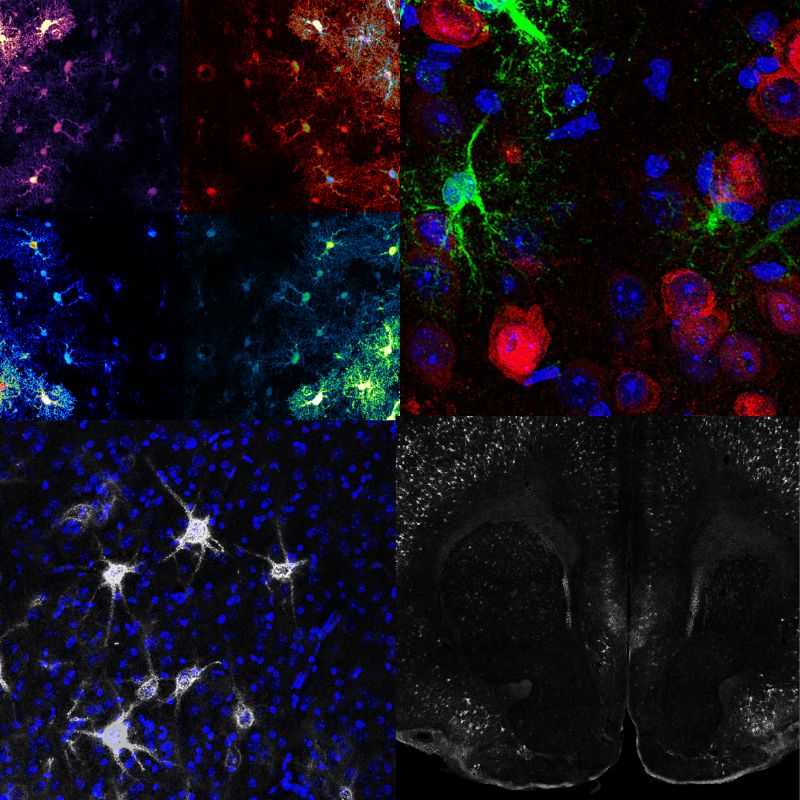
The Parise Laboratory studies how the brain’s extracellular matrix (ECM) is remodeled by stress and drugs of abuse, and how these ECM changes shape synaptic plasticity and behavior. Our work integrates rodent models of stress and addiction with viral-mediated gene transfer, in vivo circuit readouts (e.g., fiber photometry), advanced microscopy and whole-brain imaging, and molecular/omics approaches. By identifying ECM-regulated “state changes” that bias vulnerability vs. resilience, we aim to discover new targets for prevention and treatment of mood and substance use disorders.
Research Areas
- Genetics, Genomics and Precision Medicine
- Neurological Disorders
- Neuroextracellular Matrix Biology
- Behavioral & Neuro Pharmacology
Principal Investigator
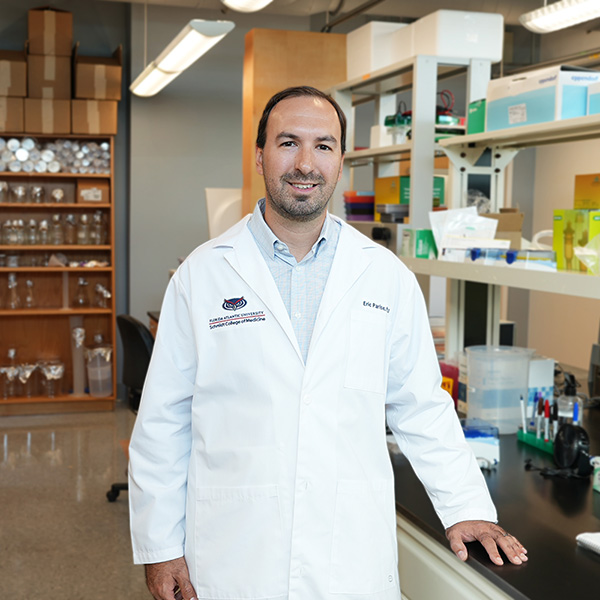
Eric M. Parise, PhD
Assistant Professor of Biomedical Science
Stiles-Nicholson Brain Institute
Email:
eparise@health.fau.edu
Phone: 561-297-2278
Office/Lab Location:Charles E. Schmidt College of Medicine
777 Glades Road, BC-71, Room 308
Boca Raton, FL 33431
Dr. Eric Parise earned a B.S. in Psychology, an M.S. in Psychobiology, and a Ph.D. in Neuroscience from Florida State University, where his undergraduate and doctoral work examined the long-term impact of developmental exposure to drugs of abuse and antidepressants on the brain's reward circuitry.
Teaching & Mentoring
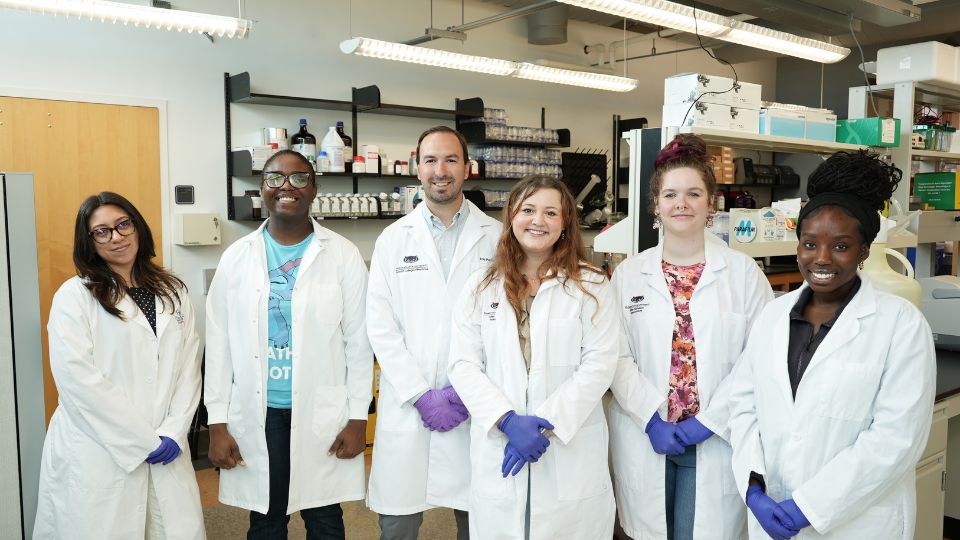
Dr. Parise is committed to a hands-on, mentorship-centered approach to training the next generation of scientists and clinicians. In his lab at Florida Atlantic University, trainees learn by actively participating in research—from developing hypotheses and designing experiments to collecting data, analyzing results, and communicating findings. He mentors students across training stages, including undergraduate, master’s, PhD, and medical trainees, and supports individualized development based on each trainee’s goals and experience level.
His mentoring philosophy emphasizes scientific rigor, curiosity, independence, and technical skill-building in a collaborative laboratory environment. Trainees in the lab gain exposure to core neuroscience methods while also developing broader competencies in critical thinking, experimental troubleshooting, data interpretation, and research presentation.
In addition to laboratory mentorship, Dr. Parise has formal teaching experience in neuroscience and psychology, including Brain and Behavior: Pharmacology, Research Methods, and Sensation and Perception.
Open Positions
The Parise Laboratory is recruiting motivated trainees interested in translational systems neuroscience, extracellular matrix biology, and neuropsychiatric disease mechanisms. We welcome inquiries from undergraduate students, graduate students, and medical students with interests in stress neurobiology, addiction, circuit plasticity, and molecular neuroscience. To inquire about opportunities, please email Dr. Parise with a brief statement of interest and an updated CV.