FAU Jupiter Welcomes First Cohort of Postbaccalaureate Fellows
by Chelsey Matheson | Friday, Dec 19, 2025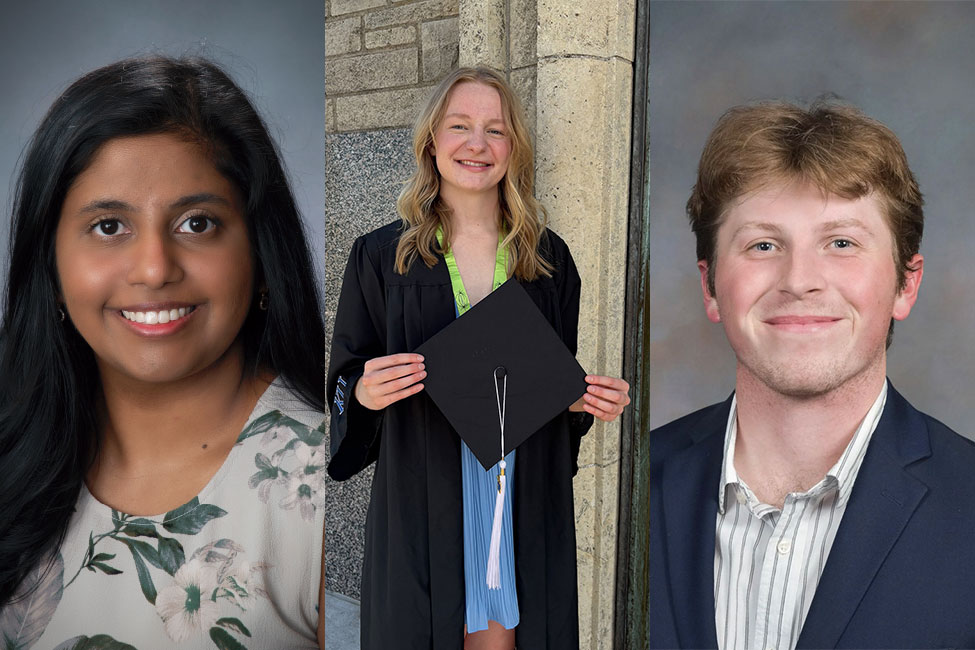
Florida Atlantic’s John D. MacArthur Campus at Jupiter launched a postbaccalaureate fellowship program in early 2025. The program offered individuals with a bachelor’s degree the opportunity to gain hands-on, in-the-lab research training to prepare for pursuing a doctoral degree in neuroscience, biological sciences or biomedical sciences. Fellowship positions are for one year. In August, the inaugural cohort of fellows joined the campus research community.
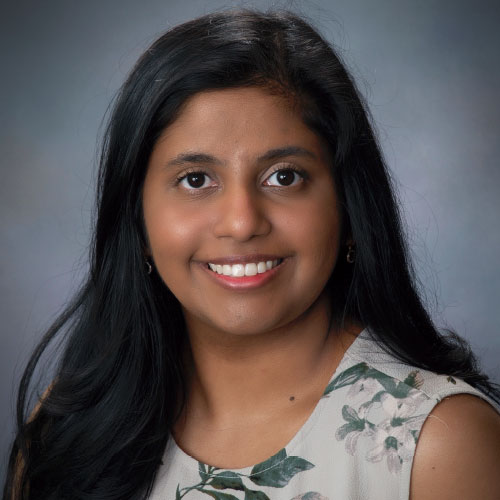 Kiara Arjune is working in the lab of Lucia Carvelli, Ph.D., associate professor of neuroscience in the Harriet L. Wilkes Honors College and a member of the Stiles-Nicholson Brain Institute. Arjune earned a Bachelor of Science in neuroscience and applied mathematics from the University of Miami. In the Carvelli lab, she studies the epigenetic and molecular mechanisms underlying long-term and transgenerational effects of amphetamine and cocaine using a worm called C. elegans as a model organism.
“Science was always the best way for me to help others by contributing to finding real-world answers to major questions in neuroscience,” Arjune said.
After completing the program, “I plan on pursuing an M.S. in neural engineering and a Ph.D. in neuroscience, eventually aiming to advance both fundamental knowledge and practical solutions,” she said.
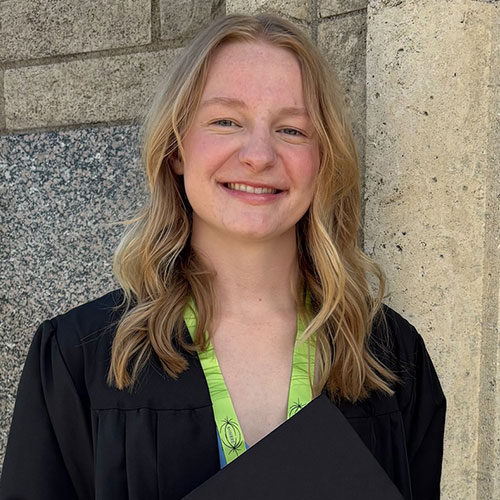 Caroline Hybl is working in the lab of Erik Duboué, associate professor of biology in the Wilkes Honors College. Hybl is investigating the clearance mechanisms of amyloid beta in the Astyanax mexicanus (Mexican tetra) as a means to investigate Alzheimer's disease.
“I fell in love with science during my high school biology class,” Hybl said. “My teacher was incredibly high energy. Experiments replaced worksheets, and curiosity was rewarded more than memorization. Through undergraduate research I fostered a passion for neuroscience research which inspired my decision to pursue a career in neuroscience.”
Hybl said that after she completes her postbaccalaureate fellowship, she plans to pursue a Ph.D. in neuroscience with a focus on neuroendocrine systems.
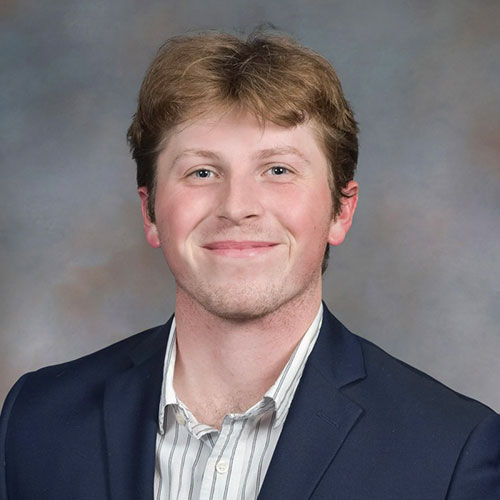 Harrison Hutchings is investigating gene therapy delivery in the lab of Predrag Cudic, Ph.D., professor and associate dean for research, Department of Chemistry and Biochemistry in the Charles E. Schmidt College of Science.
“My inspiration for pursuing a career in science stemmed from my grandfather's glioblastoma gamma-knife surgery,” Hutchings said. “After realizing the dramatic positive change that a single person's discovery could have on everyday people, I knew that if I could have the chance to make the same sort of change, that would be my pursuit.”
After his fellowship, Hutchings said he plans to pursue a career as a clinician-scientist.