The NeuroCollective Symposium
May 15, 2026 | Jupiter Tri-Institute Campus
Uniting Minds. Empowering Discovery. Showcasing the Future.
Florida Atlantic University at Jupiter, the Max Planck Florida Institute for Neuroscience, and The Herbert Wertheim UF Scripps Institute for Biomedical Innovation & Technology proudly present:
The NeuroCollective Symposium — a celebration of discovery driven by the next generation of neuroscientists.
This collaborative, cross-institute event highlights the vibrant trainee community of our tri-institutional campus, bringing together high school students, undergraduates, postbacs, graduate students, and postdocs as they push the boundaries of neuroscience through innovation, advanced imaging, and shared expertise.
Event Highlights
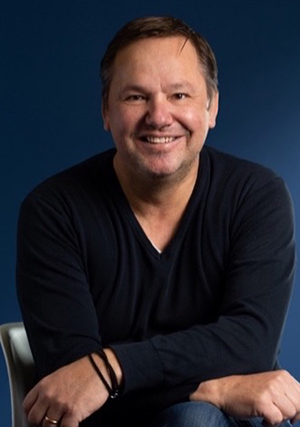
Plenary Speaker: Dr. Martin Maier (INRS, Montréal, Canada)
Talk Title: NeuroAI: Crossing the Bridge between Artificial and Natural Intelligence
3 – 4 p.m. | FAU Stiles-Nicholson Brain Institute
Career Panel Lunch for Trainees (RSVP required)
Connect with scientists and professionals across diverse career paths during small-group breakout sessions over lunch at UF Scripps.
Poster Session & Networking Reception
Wrap up the day with our poster session and networking reception at Max Planck Florida Institute for Neuroscience (MPFI).
Schedule
11:30 a.m. – 1 p.m.
Lunch & Breakout Sessions with Career Panelists - Open to Trainees, RSVP required -(UF Scripps Biomedical Institute )
1:30 – 2:45 p.m.
Selected Trainee Talks (FAU Stiles-Nicholson Brain Institute)
(Additional trainee presentations and program details will be posted as they are confirmed.)
3 – 4 p.m.
Plenary Talk: Prof. Martin Maier (FAU Stiles-Nicholson Brain Institute)
4:30 – 6 p.m.
Poster Session & Networking Reception (MPFI)
(Additional trainee presentations and program details will be posted as they are confirmed.)
Trainee Abstract Submissions
- Poster and Talk Submission Deadline: April 17, 2026
- 4-6 Abstracts will be selected for talks.
- Oral presenters will receive an honorarium.
- Awards for best talk and best poster!
Poster/Talk Abstract Submission and Registration
Join The Collective
Come be part of a growing movement where science, technology, and talent converge to shape the future of neuroscience.
Registration is FREE and open to all researchers and trainees.
Register for the NeuroCollective Symposium
Plenary Abstract
There is now a growing awareness among leading AI researchers that there is the risk of over-reliance on computational tools at the expense of biological insights, giving rise to the emerging field of NeuroAI. The next generation of NeuroAI researchers with both strong computer science skills and solid biological foundations will be crucial in preventing advanced AI research from losing sight of what makes natural intelligence so remarkable in the first place. While current NeuroAI focuses primarily on applying AI tools to neuroscience, the reverse direction can be equally transformative, leading to the development of biologically informed AI models. In this keynote, we will explore the limitations of today’s AI and how “the problem of inference” lying at the heart of AI may be resolved thru active inference, an ideal methodology for developing more advanced AI systems by biomimicking the way living intelligent systems work, ranging from humans and animals to plants, including the nascent intersecting area of AI and psychedelic medicine. As some argue, in the end, the acronym AI might actually not stand for artificial intelligence, but active inference – the key to true AI: Less artificial, more intelligent.
Plenary Bio
Martin Maier is a full professor with the Institut National de la Recherche Scientifique (INRS), Montréal, Canada. He was educated at the Technical University of Berlin, Germany, and received MSc and PhD degrees both with distinctions (summa cum laude) in 1998 and 2003, respectively. In 2003, he was a postdoc fellow at the Massachusetts Institute of Technology (MIT), Cambridge, MA, and he was a visiting professor at Stanford University, Stanford, CA, from 2006 through 2007. He was a co-recipient of the 2009 IEEE Communications Society Best Tutorial Paper Award and a Marie Curie IIF Fellow of the European Commission (2014–2015). In 2017, he received the Friedrich Wilhelm Bessel Research Award from the Alexander von Humboldt (AvH) Foundation and was named one of the three most promising scientists in the category “Contribution to a better society” of the Marie Skłodowska-Curie Actions (MSCA) 2017 Prize Award of the European Commission. In 2019/2020, he held a UC3M-Banco de Santander Excellence Chair at Universidad Carlos III de Madrid (UC3M), Madrid, Spain. In December 2023, he received the IEEE Communications Society (ComSoc) Technical Achievement Award for contributions on 6G/Next G and metaverse concepts, and the IEEE Computer Society Bio-Inspired Computing STC 2023 Outstanding Paper Award for work on the symbiosis between INTERnet and Human BEING (INTERBEING). Based on Stanford University’s list of “World’s Top 2%” most cited scientists, he ranks among the top 2% worldwide and was awarded 2024 Highly Ranked Scholar Lifetime status by ScholarGPS as #2 worldwide in the area of access network (top 0.05%). He is co-author of Toward 6G: A New Era of Convergence (Wiley-IEEE Press, 2021) and author of 6G and Onward to Next G: The Road to the Multiverse (Wiley-IEEE Press, 2023).
Sponsors