Watch video presentation
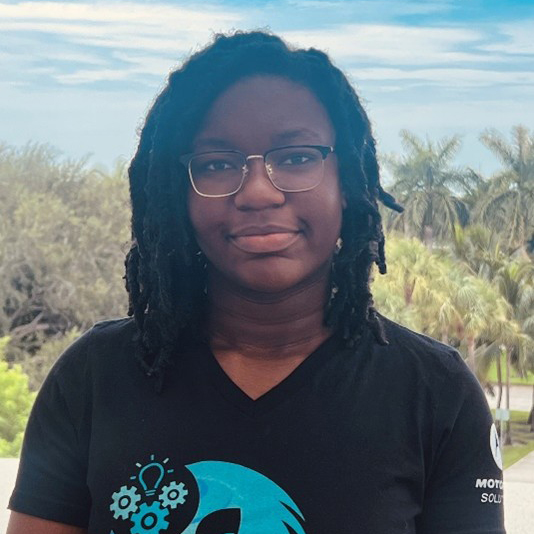
REU Scholar: Zahra Williams
Infrastructure Systems: Digital Storytelling
REU Scholar: Zahra Williams
REU Scholar Home Institution: Florida Atlantic University
REU Mentor: Dr. Jason Hallstrom
PROJECT
MobRelD: A Video Processing Module with RelD Integration
A common challenge in pedestrian tracking and detection is the inability to consistently identify the same individual over different images or video frames, typically due to occlusions and differing camera angles. In response, computer vision-based re-identification (Re-ID) has been extensively researched. Re-ID extracts a feature representation of a query image to compare to a gallery of other images, with the goal of identifying the same individual across multiple cameras. The topic has become more prominent in research due to innovations in performance, as well as its high utility, specifically in areas where data extraction from video footage is necessary, such as the creation of digital twins. Despite recent advancements in Re-ID model performance, there is no perfect solution to matching IDs across cameras, especially across videos. To address the difficulty of consistent re-identification across multiple cameras, specifically in videos rather than images, we present MobReID, a video processing module that leverages FastReID to assist with inter-camera identity matching. Additionally, we explore the impact of camera position and camera overlap on MobReID's performance, questioning whether overlapping camera regions can improve model performance. We integrate FastReID's identity matching with YOLOv11's object tracking to consistently identify and track pedestrians across multiple cameras oriented at different angles.
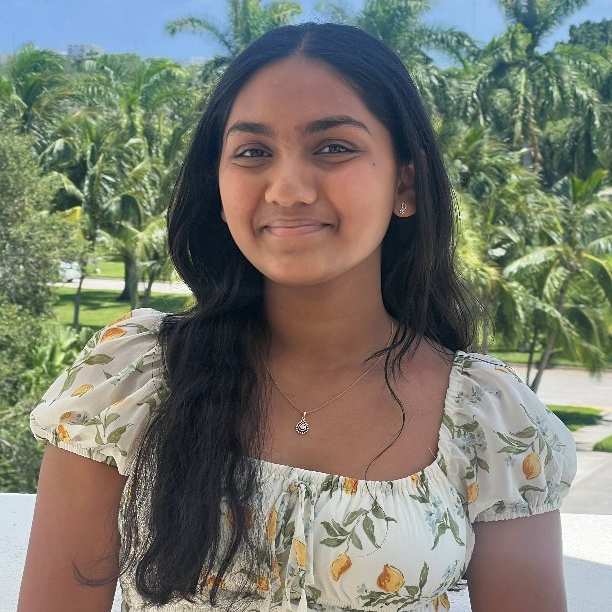
REU Scholar: Nidhi Begur
REU Scholar Home Institution: Florida Atlantic University
REU Mentor: Dr. Jason Hallstrom
PROJECT
Modeling Urban Pedestrian Transitions via WiFi-Based Flow Detection Algorithms
As part of the Center for Smart Streetscapes (CS3) mission to design safer and more responsive cities through real-time sensing, this project models pedestrian mobility based on passive WiFi signals in a live testbed located in downtown West Palm Beach. In busy urban environments, understanding how people move is crucial for designing streets, sidewalks, and public spaces. Personal devices, like phones, continuously emit anonymous probe requests, which are captured by a network of sensors without collecting any personal data. A preprocessing pipeline was developed to clean the dataset by removing invalid timestamps, selecting the strongest signal per minute for each device, and isolating only those devices observed at multiple locations to capture meaningful pedestrian movements. A greedy algorithm was implemented to reconstruct likely pedestrian paths based on spatial constraints and observed points of detection. Additional flow metrics were introduced to track entry/exit points and measure directional movement. These patterns were visualized through animated spatial maps, providing new insight into how people interact with the built environment. By transforming raw wireless data into clear visualizations, this project advances CS3's goal of creating smarter infrastructure that responds to the way people actually move.
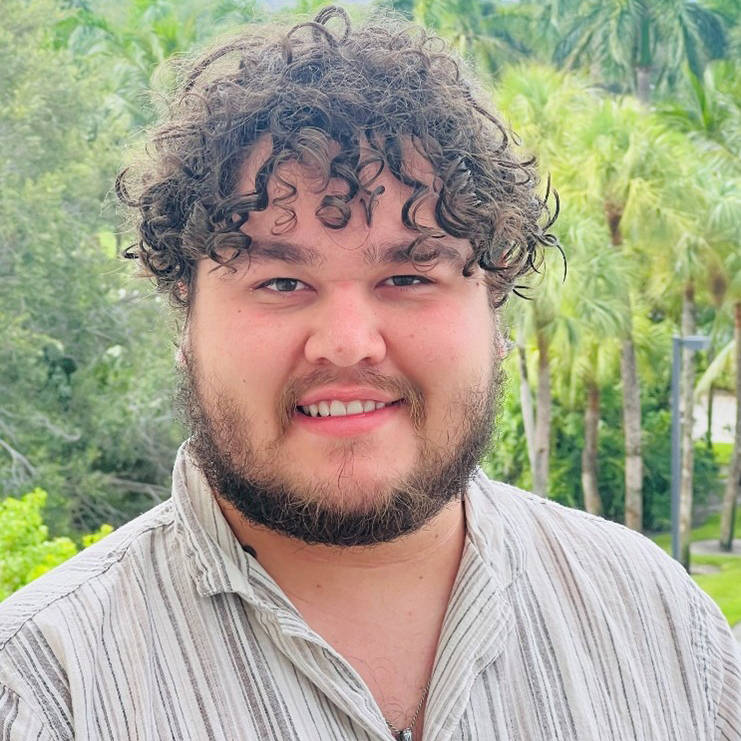
REU Scholar: Jan Erik Martins-Simonsen
REU Scholar Home Institution: Florida Atlantic University
REU Mentor: Dr. Jason Hallstrom
PROJECT
Contextually Enriched Prediction of Population Density in Urban Streetscapes
This study focuses on creating a machine learning model that integrates contextual data to forecast population density in the West Palm Beach Testbed, a sensor array located along Clematis Street that collects and aggregates Wi-Fi probe requests as a surrogate for pedestrian traffic. The model provides short- and long-term predictions of pedestrian density. The model was developed by training a random forest algorithm with Wi-Fi probe device counts over a 14-month period, as well as contextual point-of-interest information to predict density. Through this model, insight can be gained about pedestrian density patterns, while also providing a foundation for future work to generate explanations as to why areas may experience specific levels of traffic and how different locations may be correlated. The model demonstrates the potential of a lightweight approach to transforming data collected from the testbed into intelligible, actionable insights. This may support informed urban planning and decision-making in smart city environments.
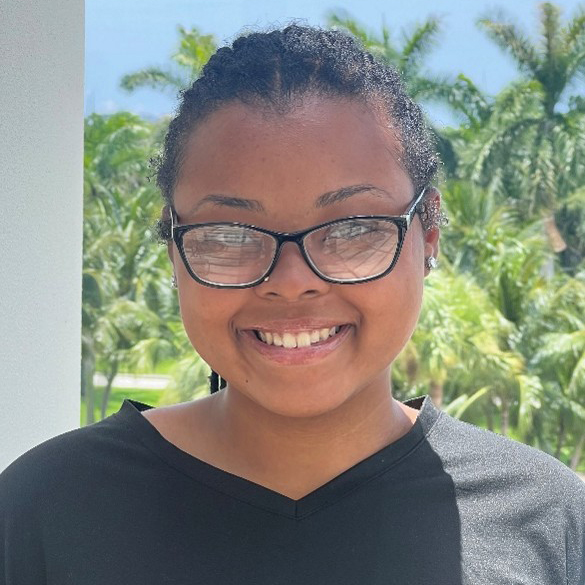
REU Scholar: Briana Deloatch
REU Scholar Home Institution: Lehman College
REU Mentor: Dr. Jason Hallstrom
PROJECT
The Center for Smart StreetScapes (CS3) works to improve public infrastructure through artificial intelligence. We report on an exemplification of this mission in partnership with BusPas, a digital signage company for bus stops. The goal is to improve the pedestrian experience through interactive digital signage that everyone can enjoy. Initial development and testing was conducted on a standard laptop using OpenCV, with plans to translate the implementation to the BusPas device. To achieve this, a computer vision model was developed that integrates YOLOv11 for person detection and tracking, enabling the system to count individuals waiting at the bus stop. MediaPipe, Google's open-source machine learning framework, was used to recognize a range of hand gestures, including those used to play a basic game – Rock, Paper, Scissors; this idea was heavily inspired by ASL. MediaPipe was trained using the labels ‘Game,' ‘Rock,' ‘Paper,' and ‘Scissors'. During data collection, each time a key was pressed, the coordinates of the detected hand landmarks were recorded and exported to a CSV file for training. Gesture training totaled 5,138 labeled samples across all gestures, collected at various angles and heights. Detection accuracy averaged 99% for each gesture. This proof-of-concept demonstrates how combining computer vision and gesture recognition can enhance the public transit experience, aligning with CS3's mission to create infrastructure that's interactive and enjoyable for all.
Watch video
presentation
REU Scholar: Nidhi Begur
REU Scholar: Nidhi Begur
Watch video
presentation
REU Scholar: Jan Erik Martins-Simonsen
REU Scholar: Jan Erik Martins-Simonsen
Watch video
presentation
REU Scholar: Briana Deloatch
REU Scholar: Briana Deloatch