Spatiotemporal Data Mining and Visualization for Smart Cities
By Ariana Galindo
REU student: Ariana Galindo, Florida Atlantic University
REU mentor: Dr. Jang, Florida Atlantic University
Importance
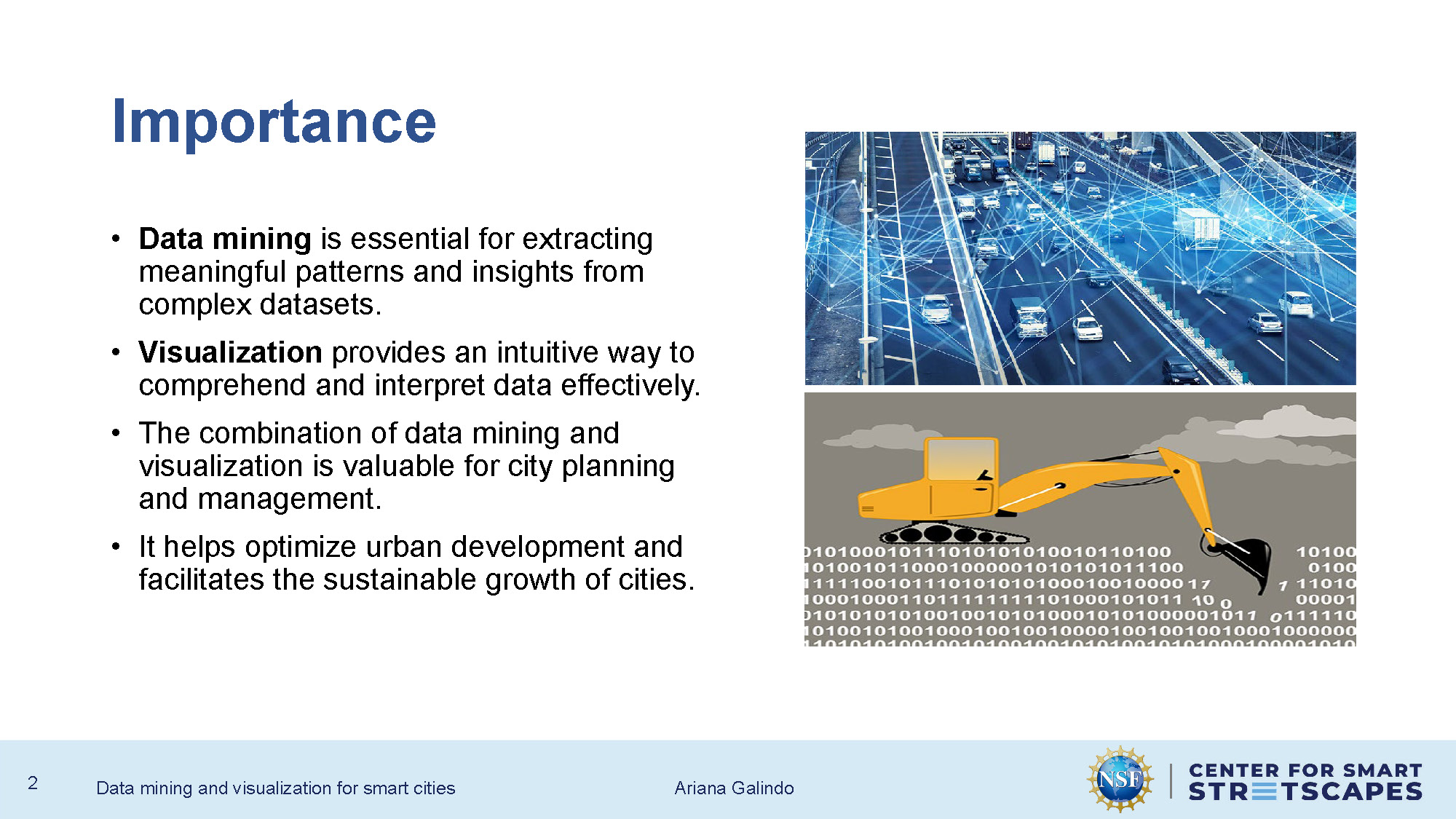
- Data mining is essential for extracting meaningful patterns and insights from complex datasets.
- Visualization provides an intuitive way to comprehend and interpret data effectively.
- The combination of data mining and visualization is valuable for city planning and management.
- It helps optimize urban development and facilitates the sustainable growth of cities.
Objectives
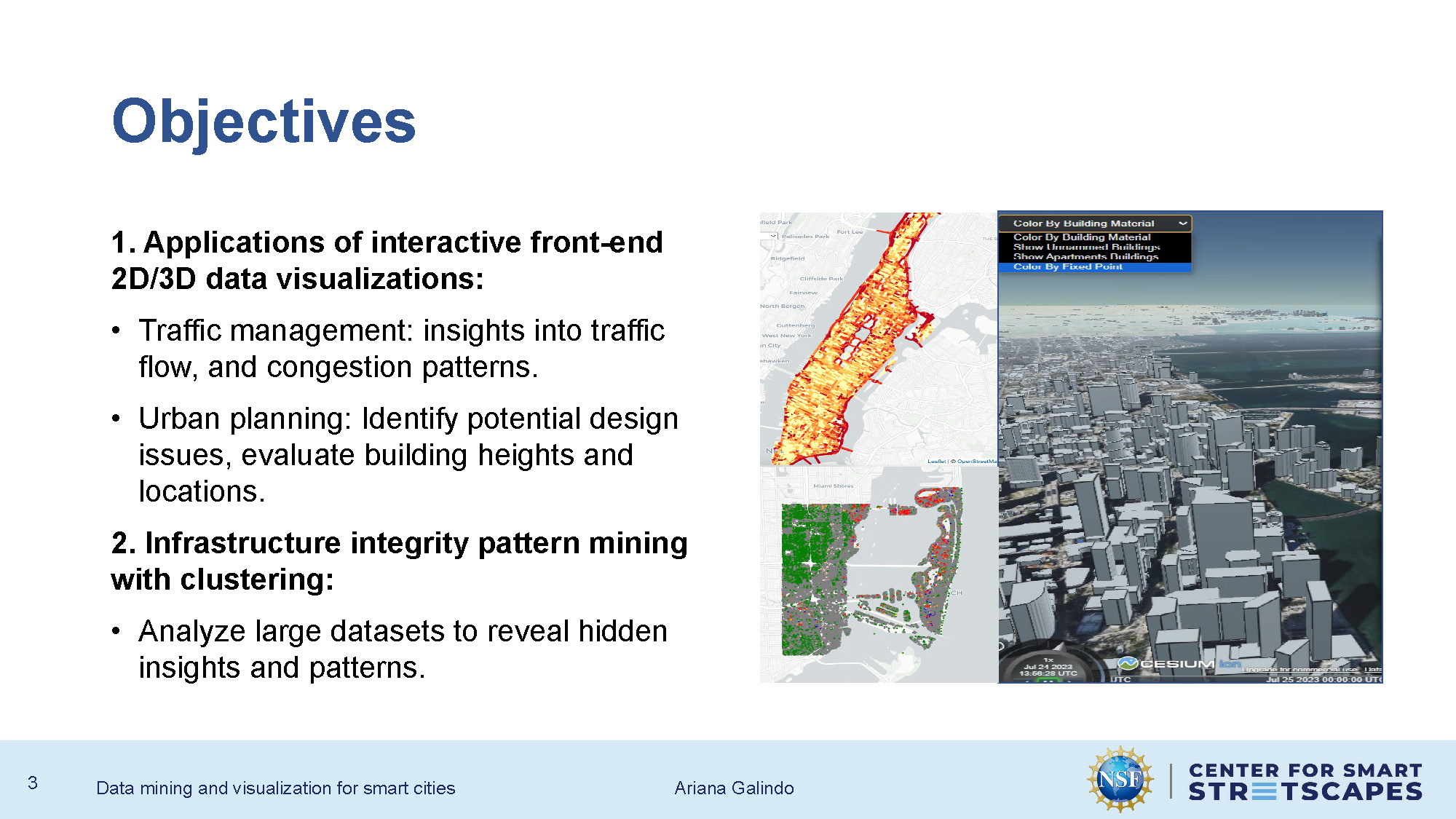
1. Applications of interactive front-end 2D/3D data visualizations:
- Traffic management: insights into traffic flow, and congestion patterns.
- Urban planning: Identify potential design issues, evaluate building heights and locations.
2. Infrastructure integrity pattern mining with clustering:
- Analyze large datasets to reveal hidden insights and patterns.
Interactive front-end 2D data visualization
- Leaflet is utilized to create a 2D web map of Manhattan.
- The map's focus is to showcase the city's densest regions, determined by a specific attribute.
Interactive front-end 3D data visualization
- Cesium is utilized to create a 3D web map of Miami.
- The buildings are depicted with their respective features, and the visualization is enhanced through functions available in the dropdown menu.
Infrastructure integrity pattern mining
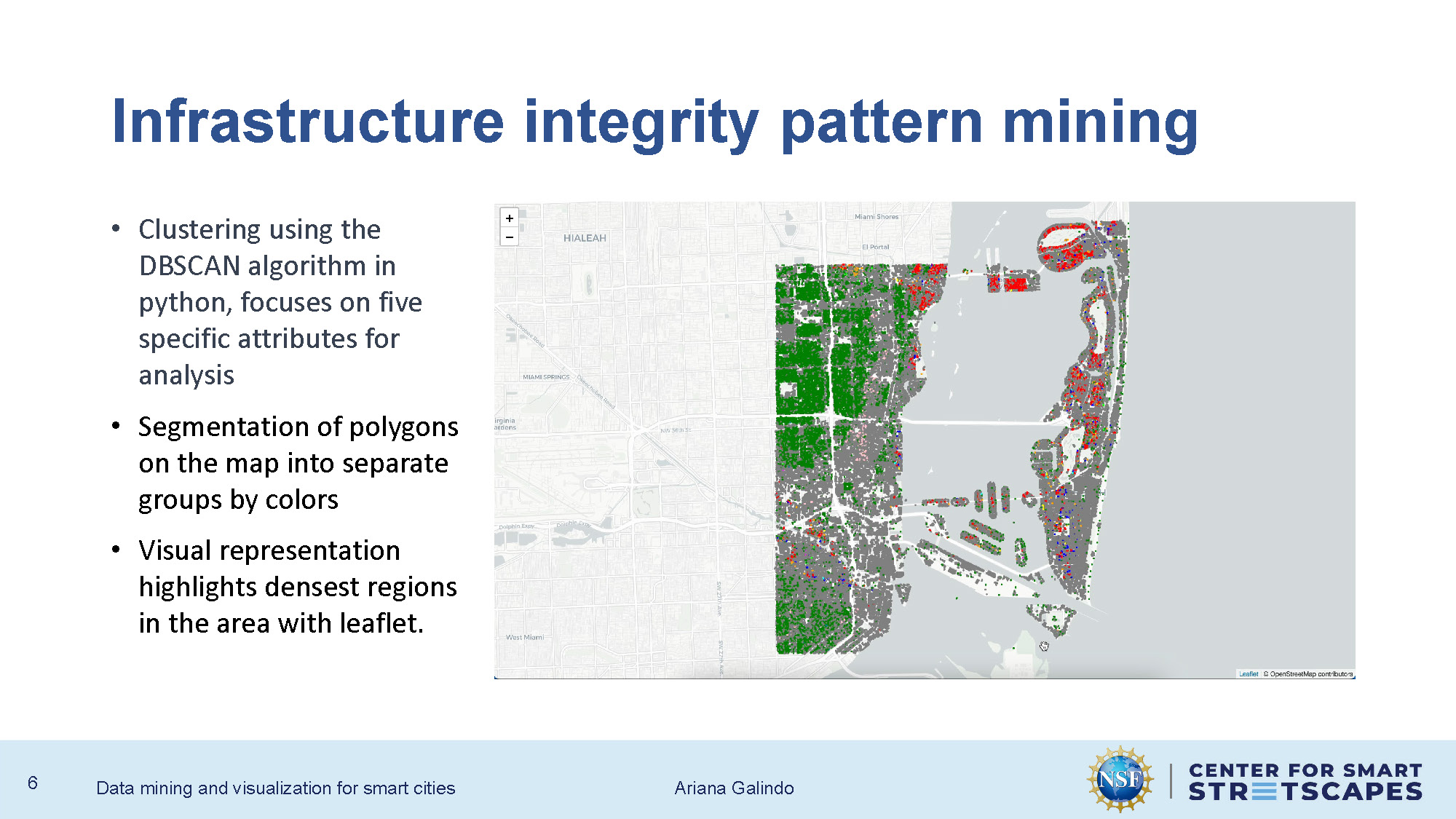
- Clustering using the DBSCAN algorithm in python, focuses on five specific attributes for analysis
- Segmentation of polygons on the map into separate groups by colors
- Visual representation highlights densest regions in the area with leaflet.
Conclusion
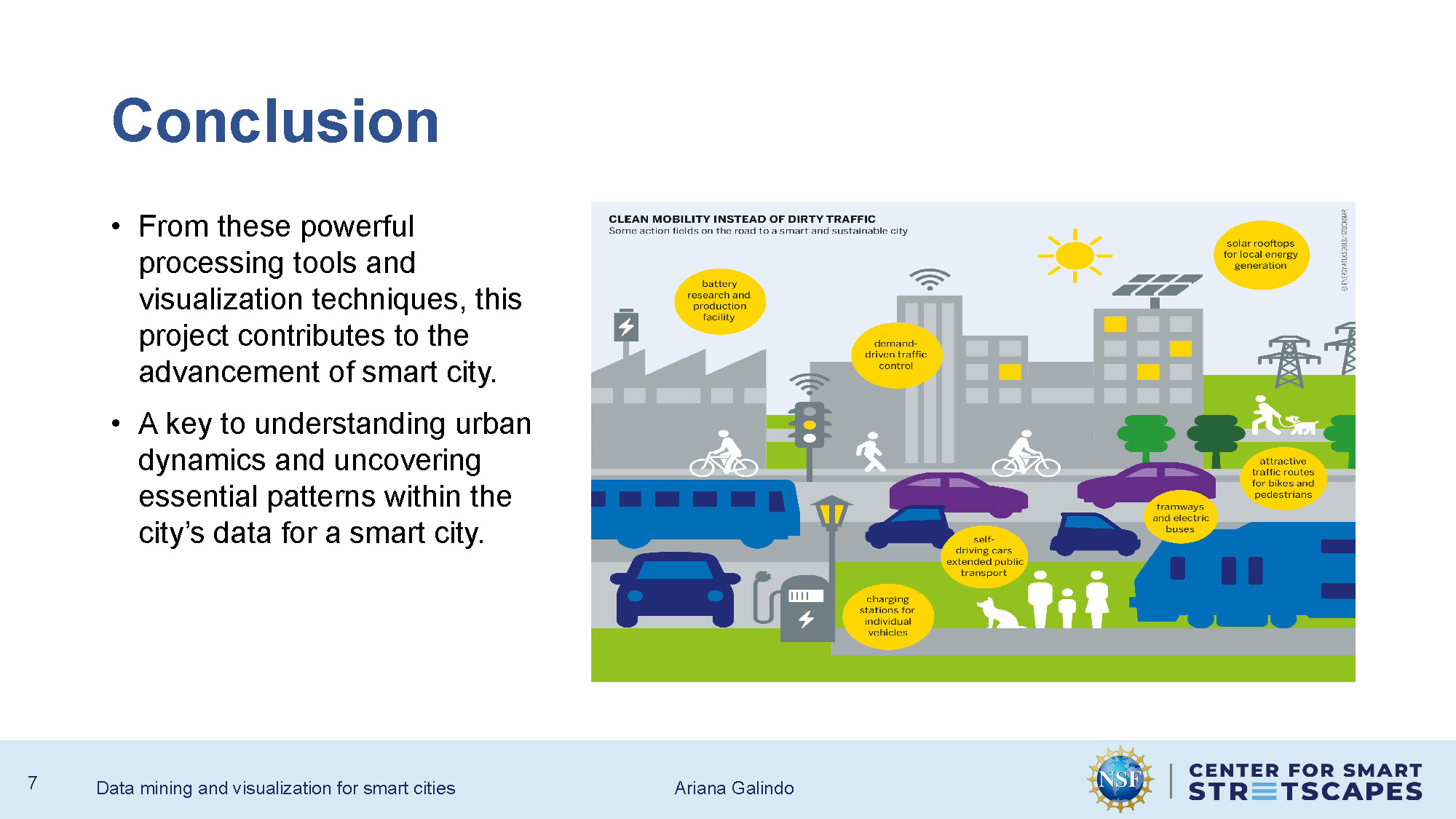
- From these powerful processing tools and visualization techniques, this project contributes to the advancement of smart city.
- A key to understanding urban dynamics and uncovering essential patterns within the city's data for a smart city.
Questions & Feedback
Thank you for your attention. Questions and feedback are welcome.
End of Presentation
Click the right arrow to return to the beginning of the slide show.
For a downloadable version of this presentation, email: I-SENSE@FAU.