Digital Twin Simulation Environment Development for Smart Cities
Presented by Abigail Joseph, REU at Florida Atlantic University
Under the supervision of Dr. Jinwoo Jang at Florida Atlantic University
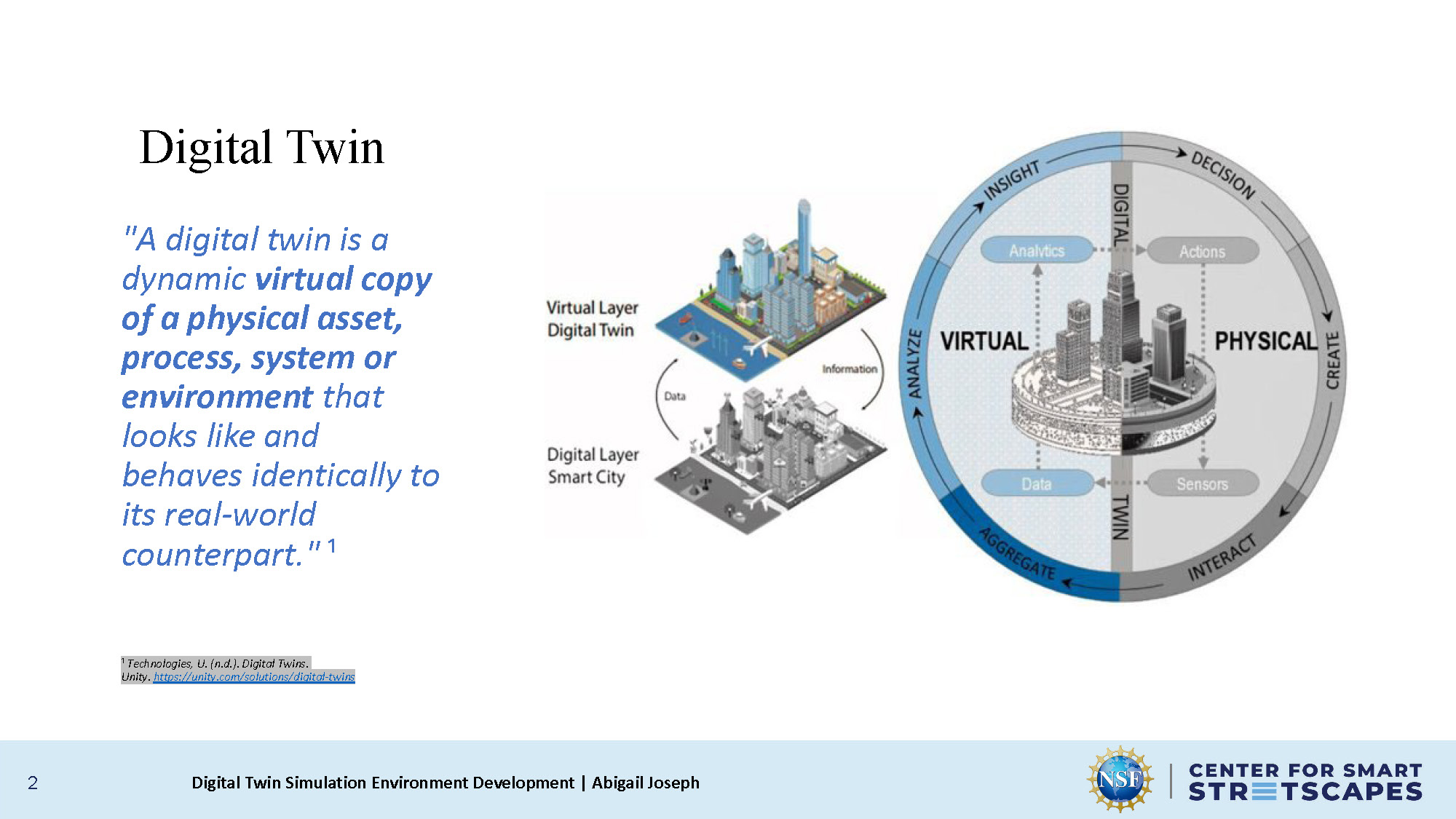
Digital Twin
"A digital twin is a dynamic virtual copy of a physical asset, process, system or environment that looks like and behaves identically to its real-world counterpart."
1 Technologies, U. (n.d.). Digital Twins. Unity. https://unity.com/solutions/digital-twins
Introduction
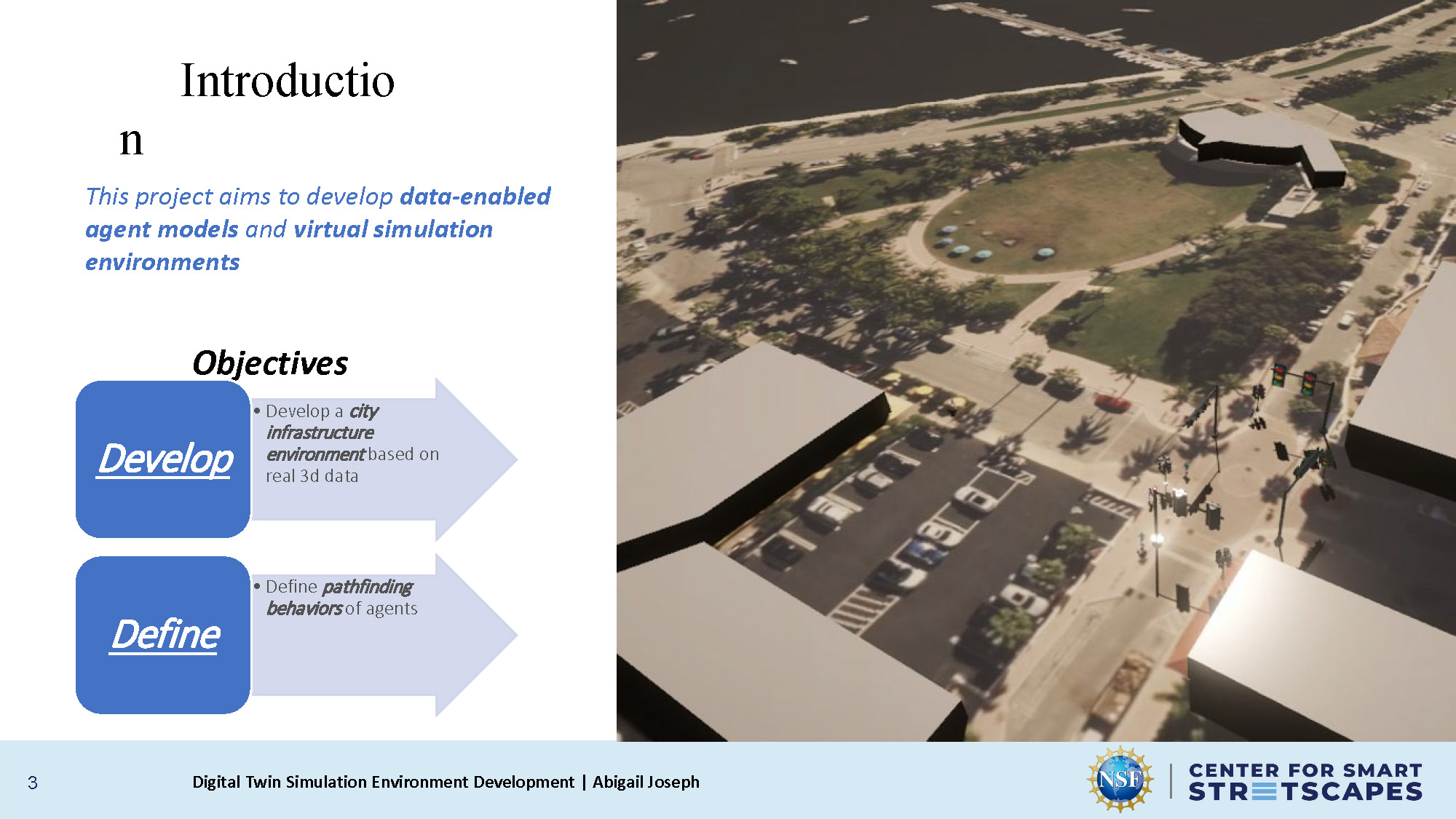
This project aims to develop data-enabled agent models and virtual simulation environments
Objectives
- Develop a city infrastructure environment based on real 3d data
- Define pathfinding behaviors of agents
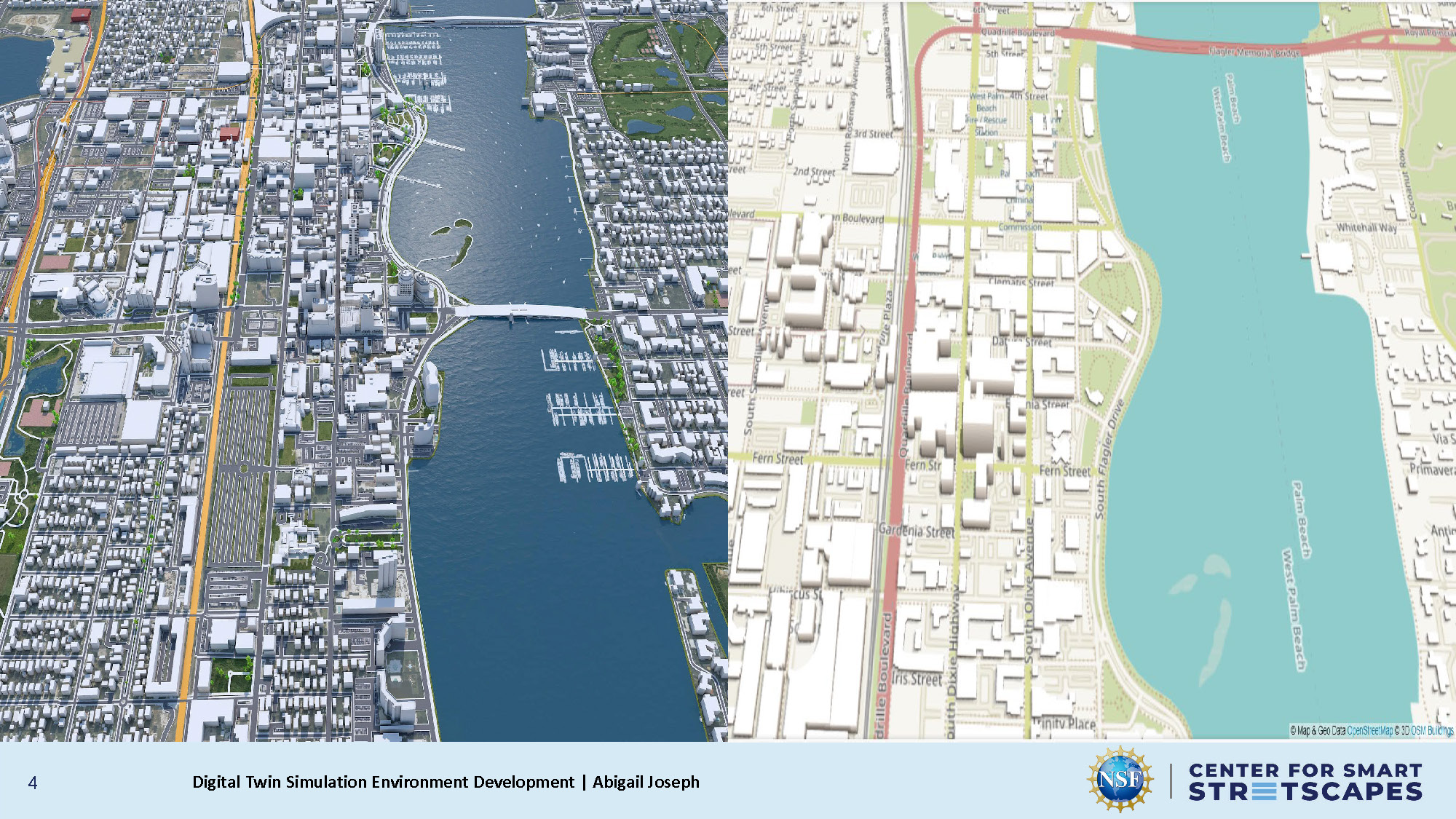
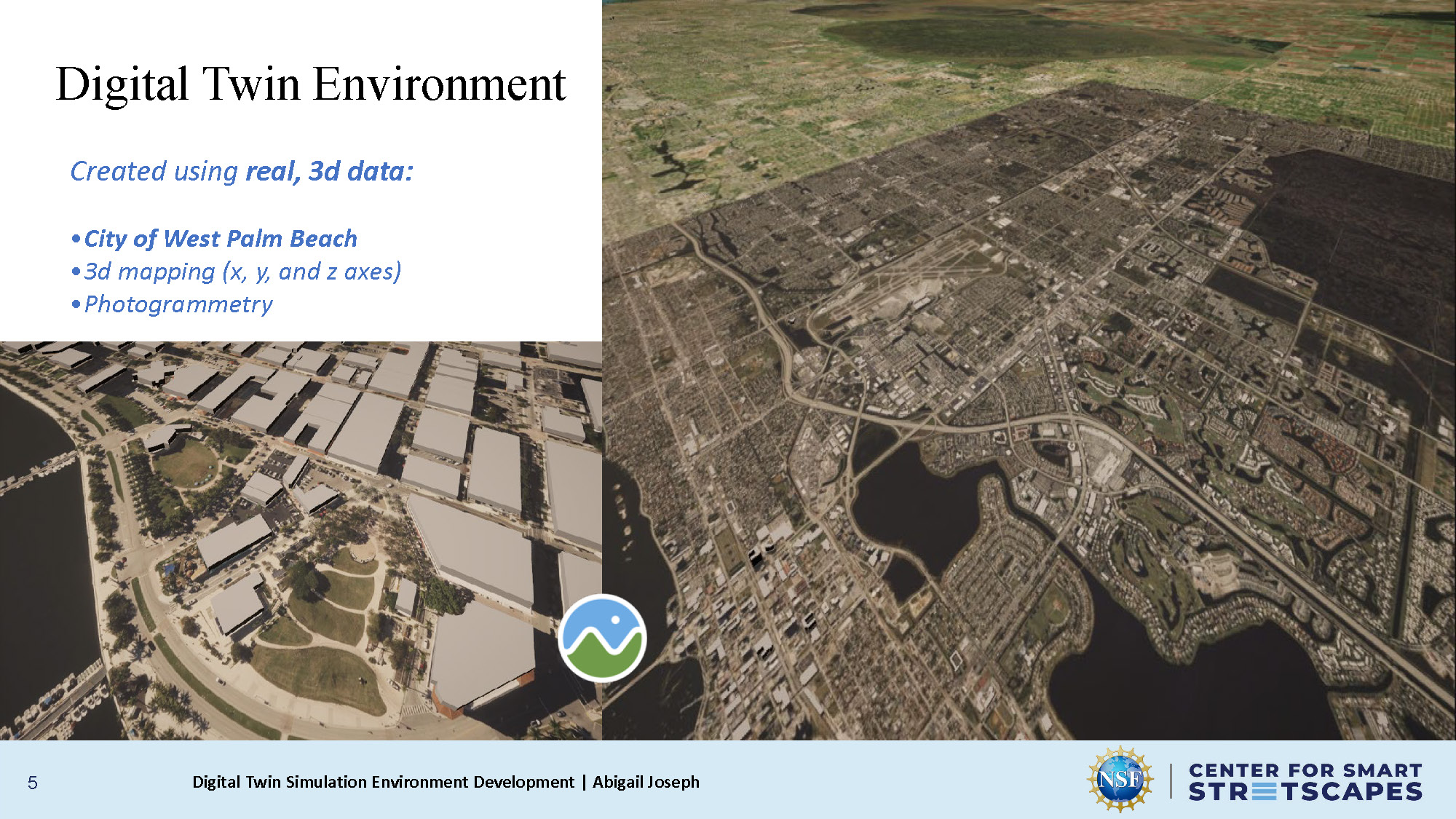
This slide shows a visual representation of the digital twin environment that was created using real 3D data from West Palm Beach.
Digital Twin Environment
Created using real, 3d data:
- City of West Palm Beach
- 3d mapping (x, y, and z axes)
- Photogrammetry
Defining Agent Behavior
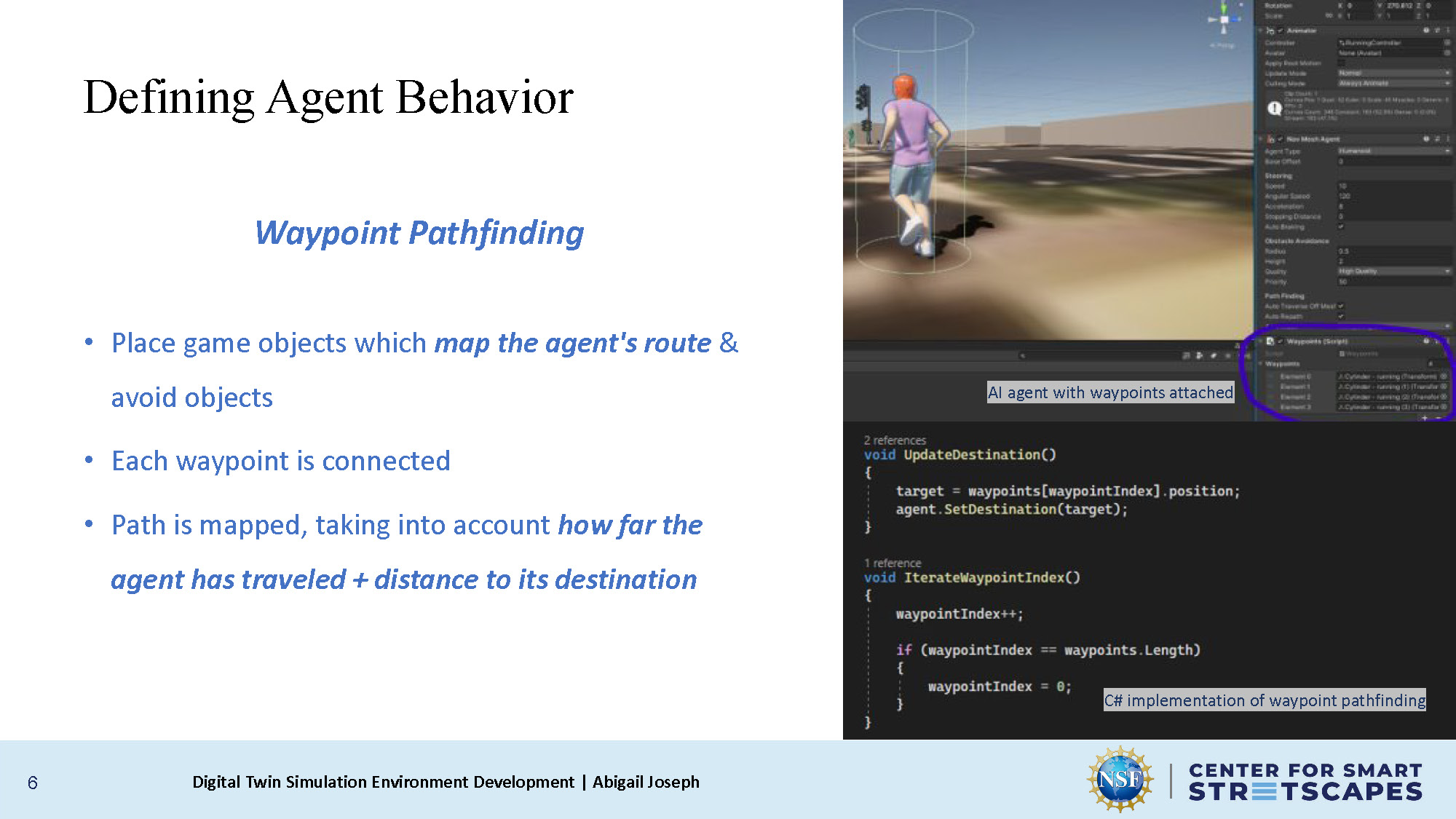
Waypoint Pathfinding
- Place game objects which map the agent's route & avoid objects
- Each waypoint is connected
- Path is mapped, taking into account how far the agent has traveled + distance to its destination
Diagram shows:
• C# implementation of waypoint pathfinding
• AI agent with waypoints attached
Agent Interactions
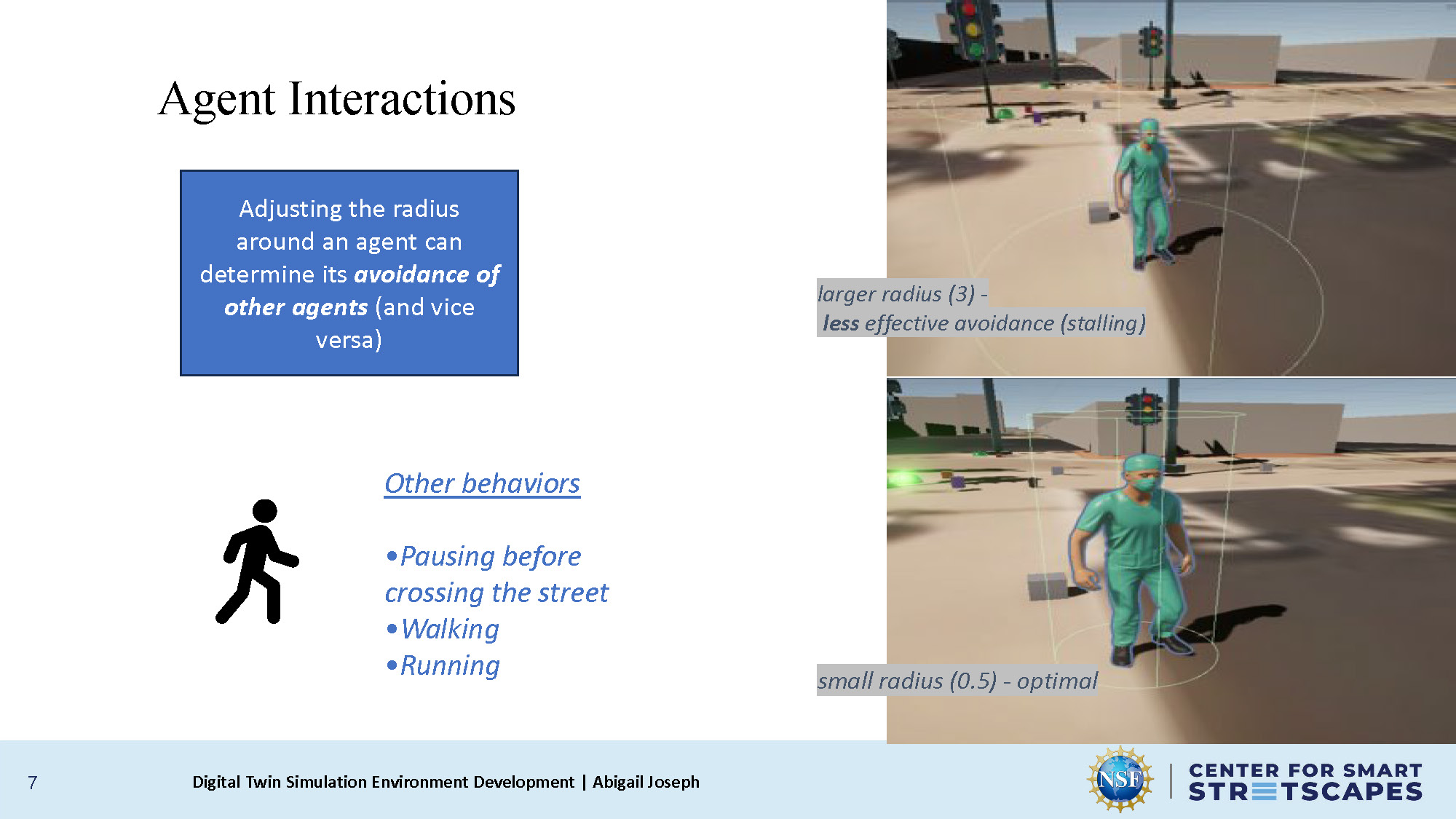
Adjusting the radius around an agent can determine its avoidance of other agents (and vice versa)
Other behaviors
- Pausing before crossing the street
- Walking
- Running
Diagram shows:
- larger radius (3) - less effective avoidance (stalling)
- small radius (0.5) - optimal
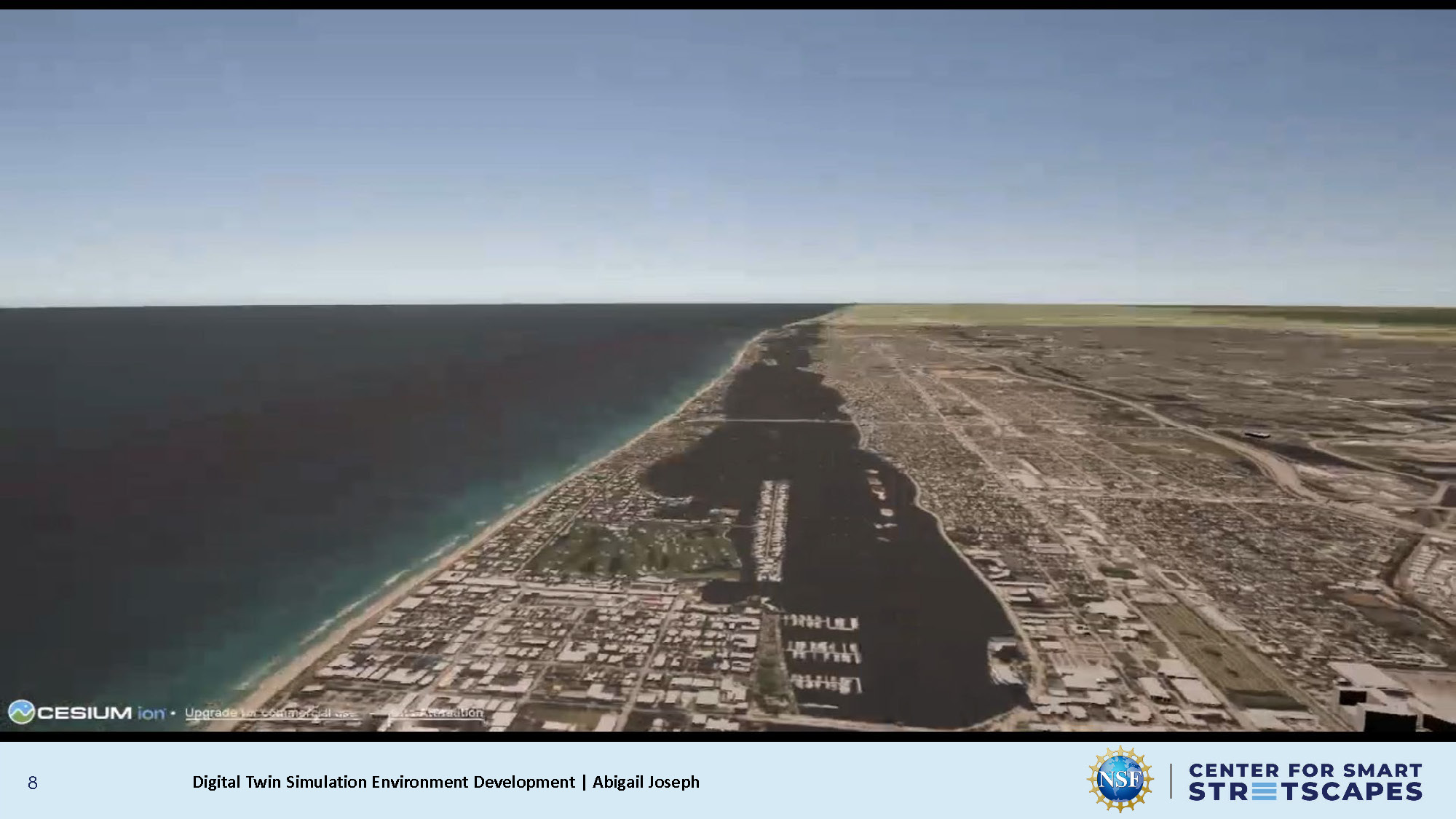
This slide shows a visual demonstration of how agents interact within the simulation environment, displaying their pathfinding and avoidance behaviors in action.
Conclusion
Future Applications
- Pedestrian – vehicle interactions
A more realistic virtual environment
- Crowds/groups of pedestrians on certain days and times (morning, afternoon, evening)
- Detailed sidewalks, trees, etc.
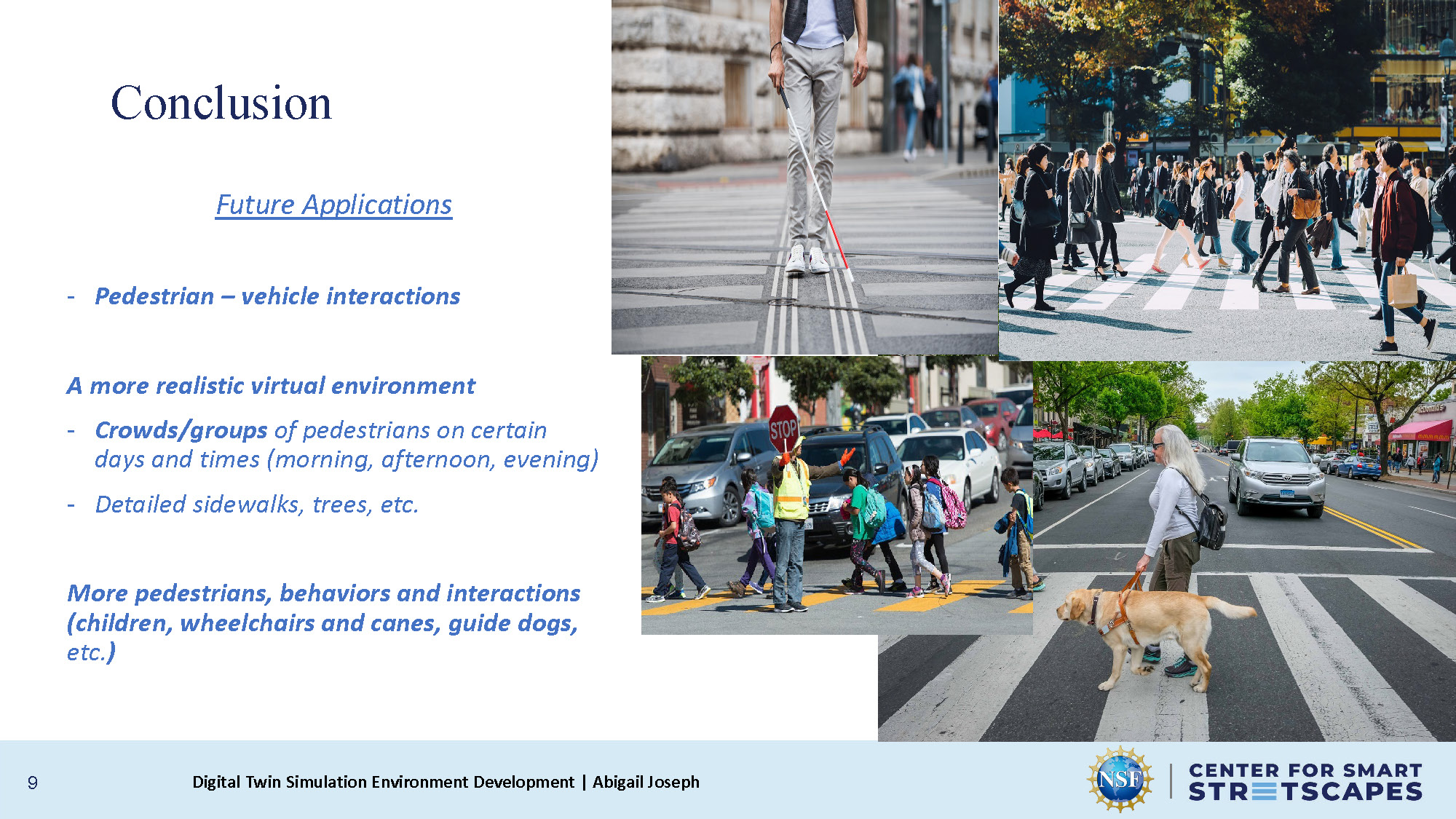
- (children, wheelchairs and canes, guide dogs, etc.)
More pedestrians, behaviors and interactions (children,wheelchairs and canes, guide dogs, etc.)
Questions & Feedback
End of Presentation
Click the right arrow to return to the beginning of the slide show.
For a downloadable version of this presentation, email: I-SENSE@FAU.