Inverse Design of Wave Energy Converter Using Artificial Intelligence
Presented by Christopher Snook
REU Mentor: Dr. Yufei Tang
Methods of Design
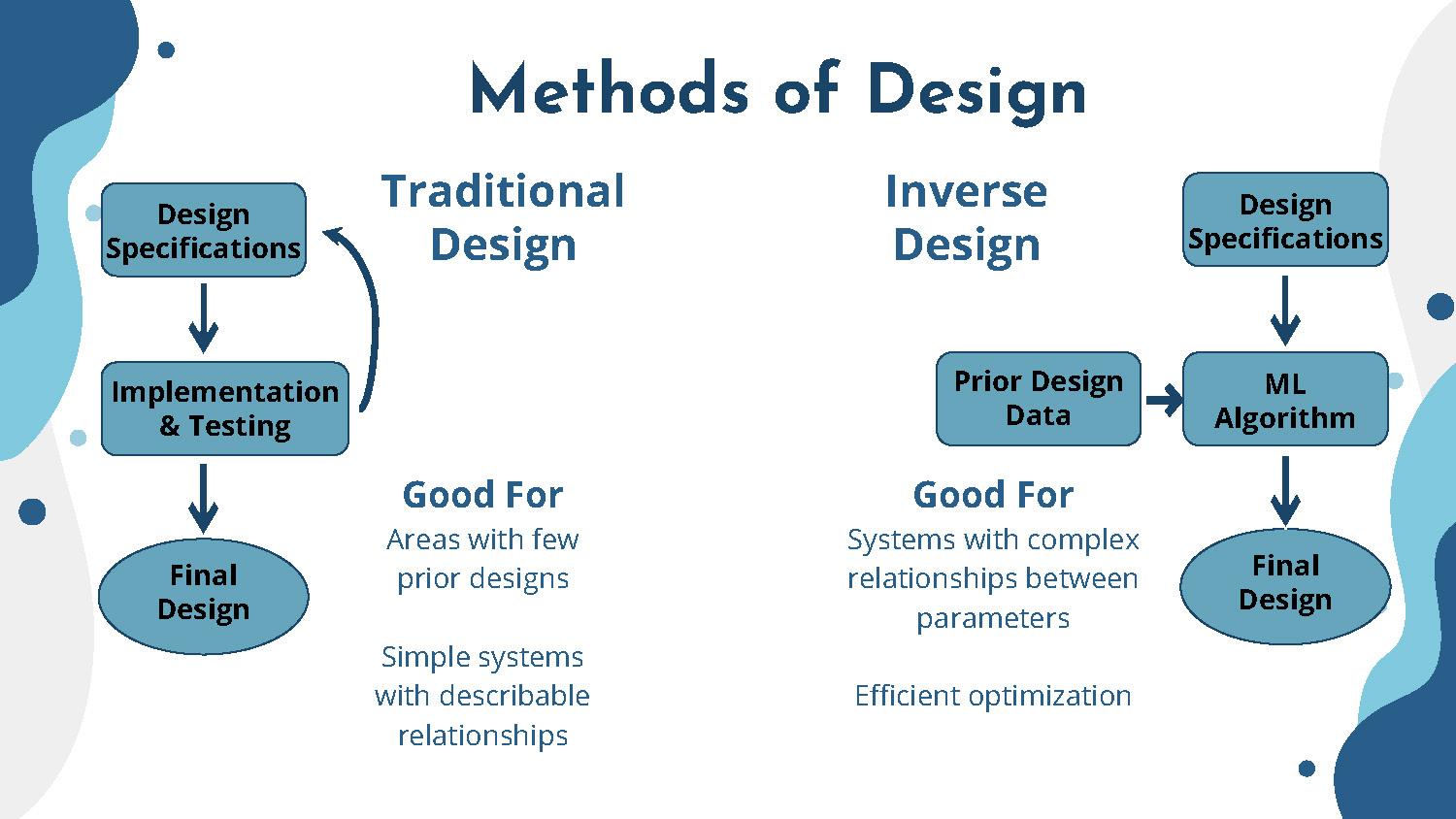
This slide compares two design methodologies:
Traditional Design
Process: Design Specifications → Implementation & Testing → Final Design
Good For:
- Areas with few prior designs
- Simple systems with describable relationships
Inverse Design
Process: Design Specifications → ML Algorithm → Final Design
Uses Prior Design Data
Good For:
- Systems with complex relationships between parameters
- Efficient optimization
Machine Learning Algorithms
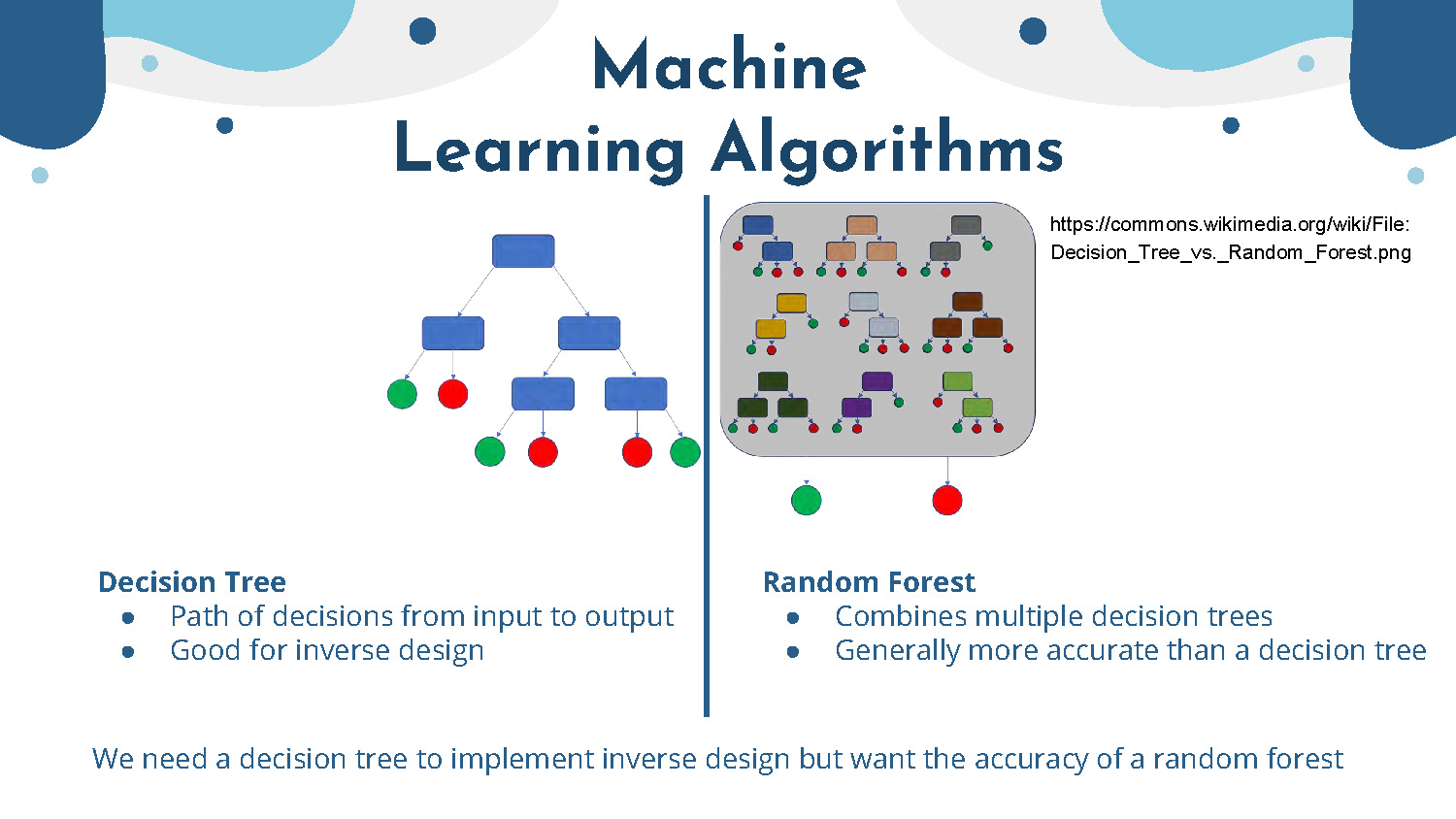
Decision Tree
- Path of decisions from input to output
- Good for inverse design
Random Forest
- Combines multiple decision trees
- Generally more accurate than a decision tree
Challenge: We need a decision tree to implement inverse design but want the accuracy of a random forest
Image reference: Decision Tree vs. Random Forest diagram from Wikimedia Commons
Model Manipulation
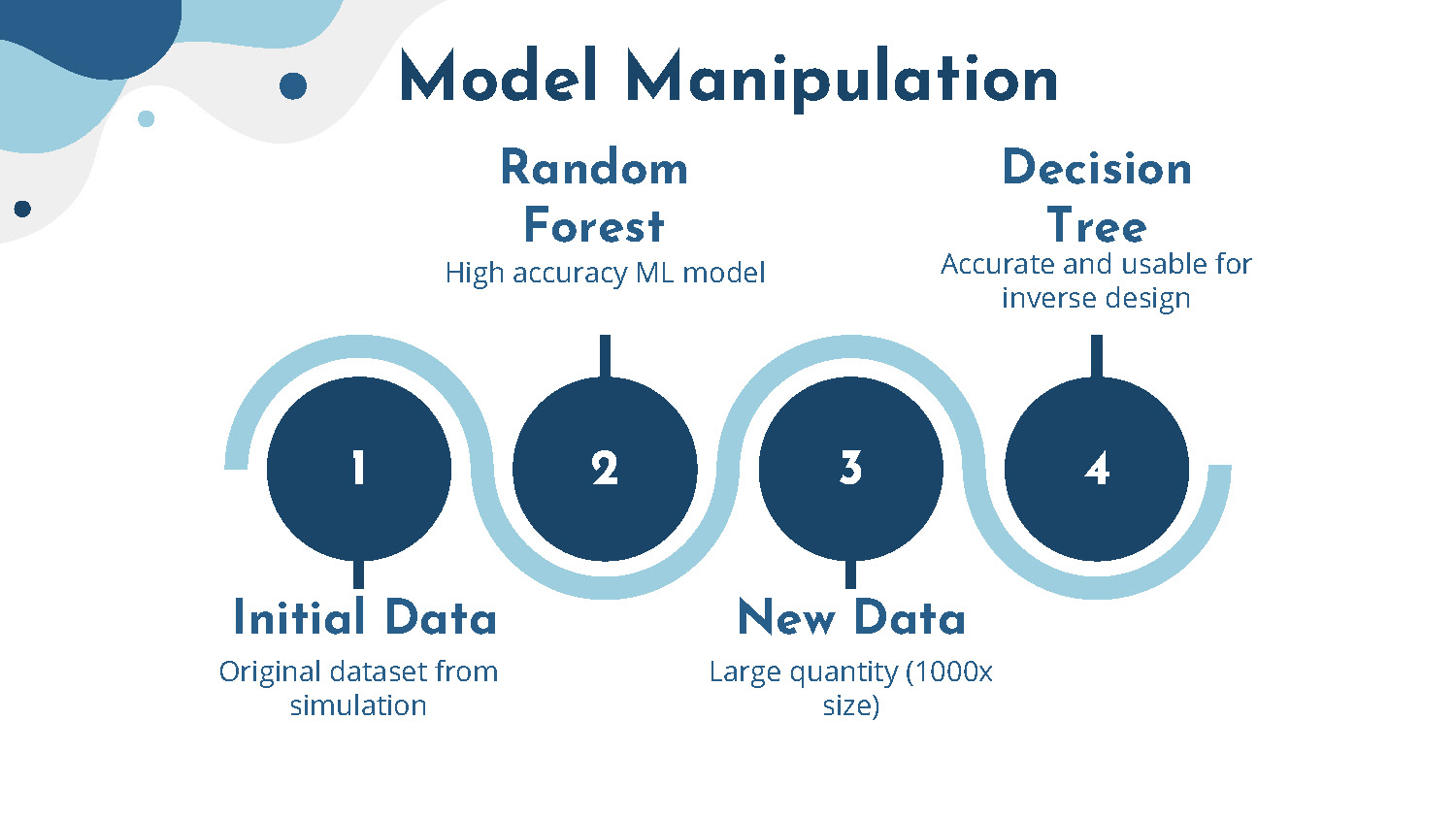
The model manipulation process consists of 4 steps:
Step 1 - Initial Data: Original dataset from simulation
Step 2 - Random Forest: High accuracy ML model
Step 3 - New Data: Large quantity (1000x size)
Step 4 - Decision Tree: Accurate and usable for inverse design
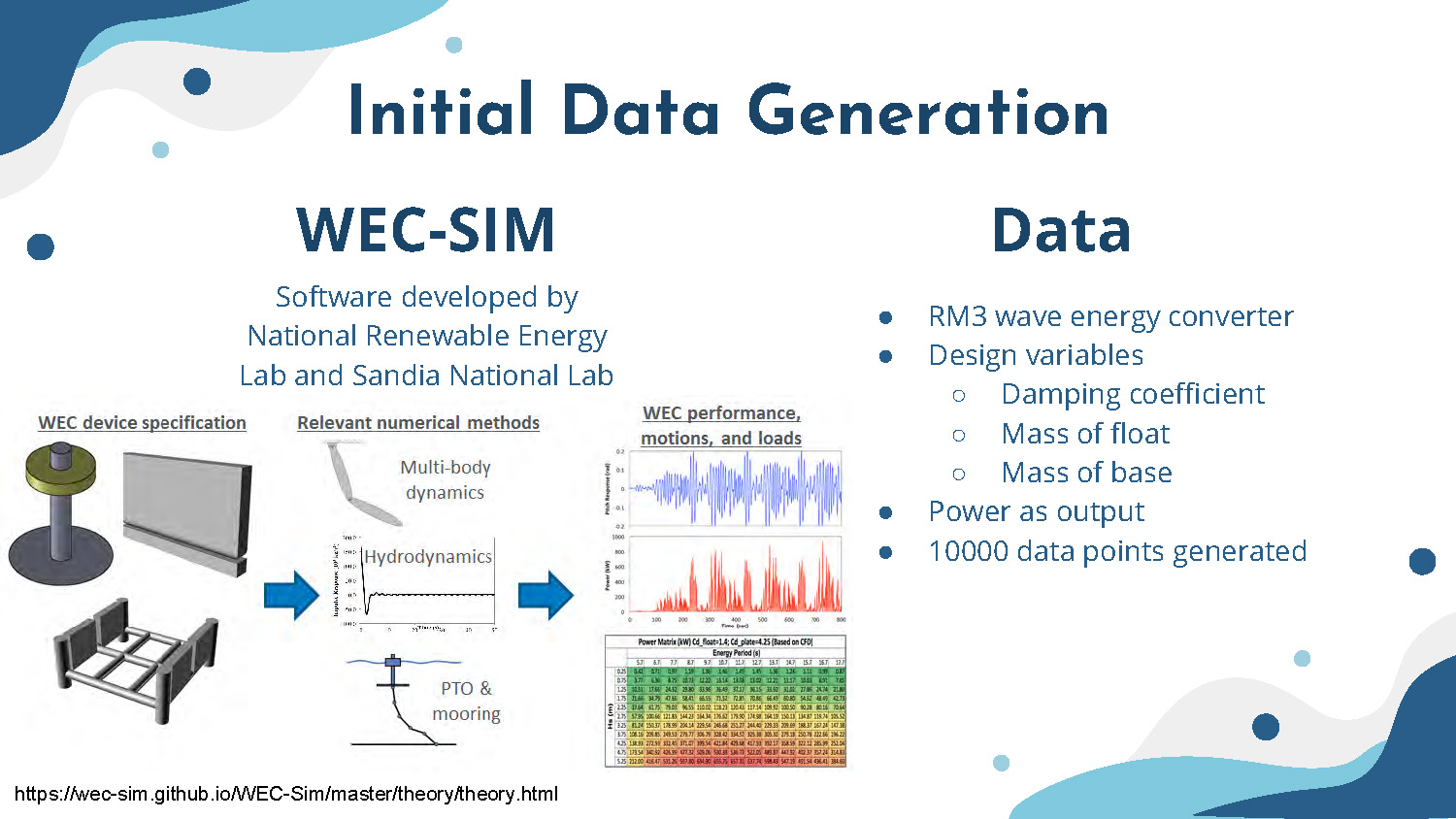
WEC-SIM Initial Data Generation
WEC-SIM is software developed by National Renewable Energy Lab and Sandia National Lab.
Image shows three illustrations of wave energy converter components
Multi-body dynamics
Hydrodynamics
PTO & mooring
Graphs showing performance data and a colored power matrix table
Reference: WEC-Sim theory documentation available at wec-sim.github.io
Data
- RM3 wave energy converter
- Design variables:
- Damping coefficient
- Mass of float
- Mass of base
- Power as output
- 10000 data points generated
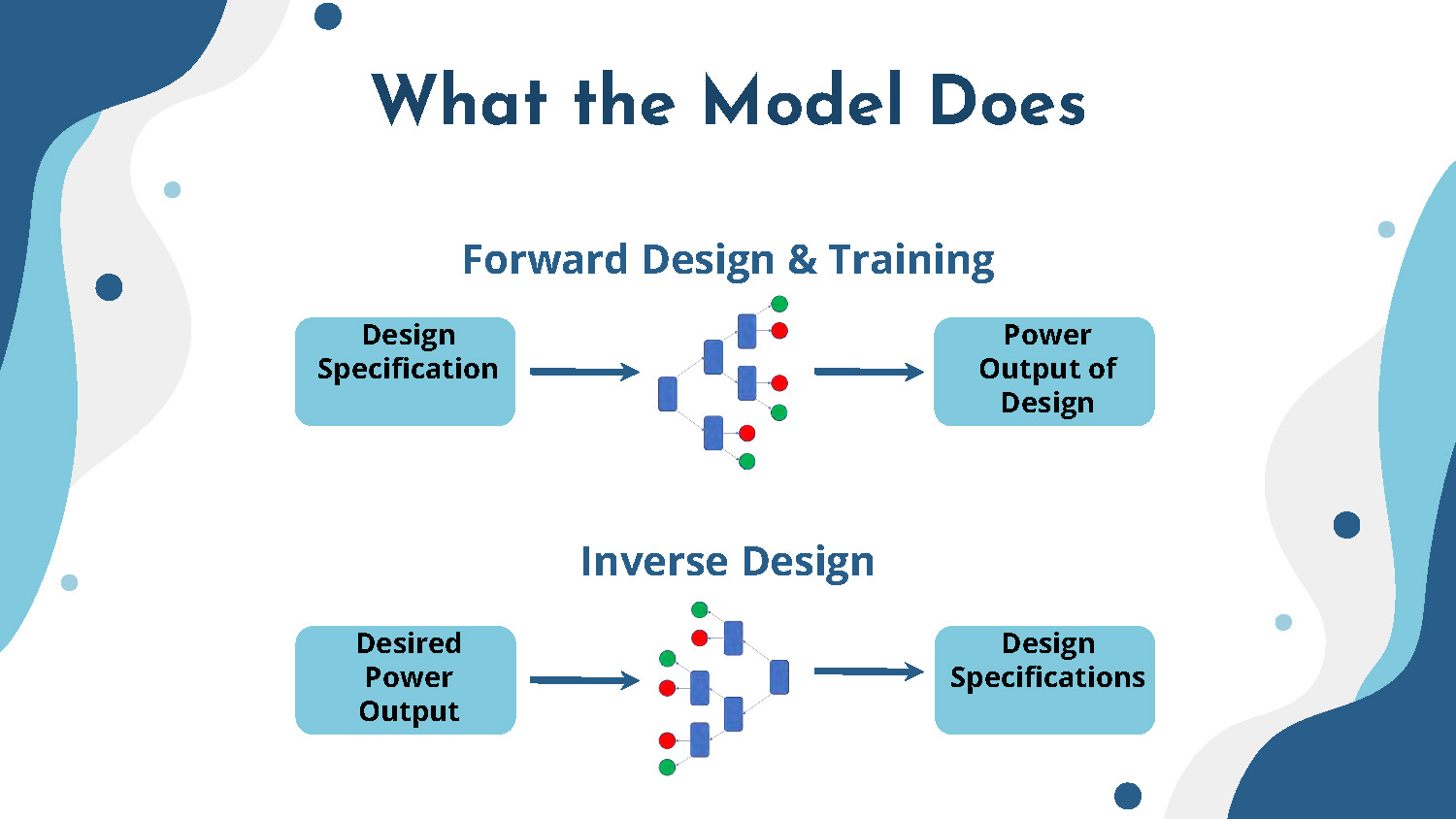
What the Model Does
Forward Design & Training
Design Specifications → Power Output of Design
Inverse Design
Desired Power Output → Design Specification
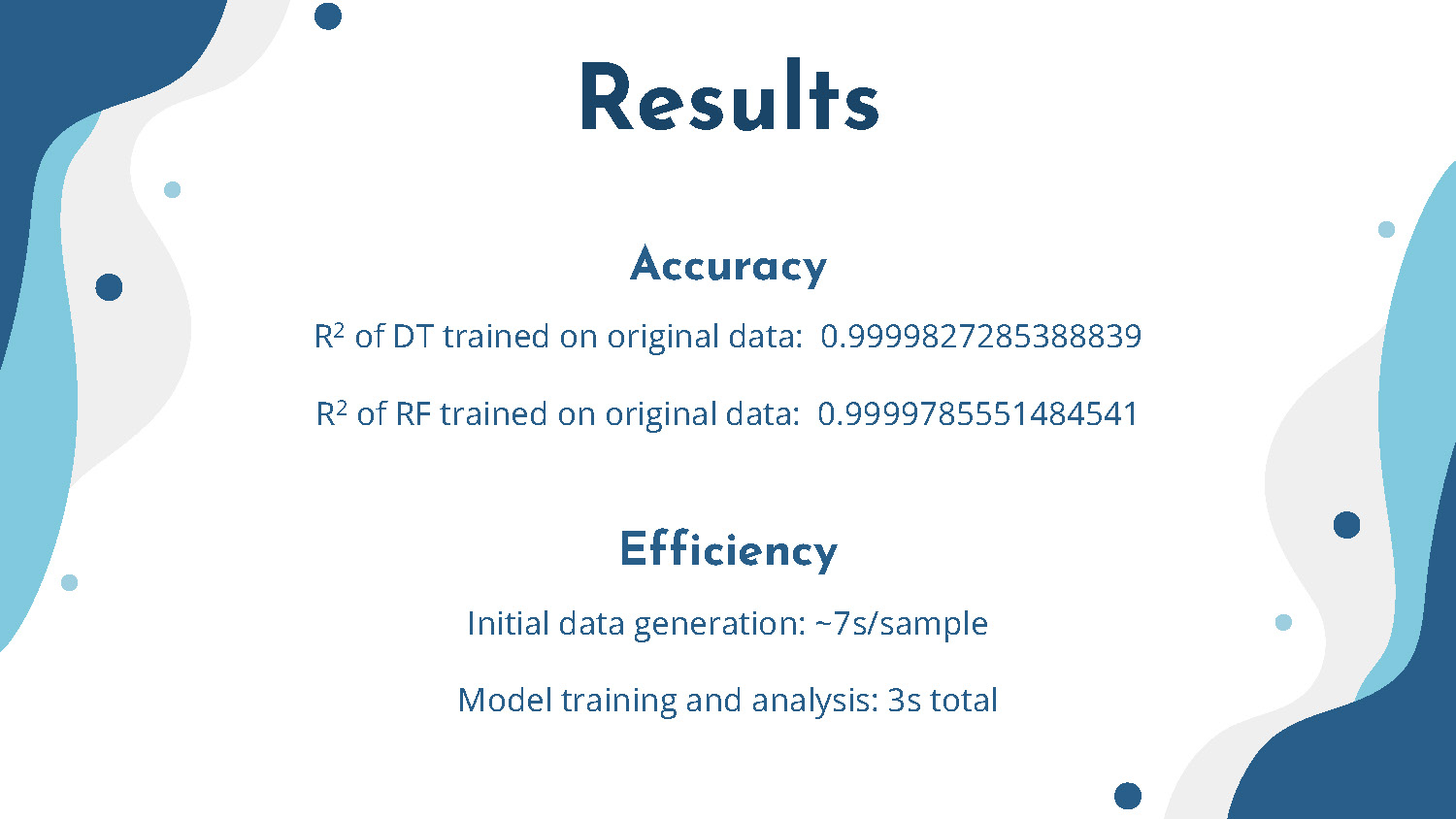
Results
Accuracy
- R² of DT trained on original data: 0.9999827285388839
- R² of RF trained on original data: 0.9999785551484541
Efficiency
- Initial data generation: ~7s/sample
- Model training and analysis: 3s total
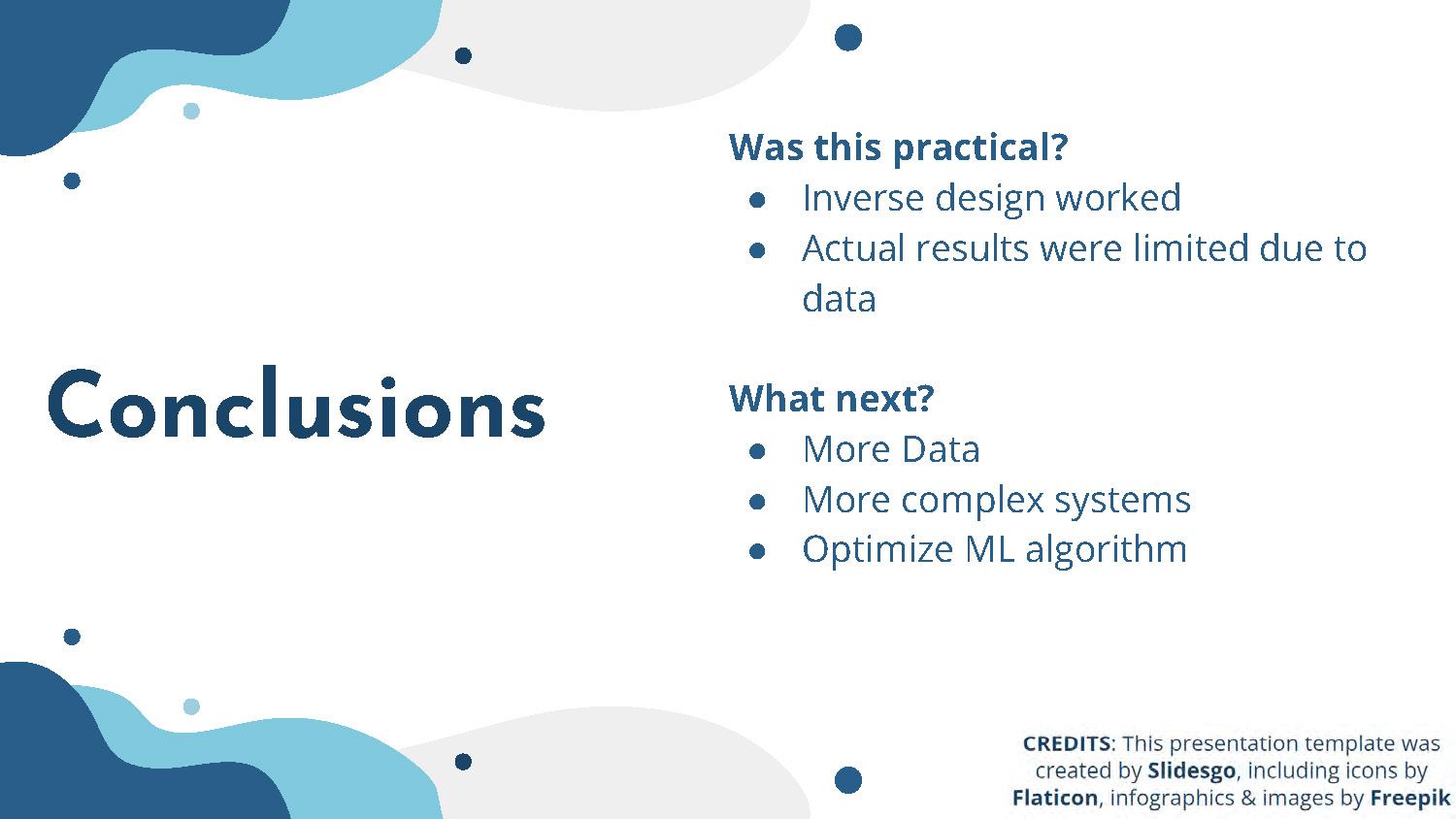
Conclusions
Was this practical?
- Inverse design worked
- Actual results were limited due to data
What next?
- More Data
- More complex systems
- Optimize ML algorithm
End of Presentation
Click the right arrow to return to the beginning of the slide show.
For a downloadable version of this presentation, email: I-SENSE@FAU.