Modeling of an Underwater Inflatable Structure Under Different Environmental Conditions

Advisor: Dr. Bing Ouyang
Team Members:
- Yanjun (Leo) Li
- Shadi Bavar
- Jordan Thomas
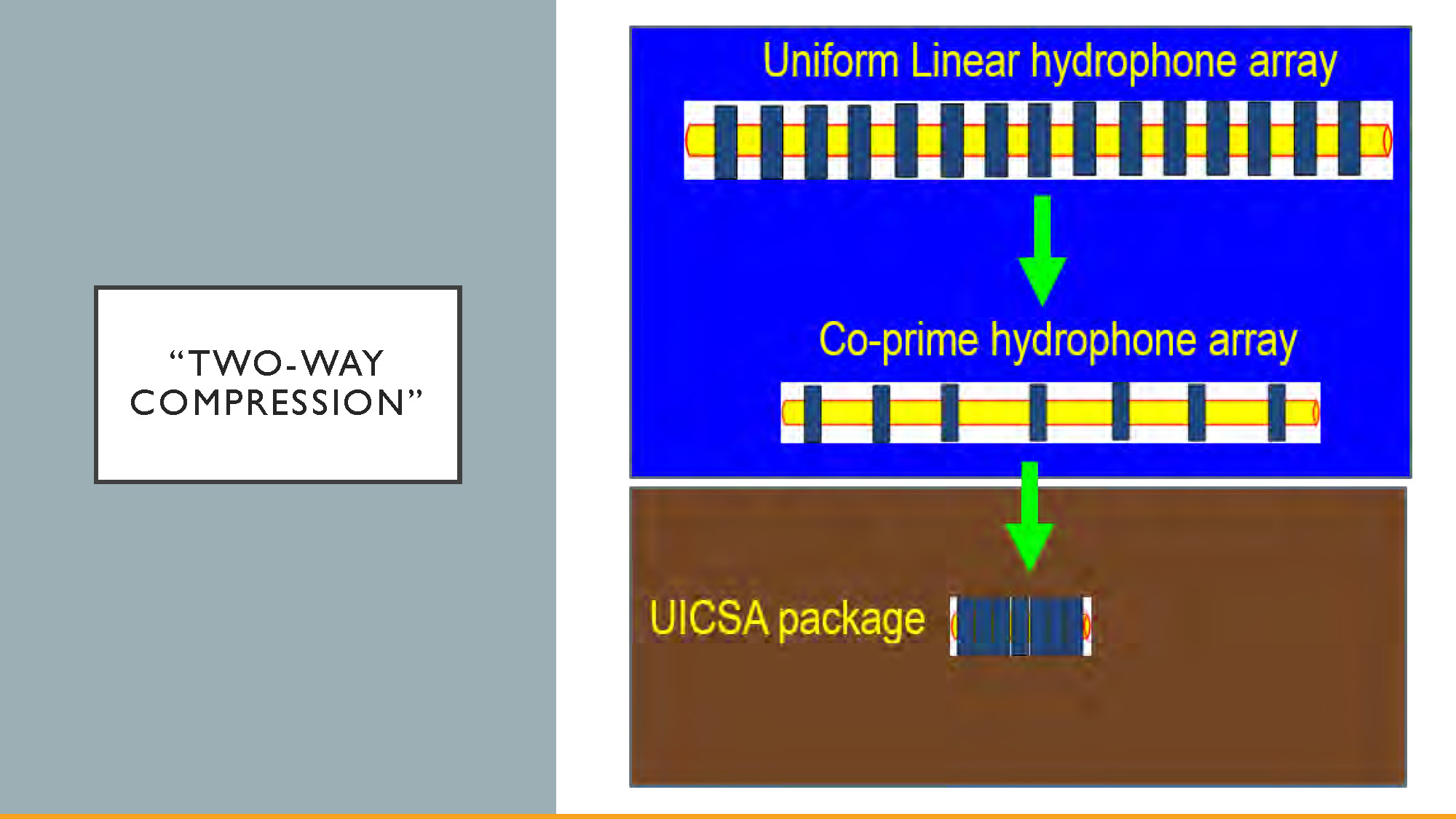
"Two-Way Compression"
This slide illustrates the concept of two-way compression as it applies to underwater inflatable structures. The diagram shows how compression forces act on the inflatable structure from multiple directions, which is a critical consideration for underwater applications where water pressure affects the structure from all sides.
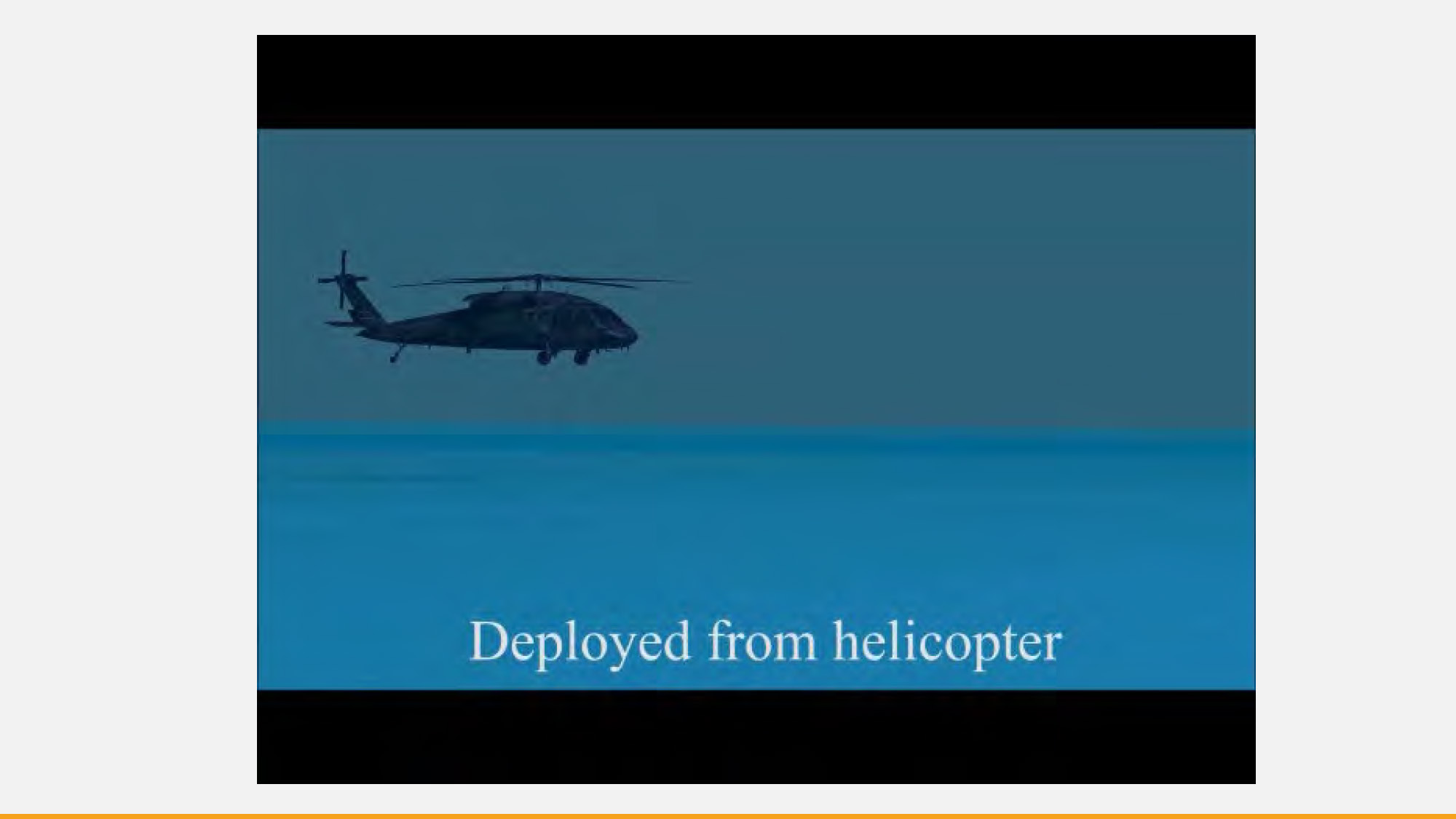
Deployed from helicopter
This slide shows a helicopter flying over water
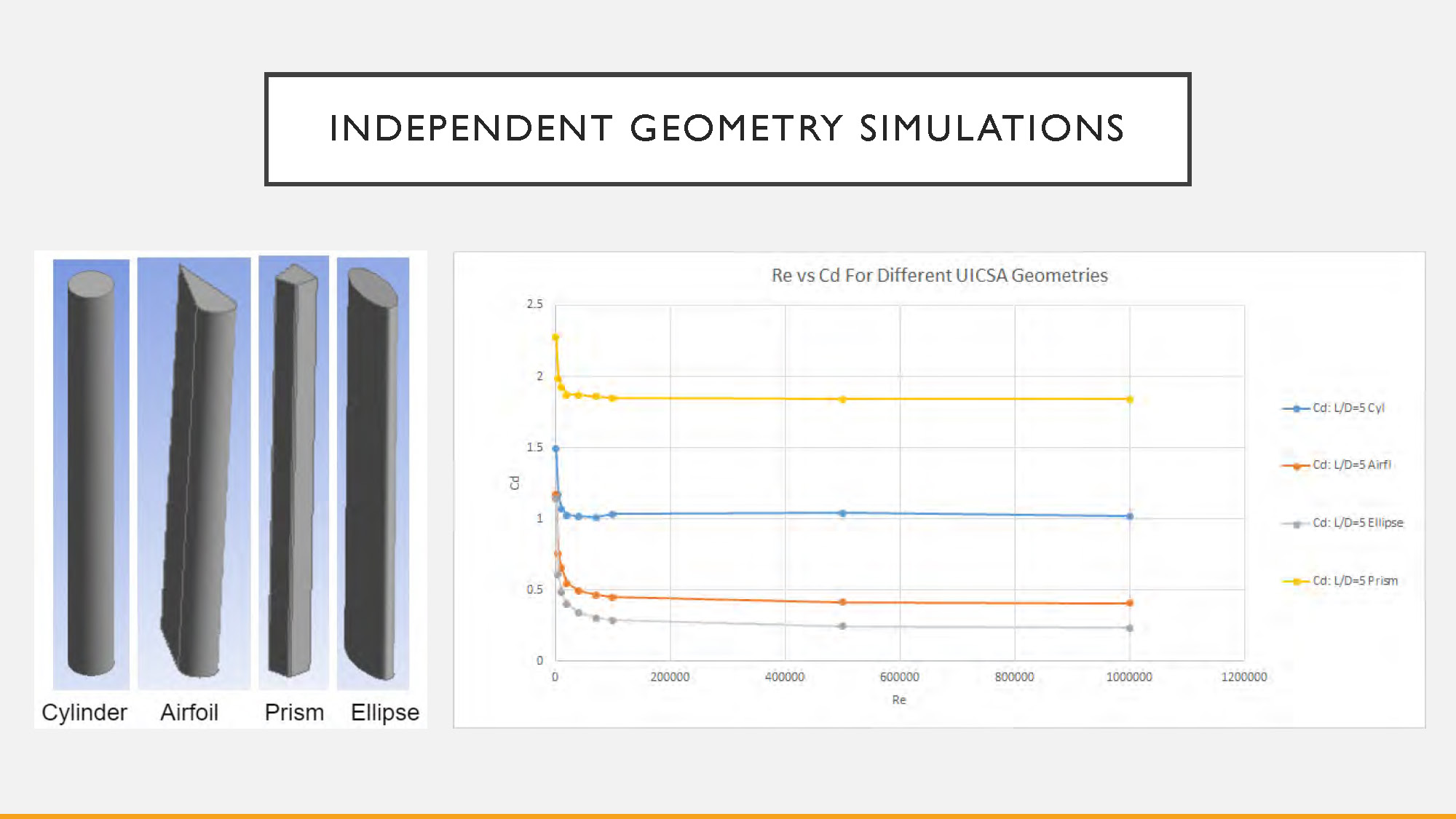
Independent Geometry Simulations
This slide presents various geometric configurations tested through independent simulations. The simulations examine different structural geometries to understand how various shapes and configurations of inflatable structures perform under underwater environmental conditions. Each geometry represents a different approach to optimizing the structure's performance and stability.
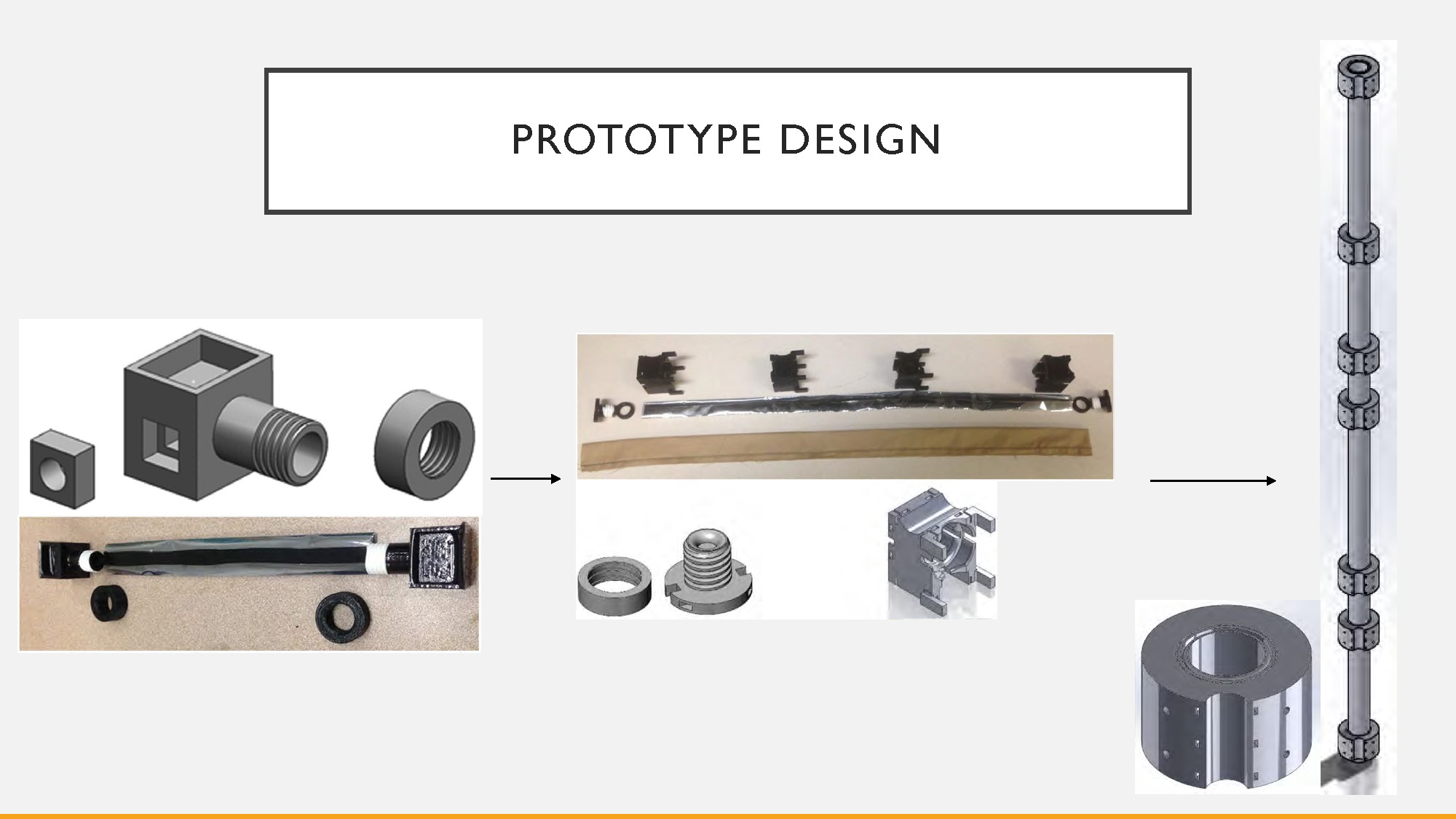
Prototype Design
This slide showcases the physical prototype design developed for the underwater inflatable structure.
References
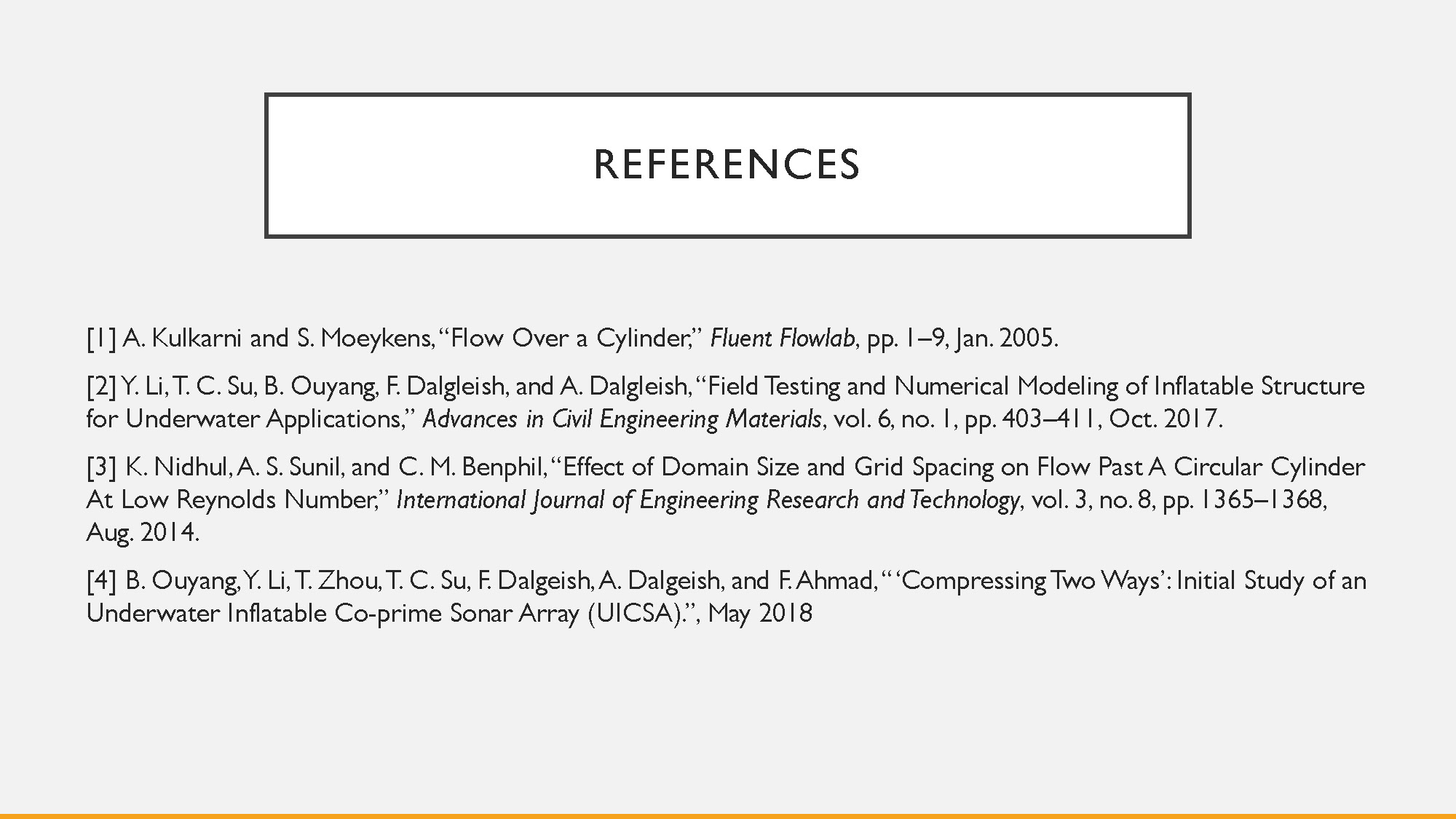
- A. Kulkarni and S. Moeykens, "Flow Over a Cylinder," Fluent Flowlab, pp. 1–9, Jan. 2005.
- Y. Li, T. C. Su, B. Ouyang, F. Dalgleish, and A. Dalgleish, "Field Testing and Numerical Modeling of Inflatable Structure for Underwater Applications," Advances in Civil Engineering Materials, vol. 6, no. 1, pp. 403–411, Oct. 2017.
- K. Nidhul, A. S. Sunil, and C. M. Benphil, "Effect of Domain Size and Grid Spacing on Flow Past A Circular Cylinder At Low Reynolds Number," International Journal of Engineering Research and Technology, vol. 3, no. 8, pp. 1365–1368, Aug. 2014.
- B. Ouyang, Y. Li, T. Zhou, T. C. Su, F. Dalgeish, A. Dalgeish, and F. Ahmad, "'Compressing Two Ways': Initial Study of an Underwater Inflatable Co-prime Sonar Array (UICSA).", May 2018
End of Presentation
Click the right arrow to return to the beginning of the slide show.
For a downloadable version of this presentation, email: I-SENSE@FAU.