Simultaneous Control of Multiple Degrees of Freedom in Upper-Limb Prosthesis
Simultaneous Control of Multiple Degrees of Freedom in Upper-Limb Prosthesis
Presented by Michael Bornstein & Dr. Engeberg
Michael Bornstein
- Attending FAU
- Senior in Mechanical Engineering
- Participating in a REU hosted by I-SENSE
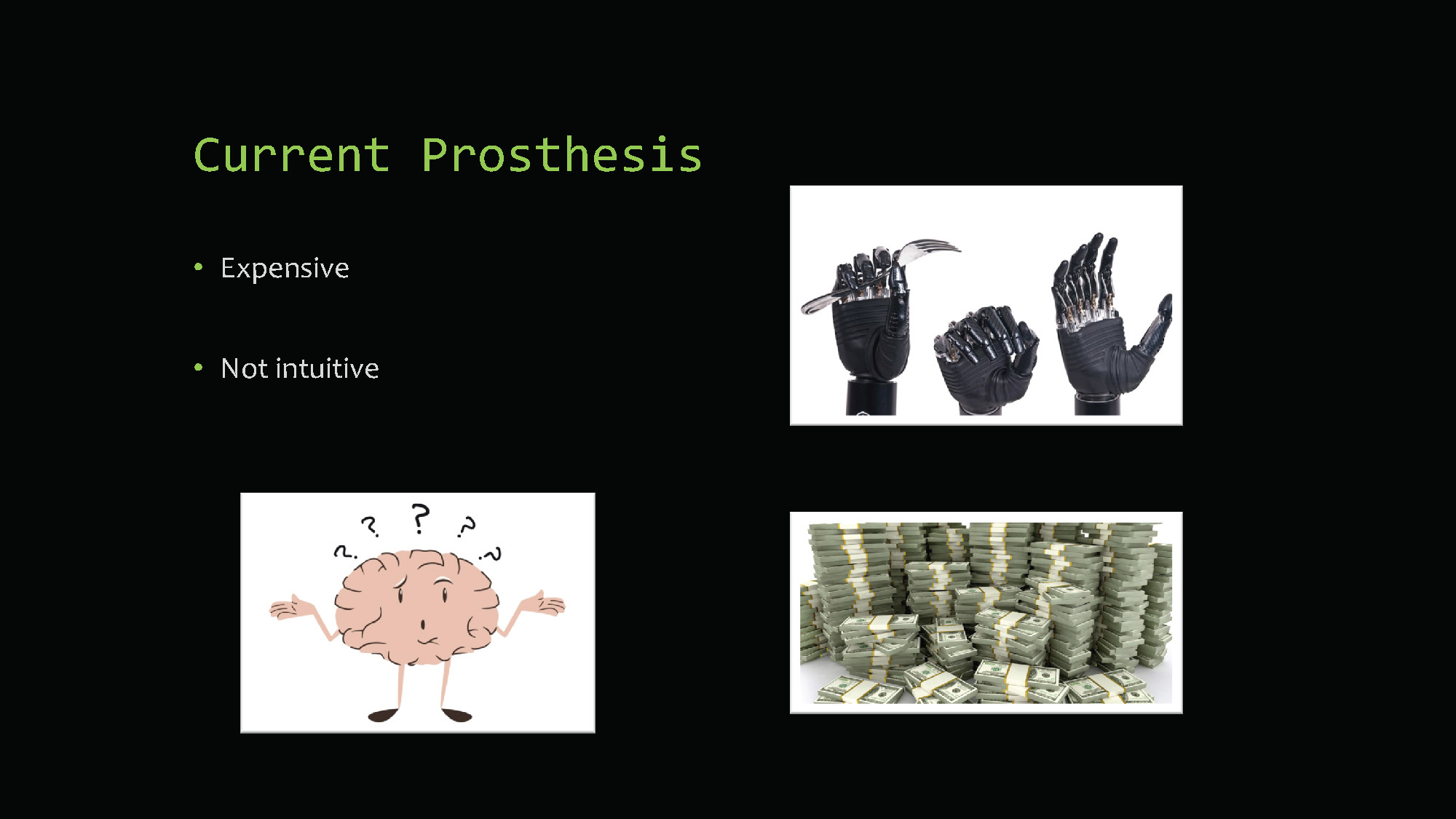
Current Prosthesis
- Expensive
- Not intuitive
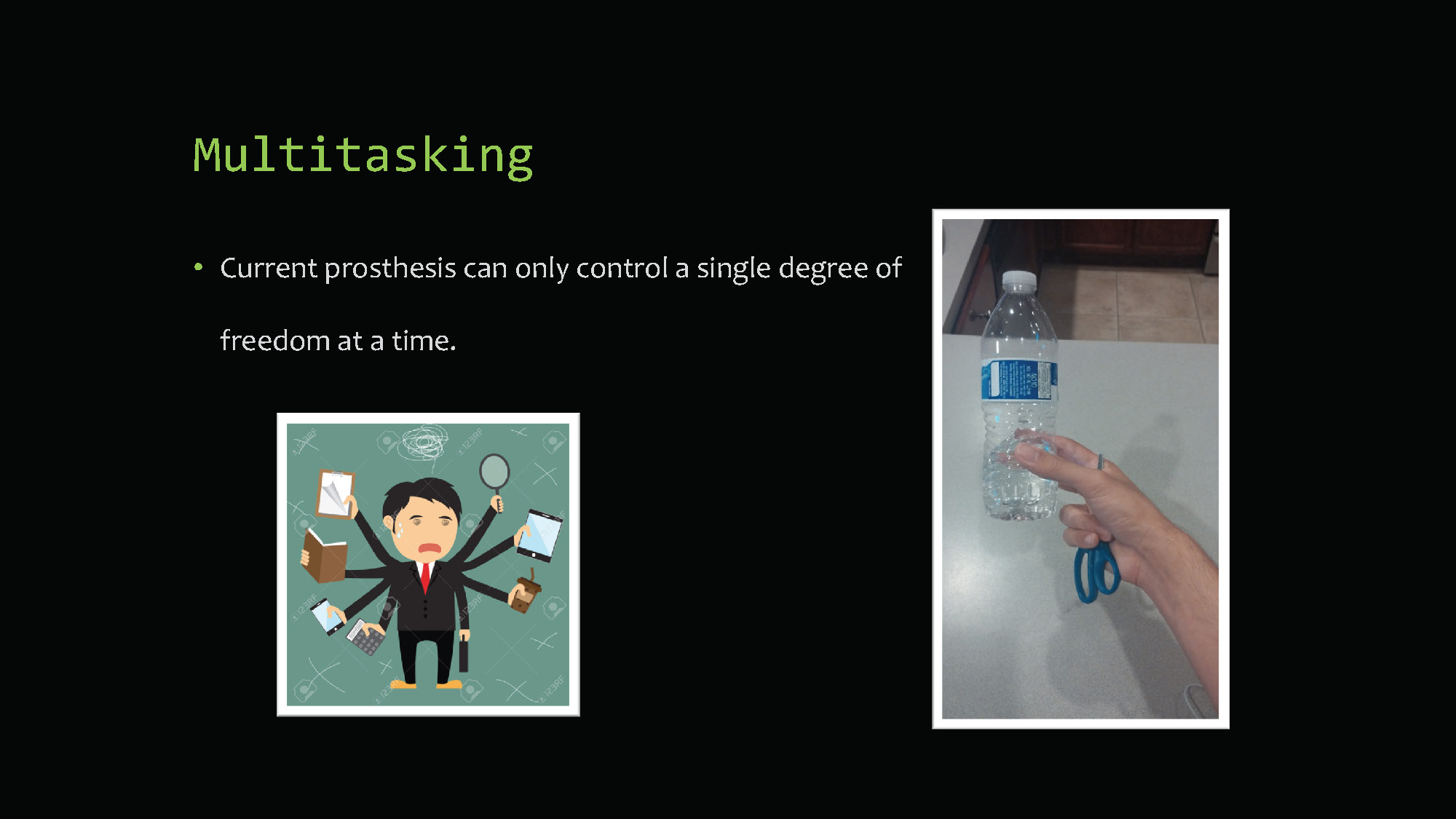
Multitasking
Current prosthesis can only control a single degree of freedom at a time.
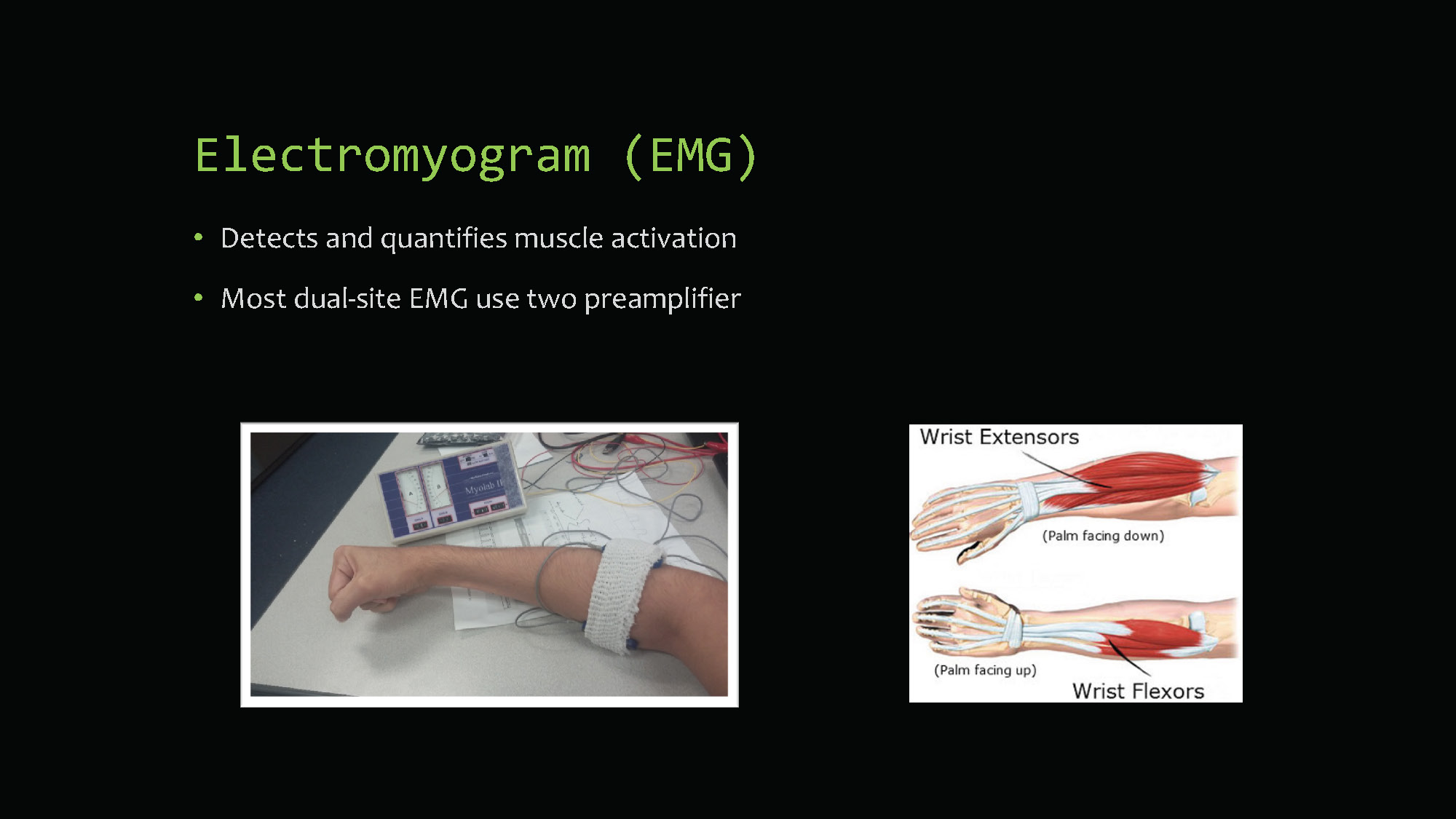
Electromyogram (EMG)
- Detects and quantifies muscle activation
- Most dual-site EMG use two preamplifier
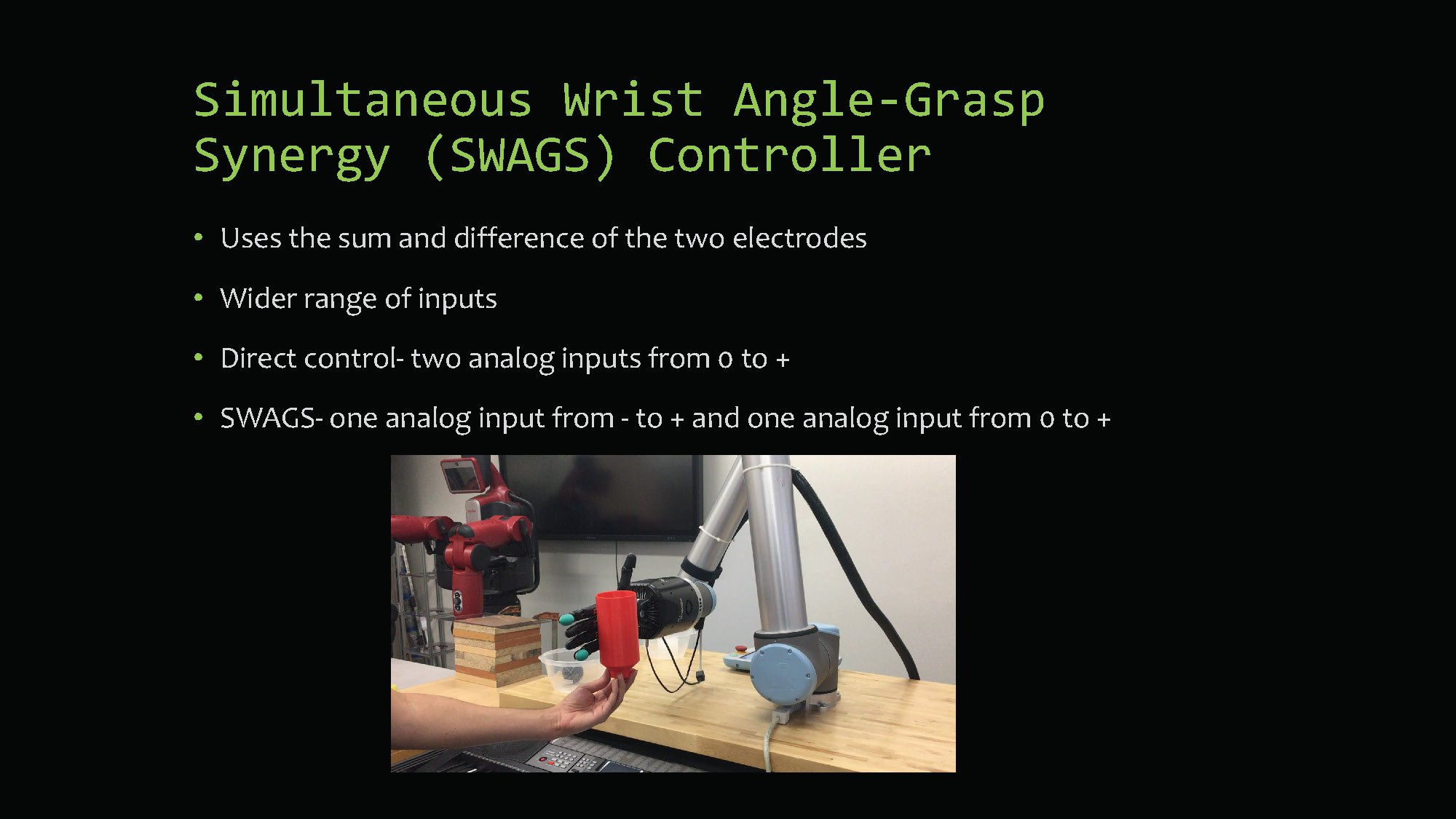
Simultaneous Wrist Angle-Grasp Synergy (SWAGS) Controller
- Uses the sum and difference of the two electrodes
- Wider range of inputs
- Direct control- two analog inputs from 0 to +
- SWAGS- one analog input from - to + and one analog input from 0 to +
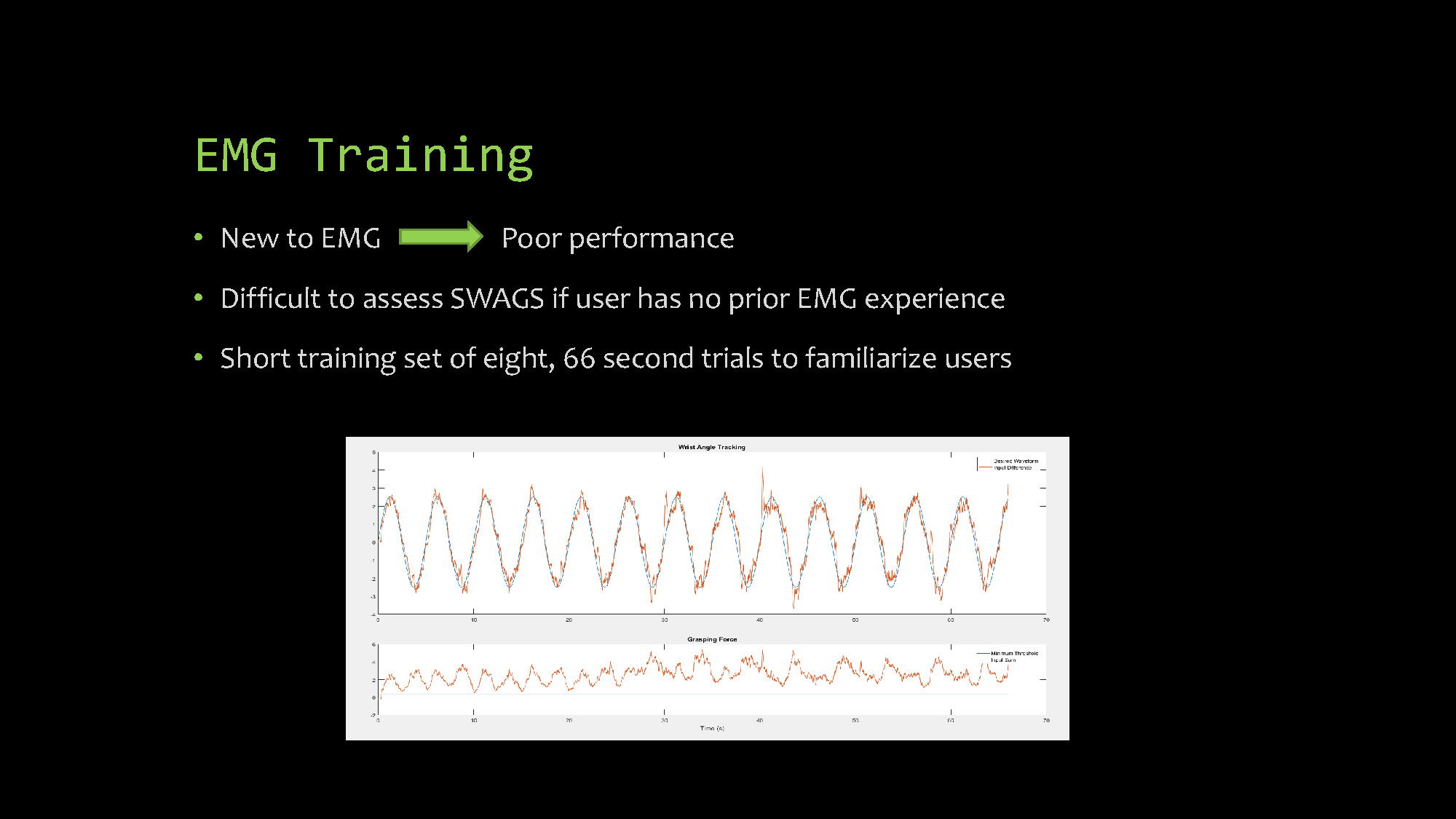
EMG Training
- New to EMG Poor performance
- Difficult to assess SWAGS if user has no prior EMG experience
- Short training set of eight, 66 second trials to familiarize users
Graph labeled Wrist Angle Tracking and Grasping Force
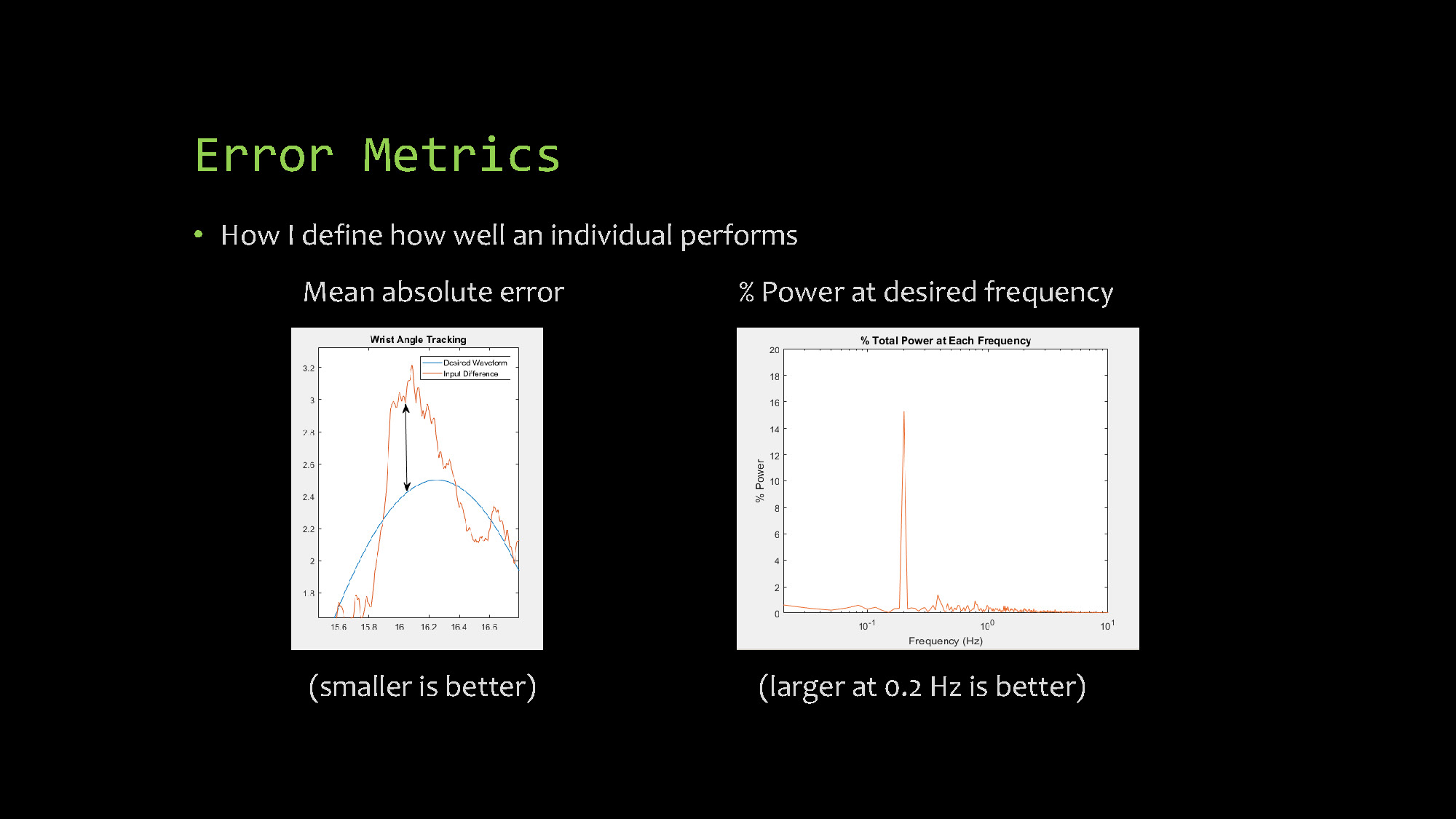
Error Metrics
How I define how well an individual performs
Left: Mean absolute error (smaller is better) with graph showing desired waveform and input difference
Right: % Power at desired frequency (larger at 0.2 Hz is better) with graph showing % power and frequency (Hz)
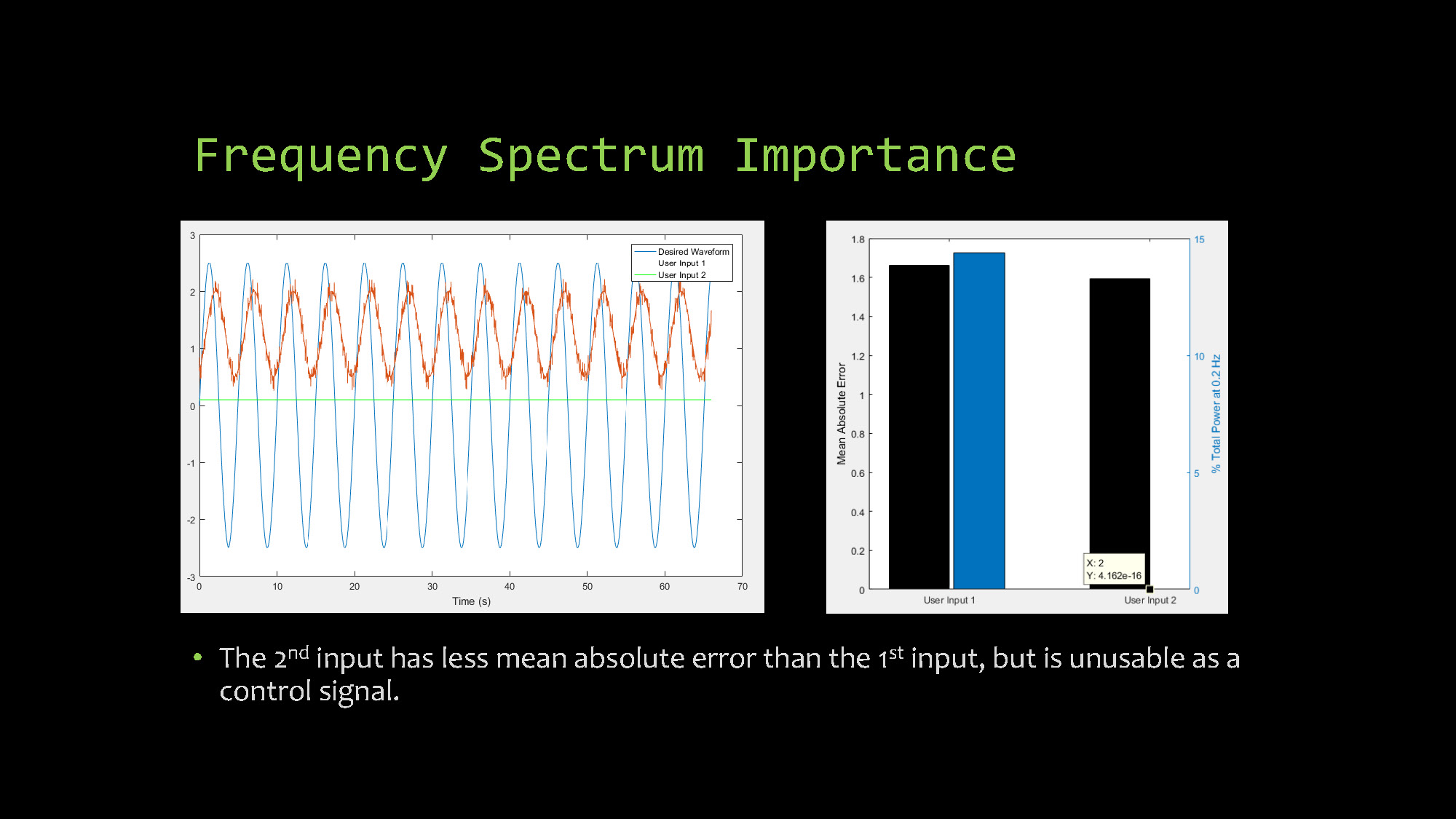
Frequency Spectrum Importance
Left: graph showing desired waveform, user input 1 and user input 2
Right: bar graph showing Mean absolute error for user input 1 and 2; total power at 0.2 Hz
The 2nd input has less mean absolute error than the 1st input, but is unusable as a control signal.
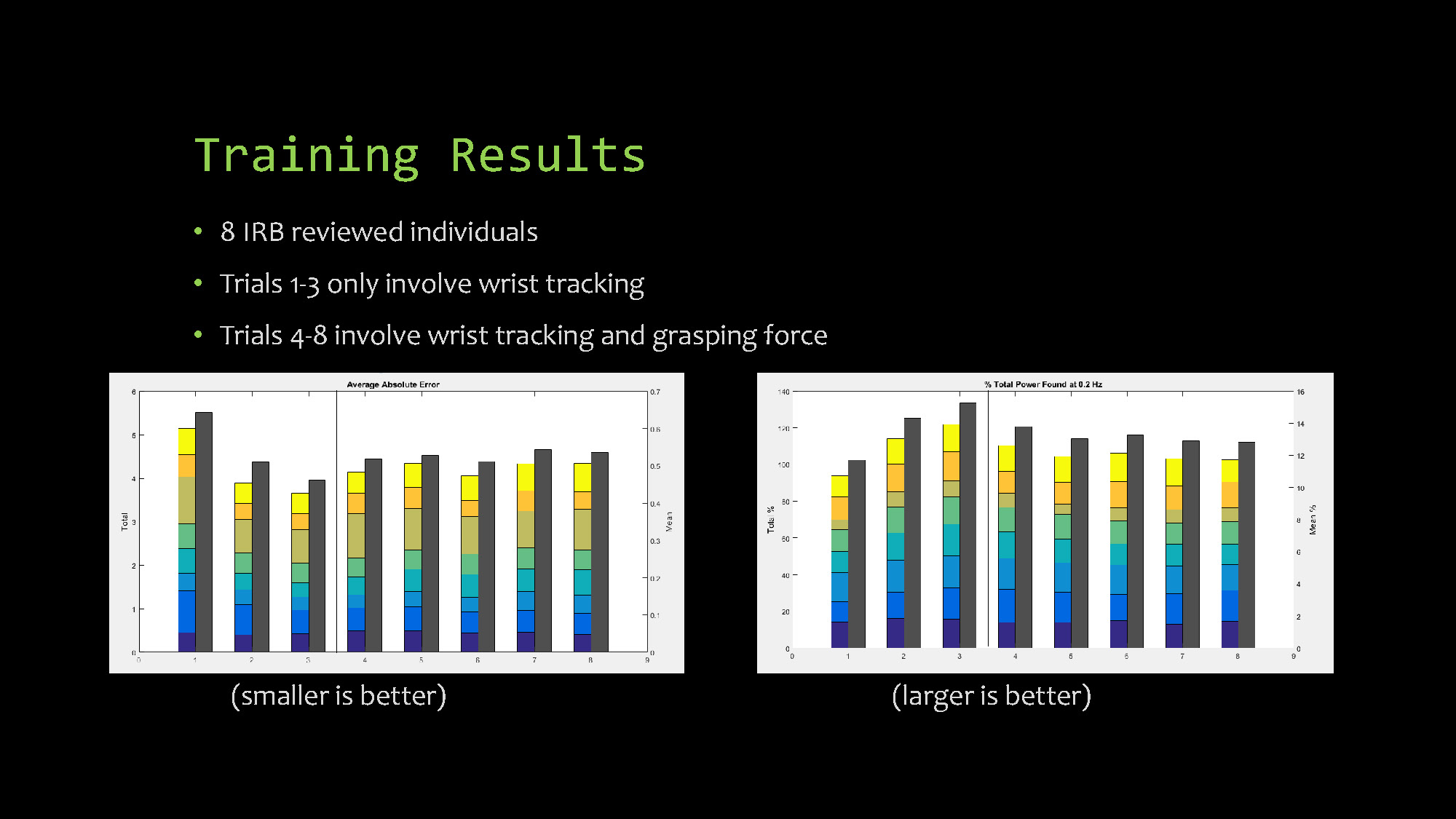
Training Results
- 8 IRB reviewed individuals
- Trials 1-3 only involve wrist tracking
- Trials 4-8 involve wrist tracking and grasping force
Left: Bar graph labeled Average Absolute Error; (smaller is better)
Right: Bar graph labeled % Total Power Found at 0.2 Hz; (larger is better)
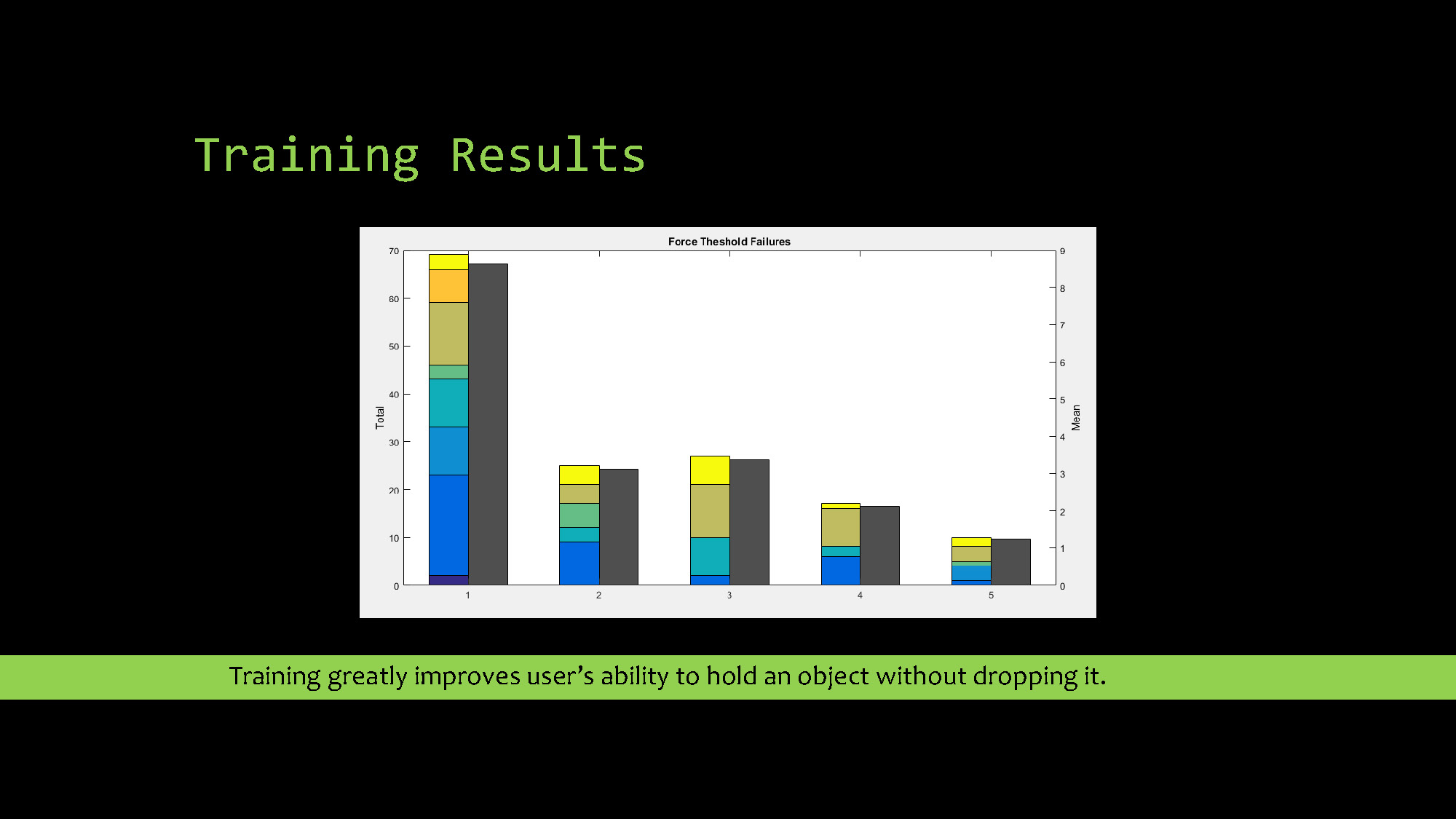
Training Results
Bar chart labeled Force Threshold FAilures (total and mean)
Training greatly improves user's ability to hold an object without dropping it.
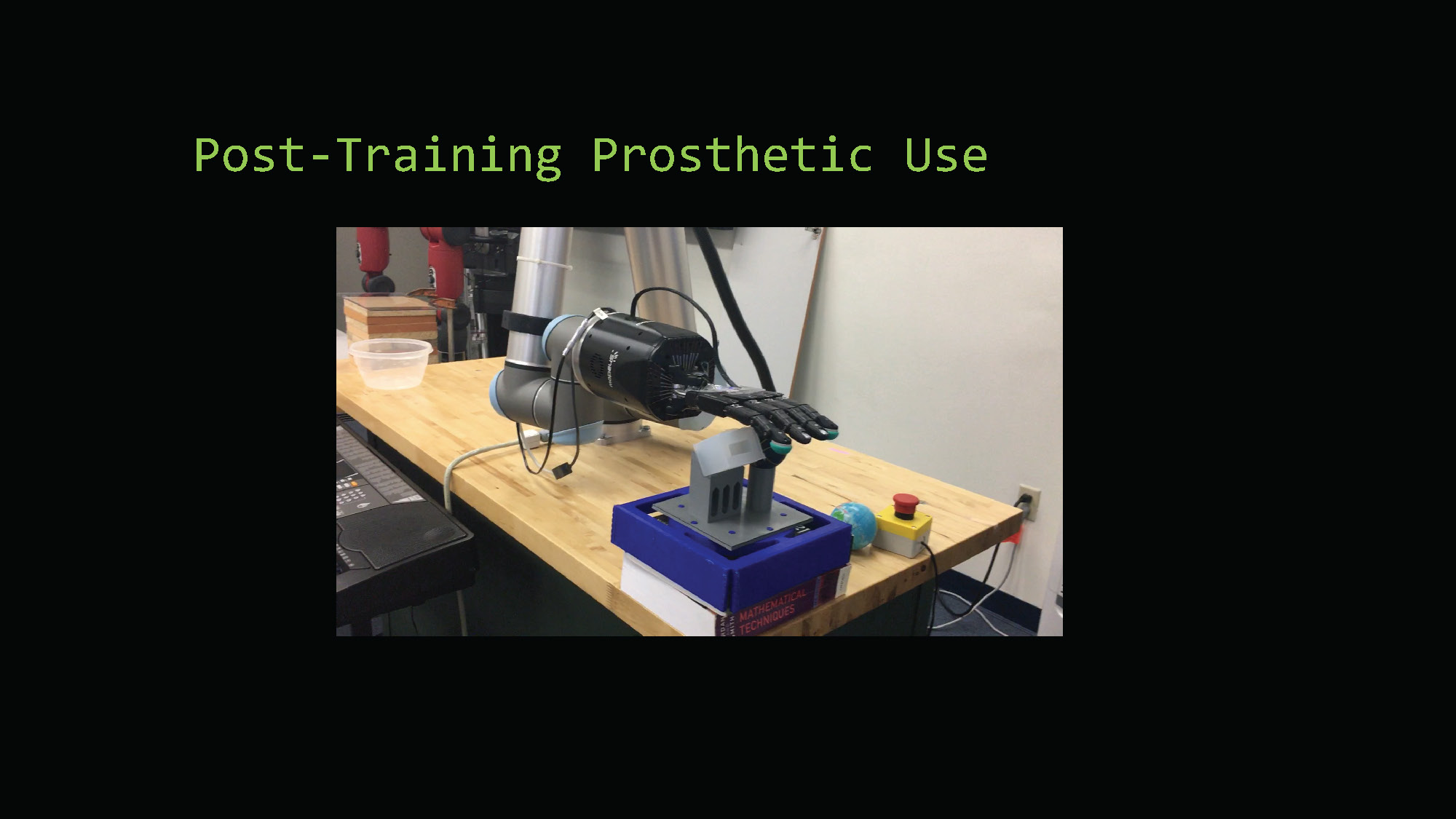
Post-Training Prosthetic Use
Image of prosthetic hand in lab setting
Conclusion
- SWAGS has the potential to be a computationally inexpensive EMG control scheme that allows simultaneous control of 2 degrees of freedom.
- Most people will not be able to use EMG effectively without any prior training.
- A short training regimen greatly improves user ability.
Future Work
- Completion of artificial neural network to determine direction of slip
- Completion of haptic feedback mechanism to alert user of slip
Questions?
End of Presentation
Click the right arrow to return to the beginning of the slide show.
For a downloadable version of this presentation, email: I-SENSE@FAU.