3D to 2D Human Heart Transformation
3D to 2D Human Heart Transformation
Kelly Nguyen

KELLY NGUYEN
- Biotechnology, Design and Society Major
- I-SENSE REU
- Conducting research under Dr. Ghoraani
ATRIAL FIBRILLATION
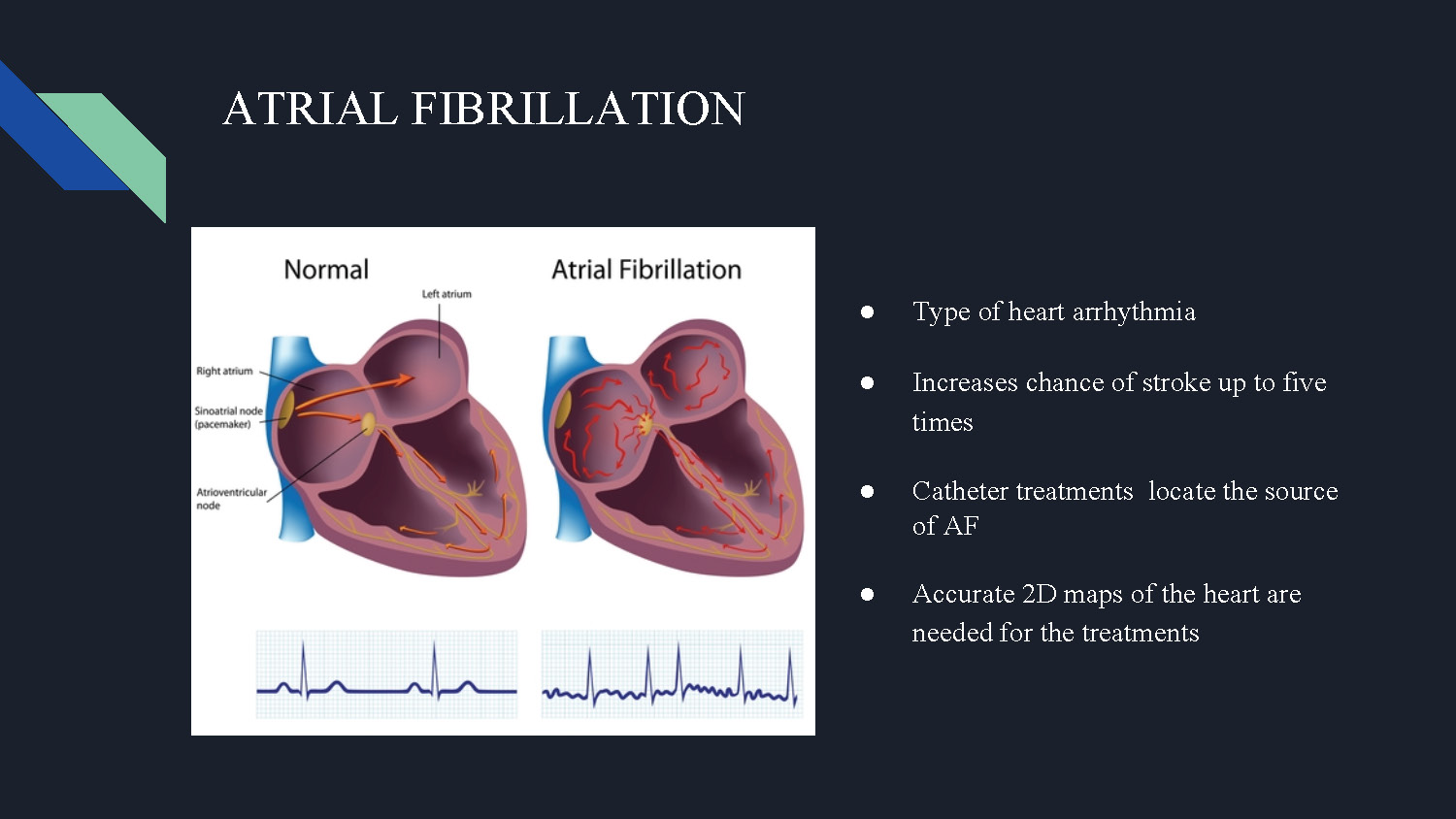
- Type of heart arrhythmia
- Increases chance of stroke up to five times
- Catheter treatments locate the source of AF
- Accurate 2D maps of the heart are needed for the treatments
TRANSFORMATION PROCESS
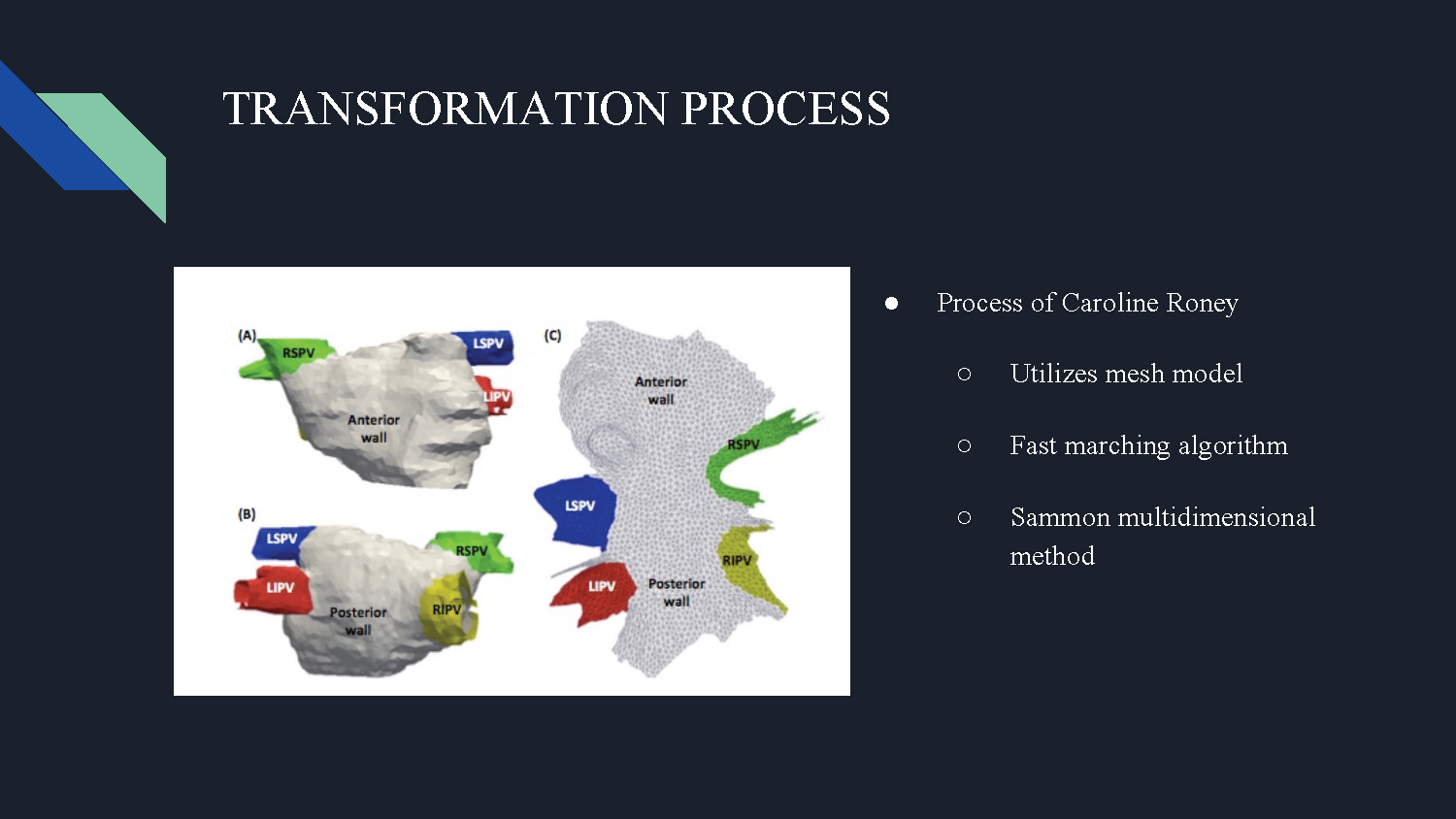
Process of Caroline Roney
- Utilizes mesh model
- Fast marching algorithm
- Sammon multidimensional method
OUR PROCESS
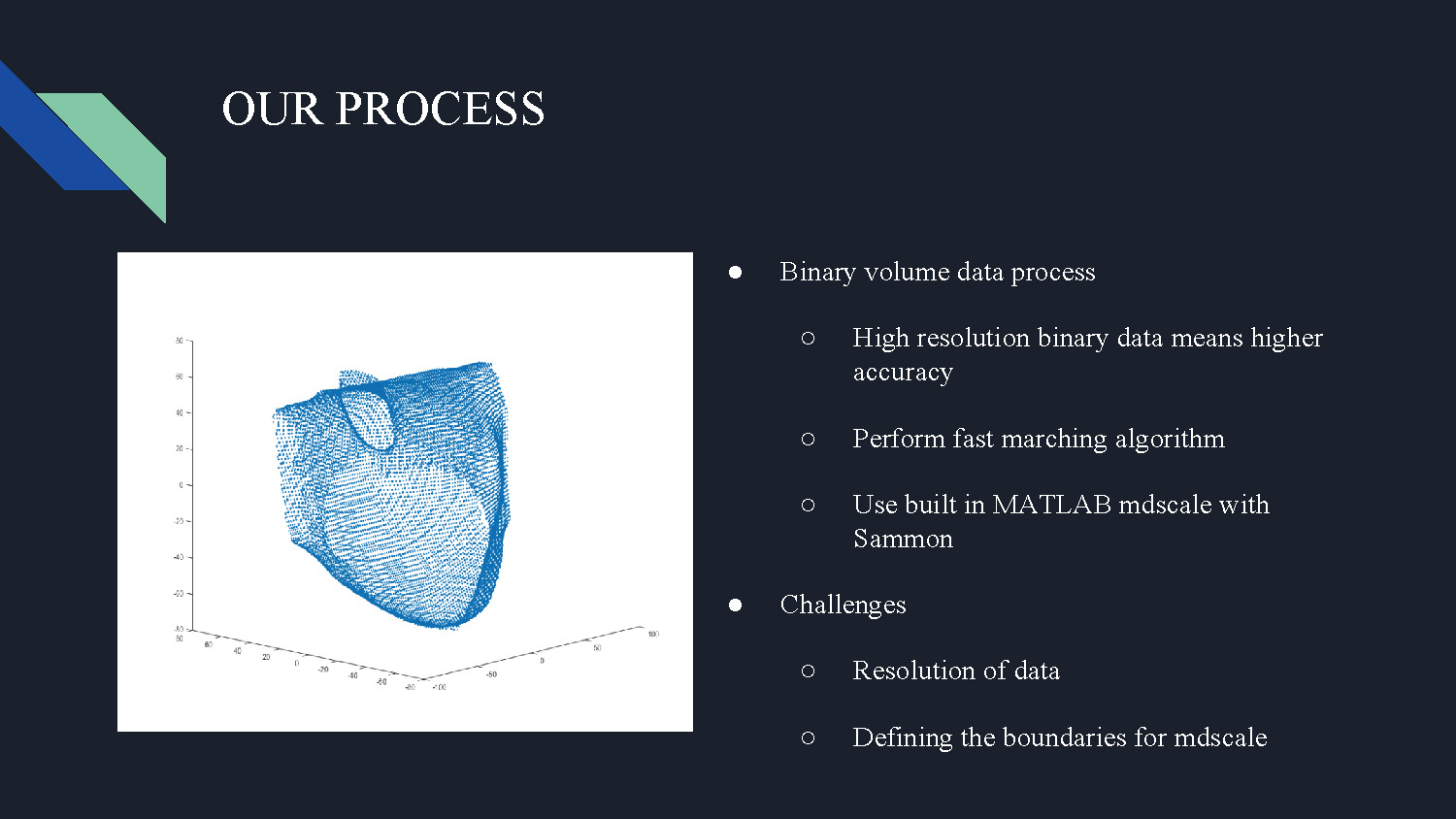
Binary volume data process
- High resolution binary data means higher accuracy
- Perform fast marching algorithm
- Use built in MATLAB mdscale with Sammon
Challenges
- Resolution of data
- Defining the boundaries for mdscale
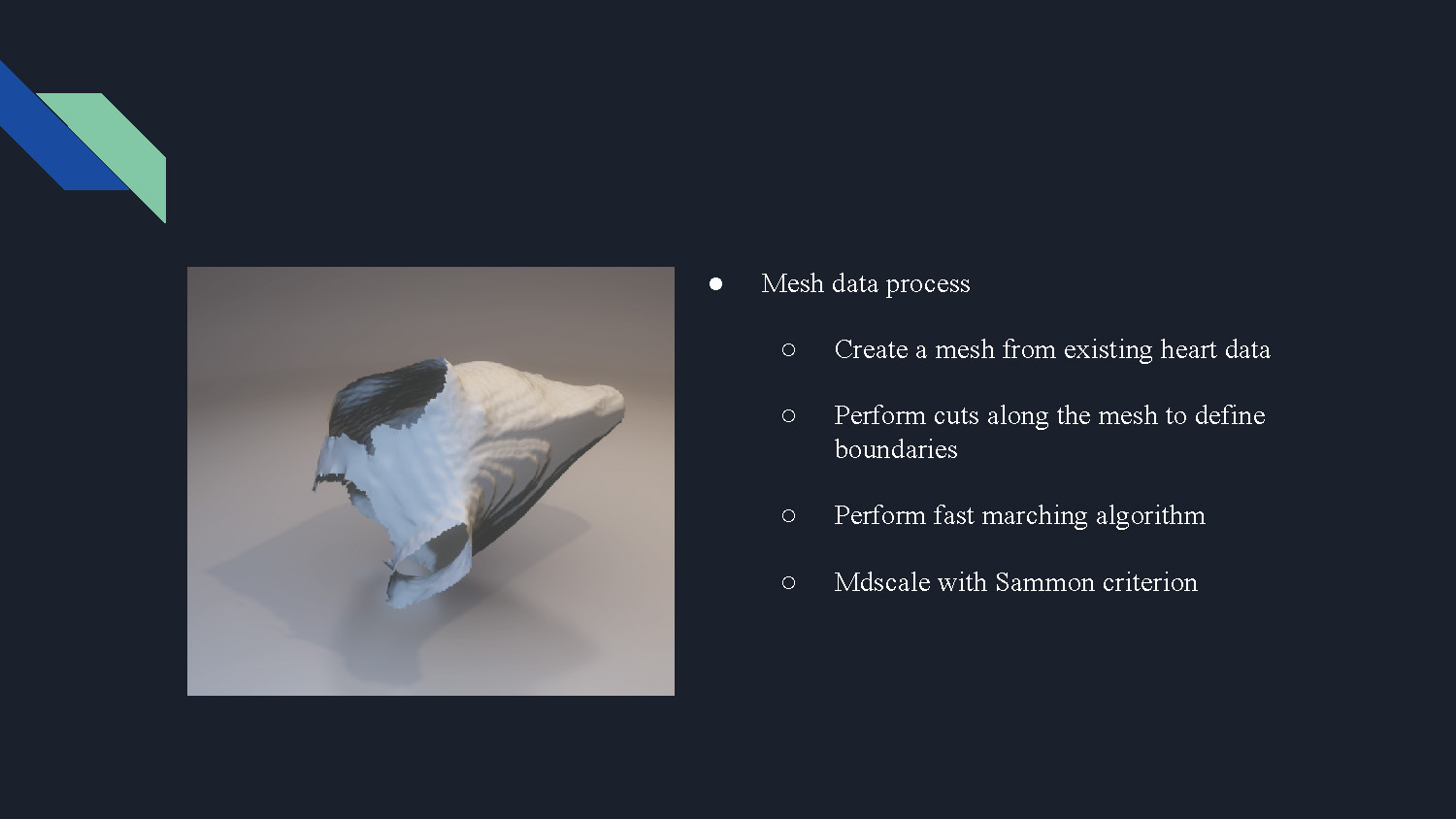
Mesh data process
- Create a mesh from existing heart data
- Perform cuts along the mesh to define boundaries
- Perform fast marching algorithm
- Mdscale with Sammon criterion
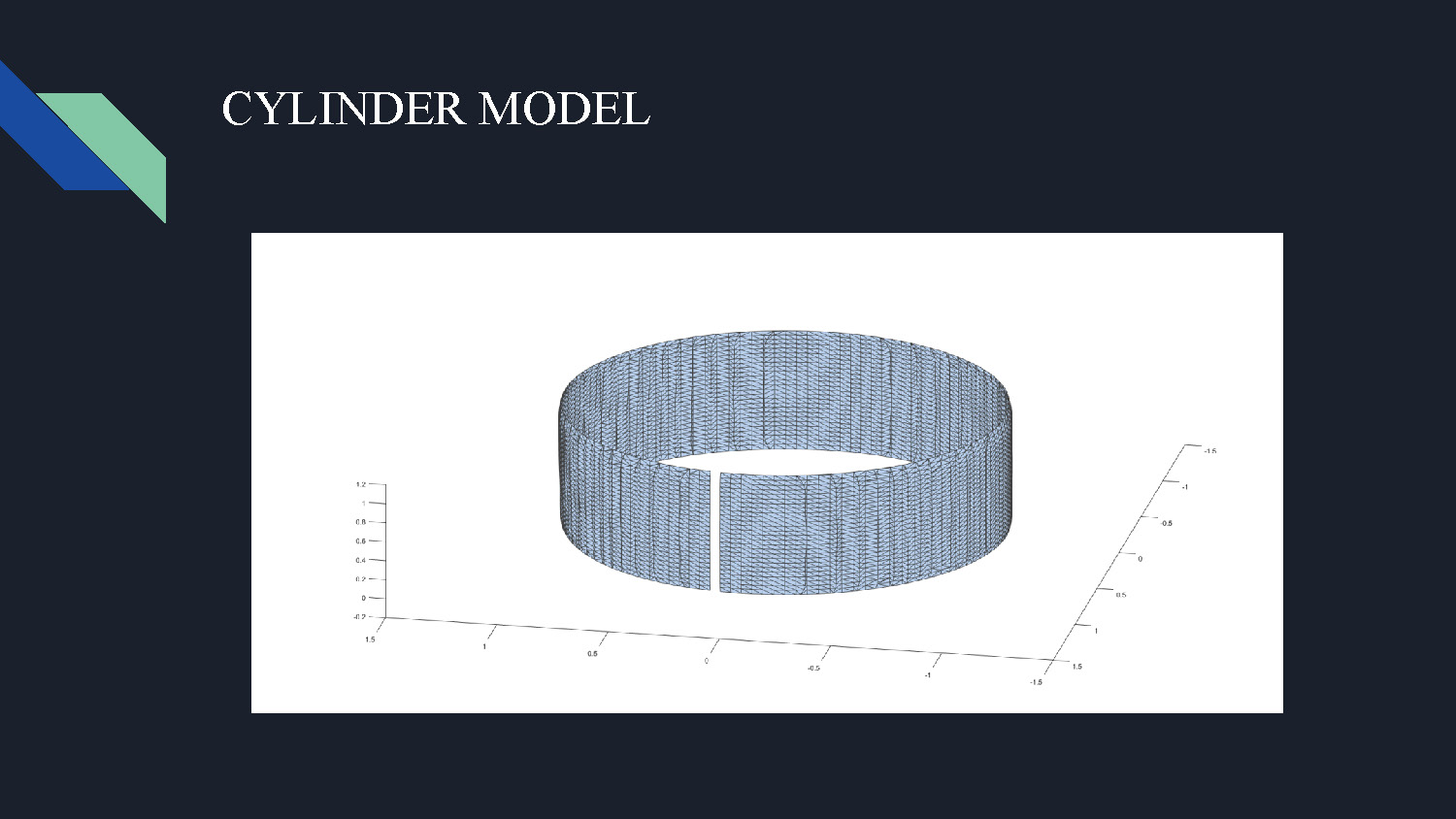
CYLINDER MODEL
3D cylindrical model representation used as a test case for the transformation algorithm development and validation.
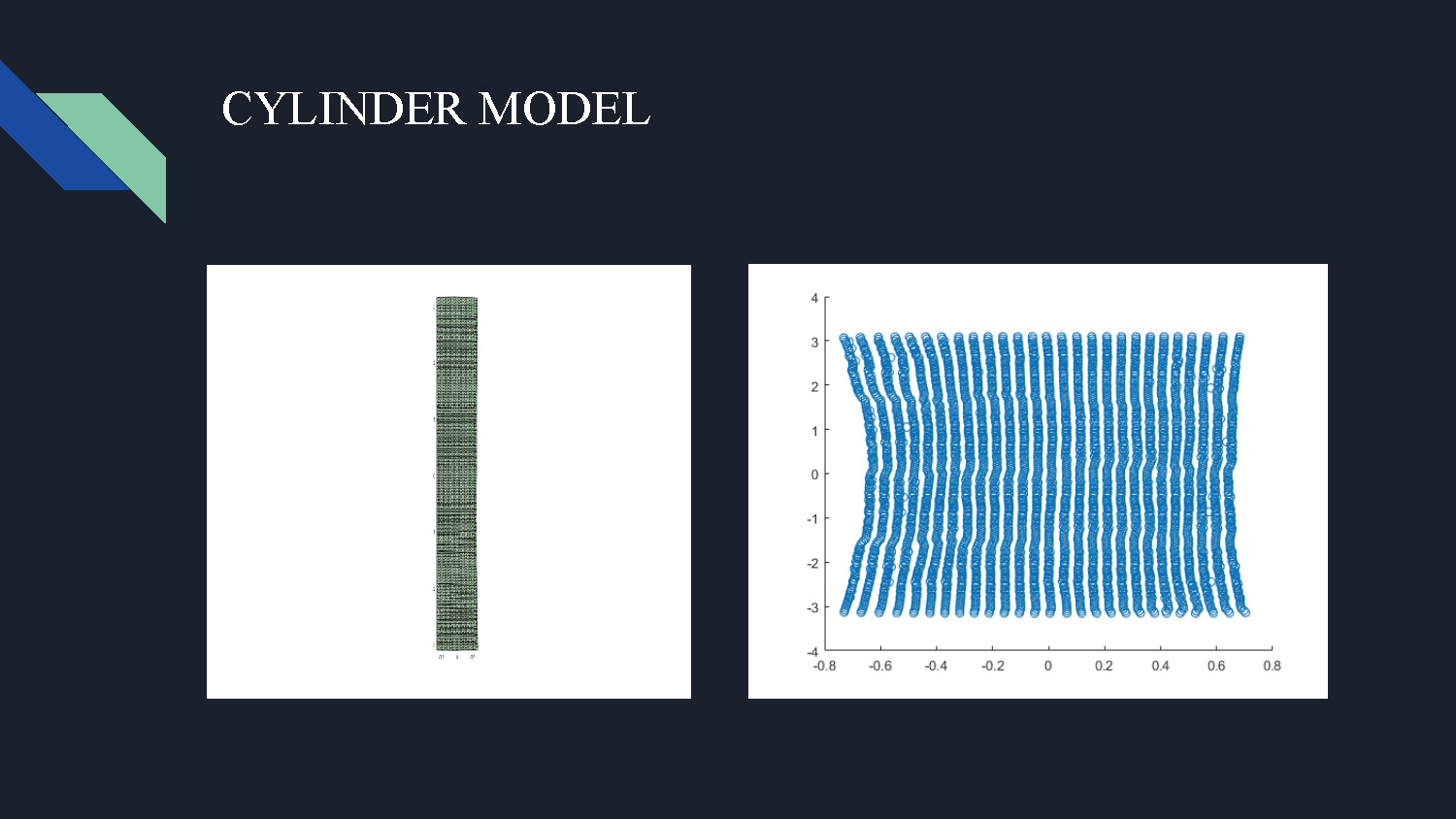
CYLINDER MODEL
Results of the 3D to 2D transformation applied to the cylinder model, demonstrating the algorithm's ability to map three-dimensional structures to two-dimensional representations.
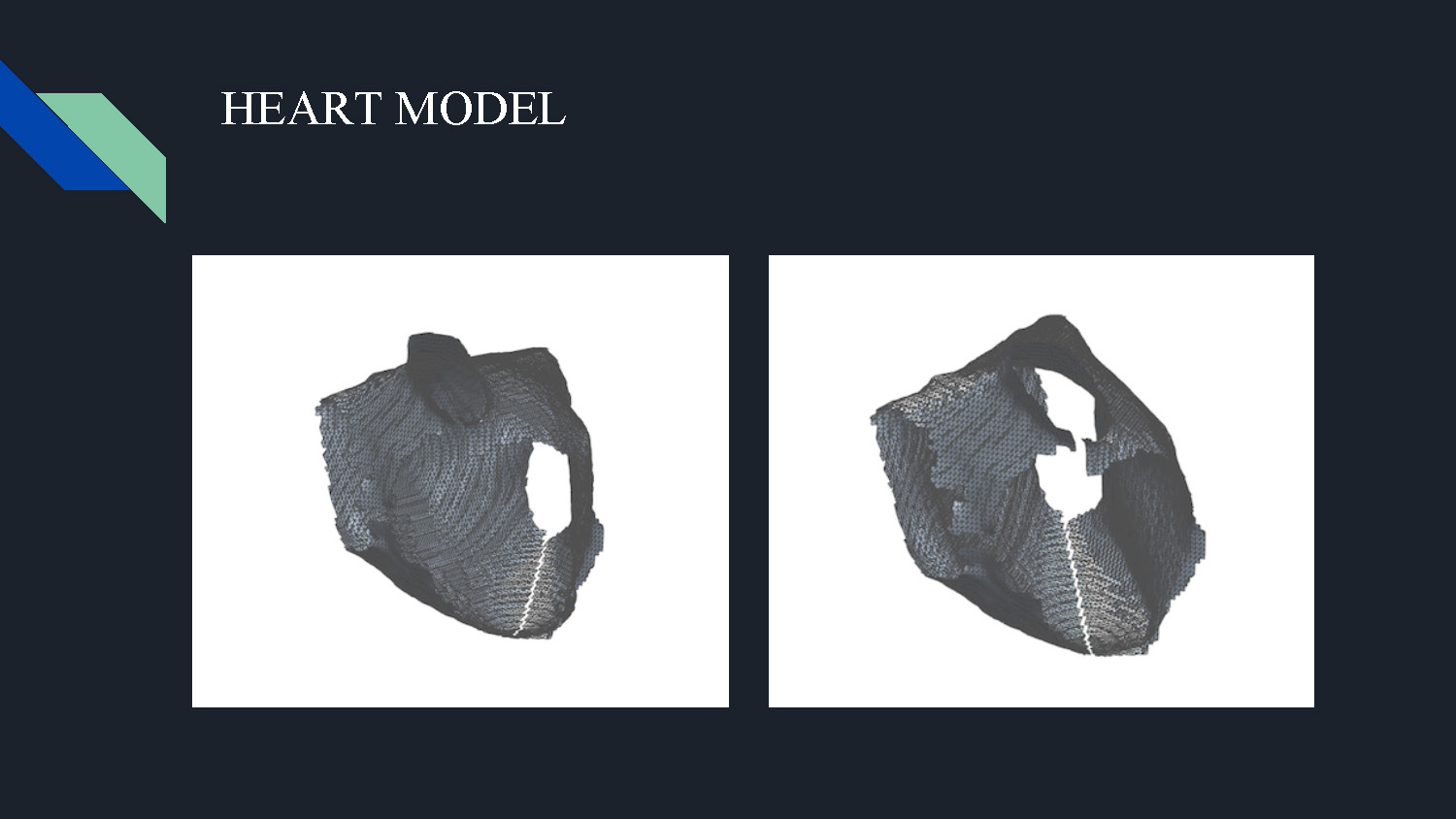
HEART MODEL
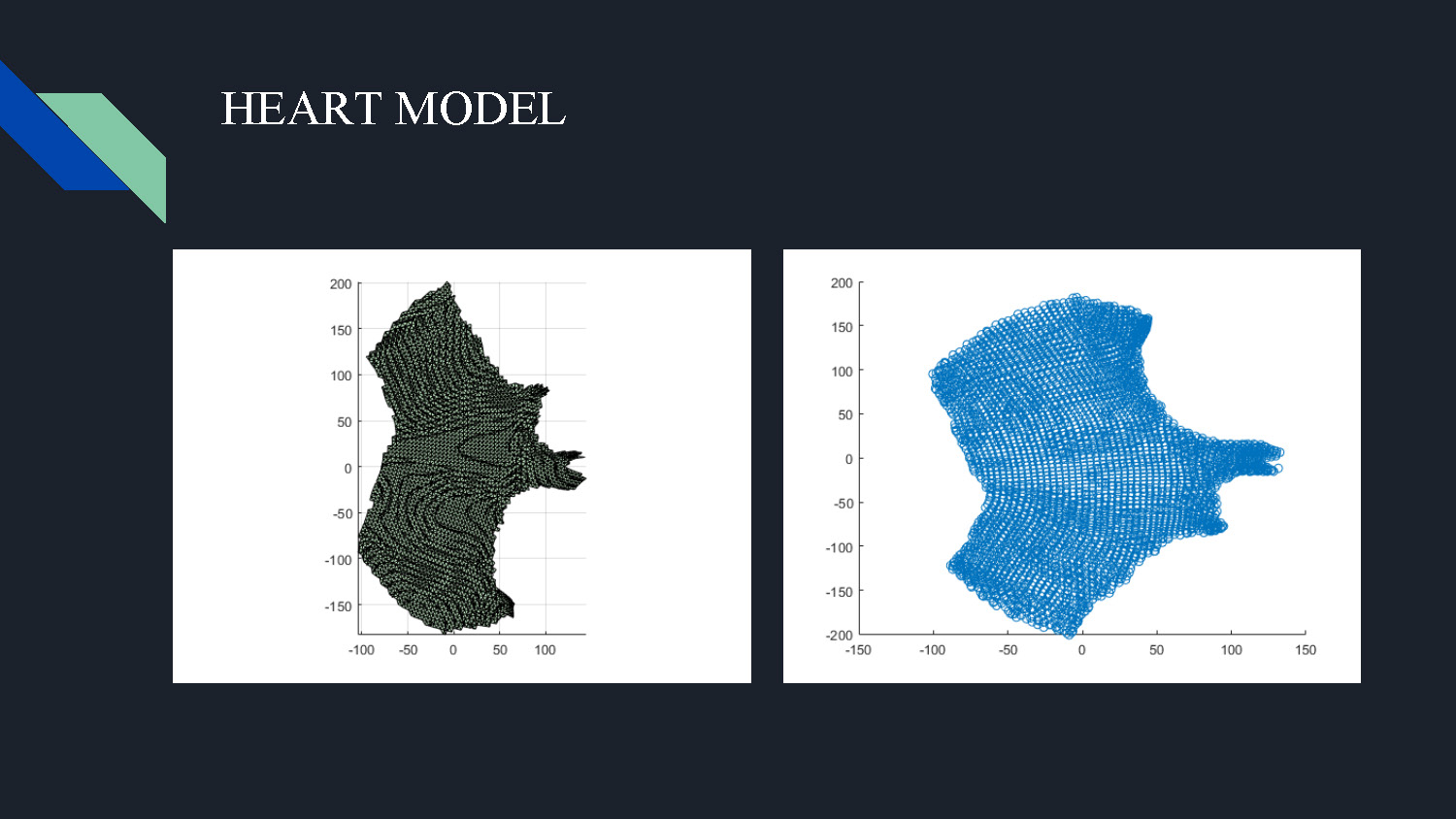
3D heart model representation showing the complex cardiac structure that needs to be transformed into a 2D map for atrial fibrillation catheter treatment guidance.
HEART MODEL
Results of the 3D to 2D heart transformation, showing how the complex three-dimensional cardiac structure is mapped to a two-dimensional representation suitable for medical procedures.
FUTURE WORK
- Applying the 2D map of the heart towards catheter guiding algorithms
End of Presentation
Click the right arrow to return to the beginning of the slide show.
For a downloadable version of this presentation, email: I-SENSE@FAU.