Voices from the Community: A Science-Driven Partnership for Cleaner Waters in Florida and Beyond
by Nicole G Nussbaum | Monday, Oct 20, 2025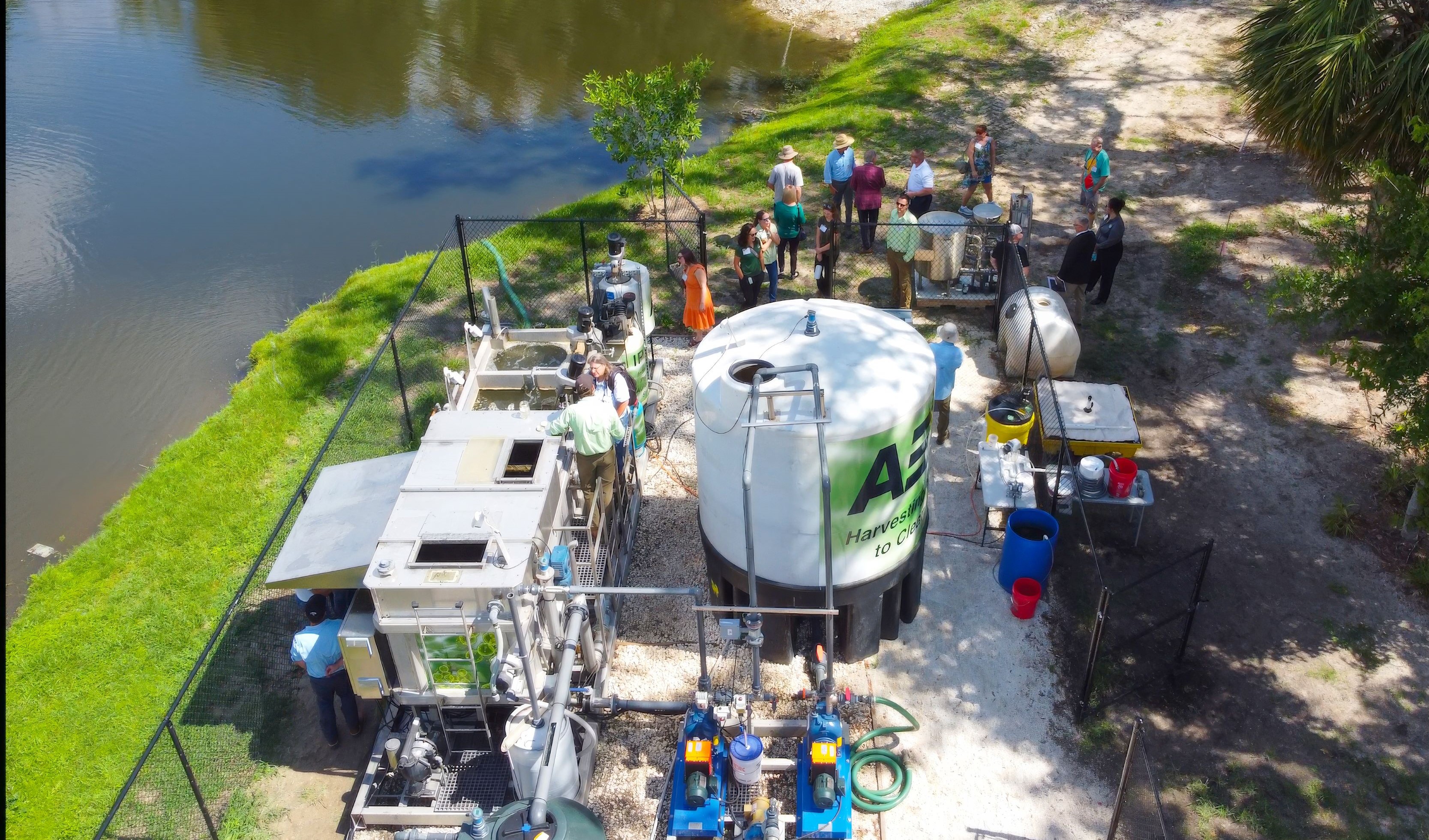
Voices from the Community is a series
showcasing
how I-SENSE research translates from the lab into the community to create real, local impact. From smart cities and public infrastructure to healthcare innovation and
defense
, these stories highlight how collaborative partnerships bring sensing technologies to life in communities across South Florida and beyond.
Building relationships with
local governments
,
nonprofits
,
neighborhood groups
,
private
organizations
and more is the
key to making our research meaningful,
actionable
and embedded in the communities it aims to serve.
Florida’s water quality challenges are as complex as they are urgent. From harmful algal blooms clouding Lake Okeechobee to nutrient runoff threatening coastal estuaries, these issues affect both ecosystems and communities. Addressing them requires more than science alone – it takes collaboration across research, engineering and community engagement. That collaboration is at the core of the partnership between Florida Atlantic’s Sensing Institute (I-SENSE) and AECOM, one of the world’s largest environmental and infrastructure firms.
For Dan Levy, founder of BlueCycle Technologies and national director of AECOM’s algae practice and hydrothermal liquefaction waste-to-energy programs, the partnership is about aligning shared strengths to create smarter, more adaptive solutions. Levy has spent his career developing technologies that restore water quality, recover nutrients and convert organic waste into clean energy.
“When we connected with Dr. Jordon Beckler, we saw an opportunity to bring world-class sensing technology into AECOM’s field-proven restoration programs,” Levy said.
Beckler, Ph.D., an oceanographer with joint appointments at I-SENSE and FAU Harbor Branch Oceanographic Institute, developed an on-site sediment flux monitoring system that provides high-resolution, real-time data on nutrient loading. Instead of waiting weeks for costly traditional sampling methods, Beckler’s system collects continuous measurements directly from the lakebed — offering critical insights into how nutrients cycle through sediments and fuel harmful algal blooms.
AECOM has integrated this sensing technology into its scalable treatment platforms, including Hydronucleation Flotation Technology (HFT) and the Intelligent Process Automation System (I-PAS), both co-developed under Levy’s leadership and are now being advanced through his new company, BlueCycle Technologies. Together, these tools form a “closed loop” approach: monitoring ecosystem conditions in real time, adapting treatment strategies accordingly and validating results through continuous feedback.
“What makes this partnership so impactful is the integration of academic research with engineering execution,” Levy said. “I-SENSE brings transparency, credibility and scientific rigor to our field operations, ensuring we can act as well as demonstrate the impact of those actions.”
The results are already shaping a forward-looking framework for restoring nutrient-impaired waters. By merging I-SENSE’s sensing innovations with AECOM’s treatment technologies, the collaboration offers a model for tackling harmful algal blooms at both the source and the symptom level. It’s a science-driven pathway that could help restore some of Florida’s most impacted ecosystems and provide a blueprint for restoration efforts nationwide.
“Internal nutrient loading from sediments has long been a blind spot in restoration projects,” said Beckler. “Our system gives us continuous, site-specific measurements of phosphorus flux at a fraction of the cost of traditional sampling. That data allows AECOM to calibrate treatments in real time and design interventions that don’t just treat the symptoms but address the root causes of harmful algal blooms, improving the health of communities long-term.”
Looking ahead, Levy sees this partnership as a proving ground for something bigger. “Our vision is to demonstrate a fully integrated model for ecosystem restoration — one that merges sensing, AI and scalable treatments into a self-optimizing platform. Lake Okeechobee is where we are starting, but our goal is to expand this model to impaired lakes, rivers and estuaries across the country.”
For Florida communities affected by nutrient pollution, the partnership between I-SENSE and AECOM represents more than research. It is a commitment to building smarter, faster and more resilient solutions grounded in data, driven by innovation and designed for long-term impact.