I-SENSE Impact: From Post-Quantum Research to Securing the Future at Microsoft Azure
by Nicole G Nussbaum | Thursday, Feb 26, 2026
I-SENSE Impact is a series highlighting how research experiences shape the people behind the innovation. These stories showcase how hands-on research, collaboration and mentorship at I-SENSE prepare graduates to tackle real-world challenges in cybersecurity, smart infrastructure, health technologies and beyond. Through their journeys, we demonstrate how investing in talent today drives technological advancement tomorrow.
When Mojtaba Bisheh Niasar, Ph.D., began his doctoral studies in 2019, he was searching for more than a research topic. He was looking for a challenge at the frontier of technology, and he found it at I-SENSE.
Drawn by the opportunity to work at the intersection of hardware security and emerging cryptographic standards, Mojtaba joined the team led by I-SENSE faculty fellow Reza Azarderakhsh, Ph.D., to focus on classical and post-quantum cryptography. At the time, a global race was underway to prepare for the quantum era, a future in which today’s encryption methods could become vulnerable. Mojtaba’s goal was ambitious: design high-performance cryptographic systems capable of resisting sophisticated side-channel attacks while helping shape the next generation of security standards.
His work was closely aligned with the National Institute of Standards and Technology (NIST) Post-Quantum Cryptography (PQC) Standardization Process, a worldwide competitive effort to determine which cryptographic algorithms would secure the future. Mojtaba worked on implementing and securing cryptographic schemes that were being evaluated as the next generation of global standards. When the project he worked on was ultimately selected by NIST as a winning standard, his impact became tangible. What began as academic research transitioned into a foundational element of the global security ecosystem.
During the competition, Mojtaba experienced the intensity of high-stakes research firsthand. After preparing a paper for submission, he discovered that another research group had published stronger results addressing a similar problem. With limited time before key deadlines, his team had to quickly reassess their position. Rather than viewing this as a setback, they revisited their assumptions, adapted their methodology and refined their design under tight timelines. The experience underscored the importance of agility, disciplined analysis, and the ability to improve rapidly in a fast-moving and highly competitive research environment.
He describes I-SENSE as mission-driven: a place where rigorous academic theory meets practical, industry-forward problem-solving. It’s an environment that encourages researchers to merge technical skills with real-world consequences. Beyond technical expertise, he developed resilience, learning to treat failure as data rather than a dead end, and cultivated the habit of stepping back to analyze problems from multiple angles before diving into solutions.
Today, Mojtaba serves as a hardware security architect for Microsoft Azure. He works on Caliptra, the first open-source root-of-trust architecture intended for broad industry adoption. His role focuses on designing secure, transparent and quantum-resistant hardware security solutions for data centers worldwide. His work is widely deployed, helping protect the infrastructure that powers modern computing.
“We aren’t just protecting data,” he said. “We are building the foundation of trust for the next generation of computing.”
The connection between his doctoral research and his current role is direct. While industry operates at a different pace and scale than academia, the core challenges remain the same, and I-SENSE equipped him with the expertise needed to address the global quantum threat. He graduated not only with a degree, but with a highly sought-after skill set and the confidence to lead.
Looking back, Mojtaba considers I-SENSE the bridge that transformed his academic curiosity into a career at the forefront of global cybersecurity.
For current and prospective students, his advice is simple: Look beyond the code. The strongest engineers are not just implementers, but thinkers who analyze problems from multiple dimensions and collaborate effectively within a team. Sometimes impact comes not from reinventing the wheel, but from refining and strengthening what already exists.
Mojtaba’s journey reflects what I-SENSE strives to cultivate — talent prepared to define the future of technology.
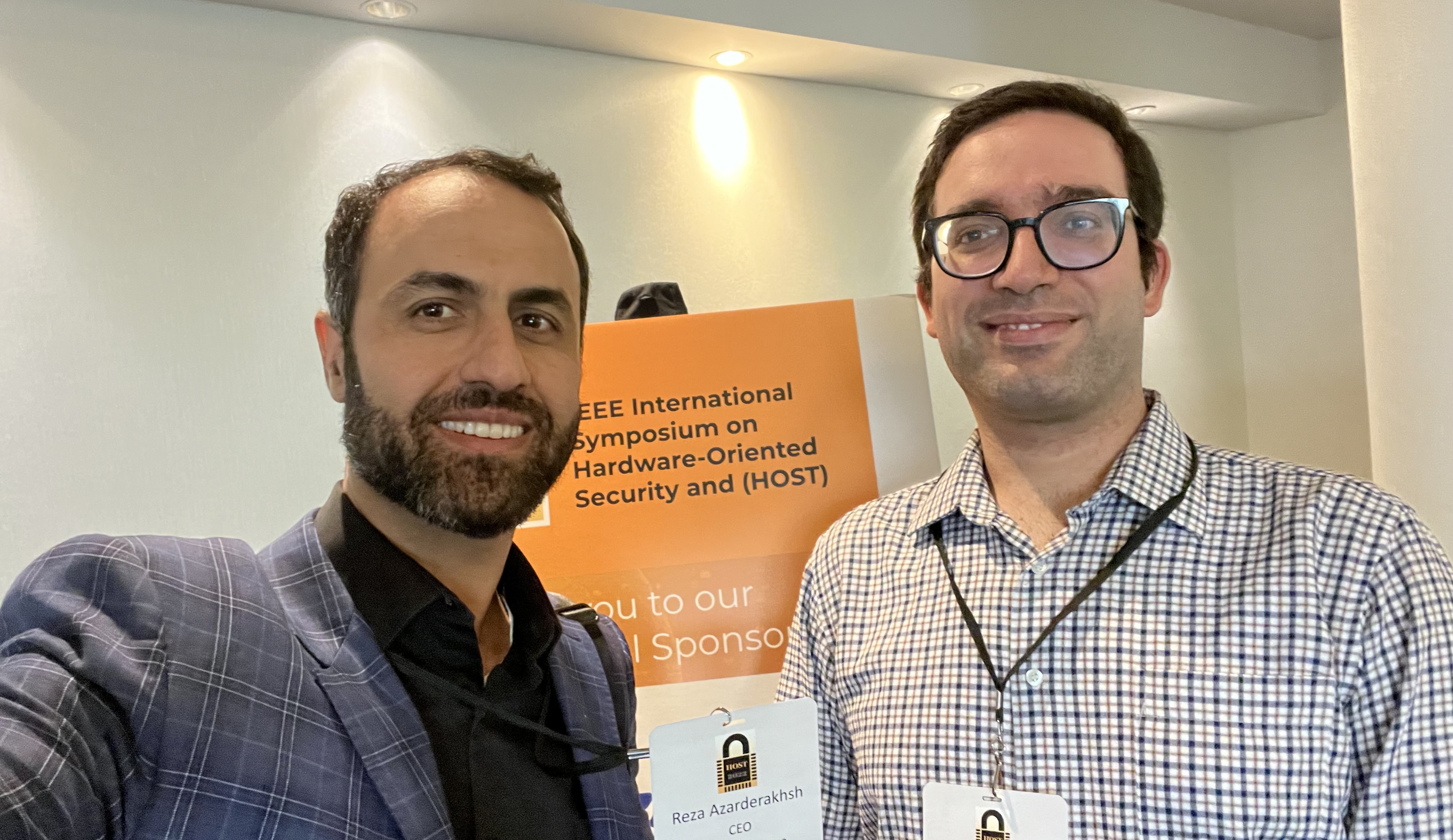
I-SENSE Faculty Fellow Reza Azardareakhsh, Ph.D. (left) and Mojtaba Bisheh Niasar (right).