
Owl Ready is the official preparedness and safety app of Florida Atlantic University. Download this app for safety resources available on campus.
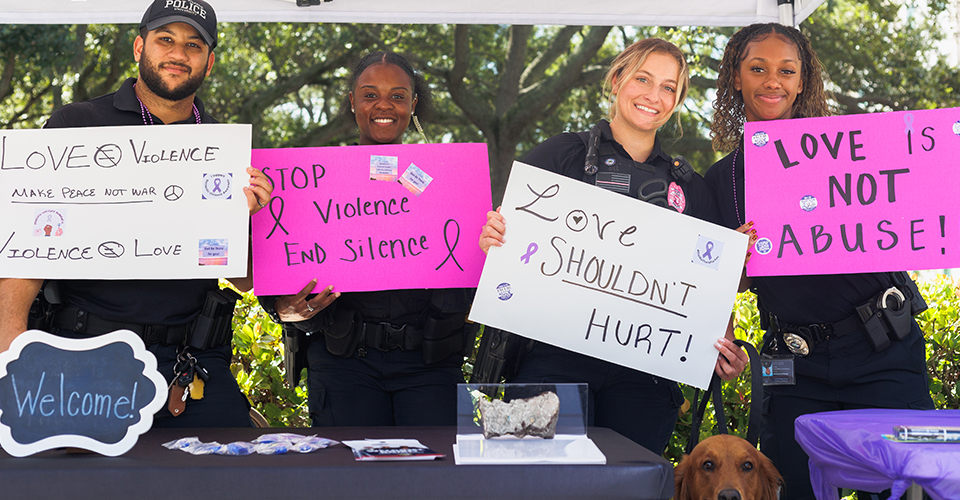
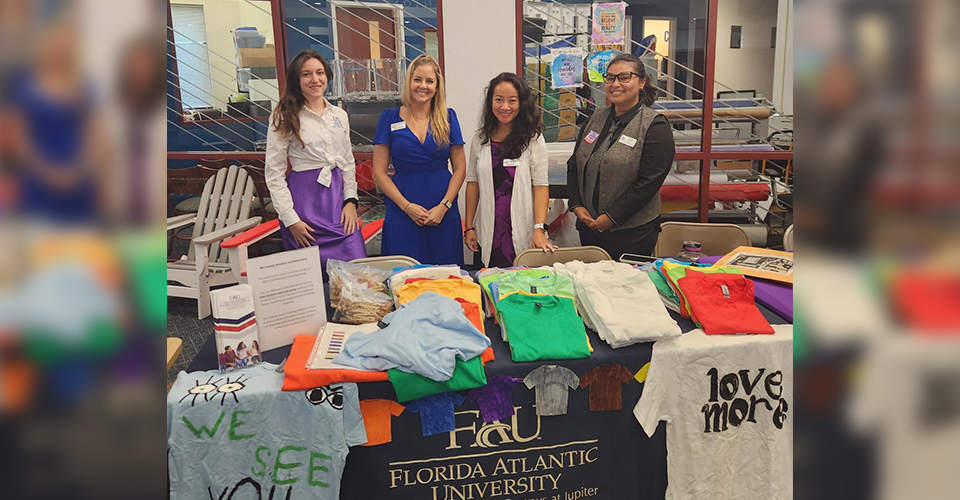
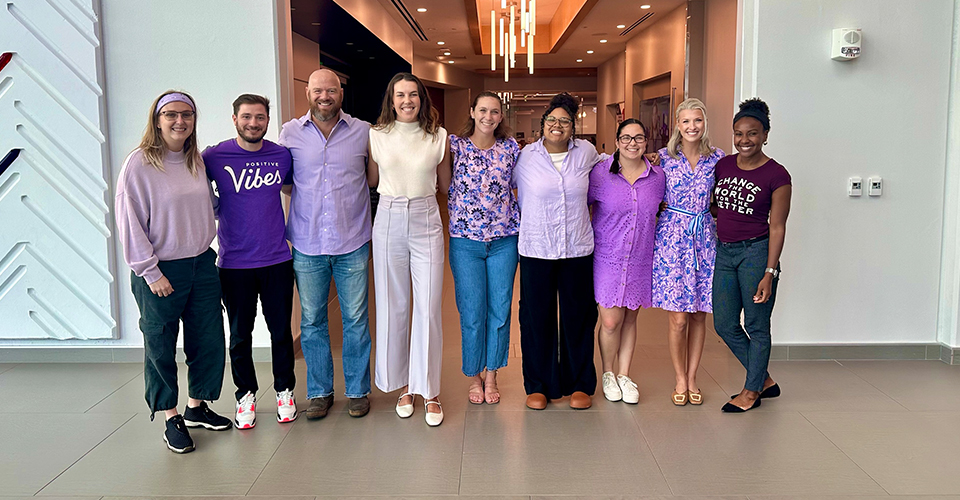
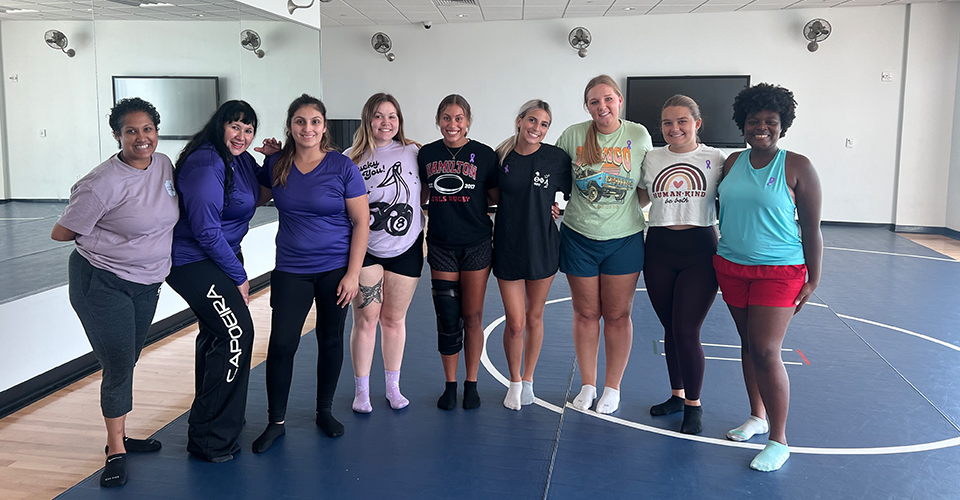
Domestic Violence Awareness Month
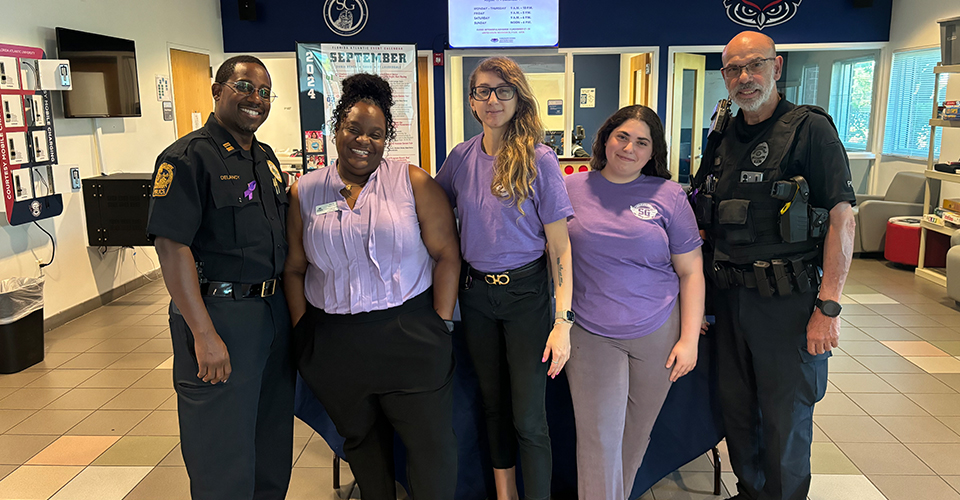
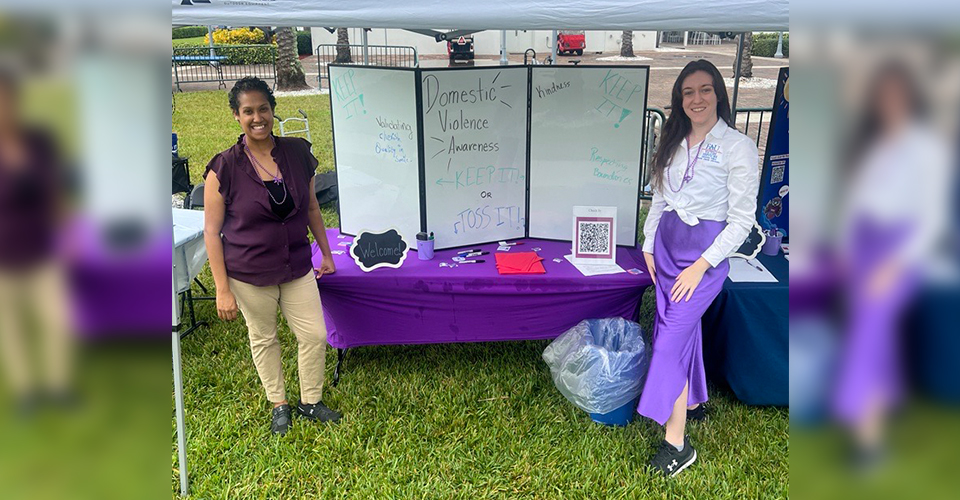
If you are looking for more information to get involved as a volunteer, host an event or more, please contact victimservices@fau.edu. If you are hosting or participating in any event, do not forget to post on social media and use the hashtag #owlsgopurple.
Education
Defining Domestic and Dating Violence
What is Domestic Violence?
Domestic Violence (DV) is a pattern of behaviors used to establish power and control over another person through fear or intimidation. DV can occur in romantic relationships, parent/child relationships, caregiver relationships, sibling relationships, friendships, roommates or any relationship between individuals who live together.
What is Dating Violence?
Dating Violence or Intimate Partner Violence (IPV) is a pattern of behaviors used to establish power and control over another person through fear or intimidation during a romantic relationship.
DV and IPV do not affect everyone in the same way and can look different in every relationship.
Types of Violence
The chart below contains some of the different tactics and types of abuse that an abuser will use to maintain that power and control. This is not an exhaustive list and experiences will look different for everyone.
| Type of Violence and it’s Definition | Examples |
|---|---|
|
Academic
Preventing or sabotaging someone’s academic success or career. |
“You can’t take that class since ____ is in it” “I don’t care that you have a final tomorrow, we’re going out tonight.” |
|
Technology
Utilizing technology to control, intimidate, or threaten someone. |
“If you loved me, you’d give me your passwords.” Constant texting or facetiming Location sharing and constantly monitoring/tracking Checking phone/email/social media without permission Sharing private pictures publicly or threatening to do so |
|
Financial
Controlling or limiting someone’s access to money, resources, or the ability to work. |
“You can’t work, I want to spend time with you.” “I’ll give you money to spend, you don’t need your own.” Not allowing someone to have access to their paycheck/money |
|
Coercive Control
Pattern of behaviors used to gain power or limit freedoms. |
“Those friends are a bad influence. I don’t want you seeing them anymore.”
Isolation from friends/family Possessive/controlling behavior Threatening harm or punishment when “rules” are not followed |
|
Emotional/Verbal
Using words or actions to control, hurt, or break down another person’s self-worth. |
Putting someone down frequently, especially in front of others “It’s your fault, you never do anything right” Mean name calling |
|
Psychological
When someone uses fear, threats, intimidation, or mind games to control or manipulate another person. |
“If you leave me, I’ll hurt myself” Explosive outbursts, temper, or mood swings “If you loved me you would...” |
|
Physical
When someone uses their body or an object to hurt, control, or intimidate another person. |
Any physical harm Punching, kicking, slapping, biting, choking, etc. Physically restraining someone or restricting movement, blocking exits. |
|
Sexual
Forcing or pressuring someone into sexual activity without their consent. |
“If you loved me, you’d have sex with me” Forcing sexual activity Ignoring boundaries around sexual activity Pressuring sexual activity someone is not ready for or consenting to |
Coercion/Pressure
Coercion and Pressure are commonly used to establish control over another person. Coercion can often involve threats, force, or repeated behaviors/questions used to “wear someone down” or cause someone to feel like they have no other choice than to do what is being asked of them. This type of pressure is not okay. If someone cannot respect your no, they do not respect your boundaries, and they may not respect you.
Boundaries and Boundary Setting
Boundaries are the limits we set within any relationship we have. We cannot assume that anyone will understand our boundaries if they are not communicated. You will know if you need to set or reinforce a boundary based on how you feel.
When setting boundaries, remember:
- Understand your boundaries first
- Talk it out, clear/calm communication is necessary
- Use “I” statements
- Consider your tone, body language, headspace, and delivery
If a boundary is broken evaluate how you feel and determine if additional communication is needed. If needed, reiterate the boundaries. If someone breaks your boundaries it is okay to be less involved with that person or remove them from parts of your
Events
Boca Raton campus
Davie campus
Jupiter campus
On-Campus Resources
In case of an emergency, call 911.
To report an incident or concern, please visit www.fau.edu/report. This website provides information and the link to all reporting pages across campus.
Most importantly FAU has resources to support you. The following are resources that are available for you on campus:
| Service | Description | Contact |
|---|---|---|
| Victim Services | Provides assistance through criminal and university processes. Connects individuals to on and off campuses resources. |
www.fau.edu/dean/victimservices
or www.fau.edu/police/victim-services |
| Dean of Students | Provides options to report, information on the student conduct process and referrals. | www.fau.edu/dean |
| FAU Police Department | Provides emergency services; offers options to report a crime, and referrals for off campus evidence gathering. | www.fau.edu/police |
| Office of Civil Rights and Title IX | Provides resources and investigates allegations of discrimination and harassment. | www.fau.edu/ocr9 |
| CAPS (confidential) | Offers counseling (individual and group), psychiatric services and referral coordination. | www.fau.edu/counseling |
| Student Health Services (confidential) | Offers STI testing, HPV vaccine, emergency contraception and pregnancy testing. | www.fau.edu/shs |
| Students in Distress | Provides information on how to identify and respond to signs of distress in students. | www.fau.edu/studentsindistress |
| Victim Rights Brochures | Download in English | Download in Spanish |

| Service | Description | Contact |
|---|---|---|
|
AVDA (Aid to Victims of Domestic Abuse)
|
Confidential domestic violence shelter in Palm Beach County. Provides advocacy, shelter, and connection to domestic violence resources. |
Crisis Hotline: 1-800-355-8547
https://www.avdaonline.org/ |
|
Women In Distress
|
Confidential domestic violence shelter in Broward county. Provides advocacy, legal assistance, shelter, and connection to domestic violence resources. | Crisis Hotline: 954-761-1133
Phone: 954-760-9800 www.womenindistress.org |
| Safe Space | Confidential domestic violence shelter in St. Lucie county. Provides advocacy, shelter, and connection to domestic violence resources. |
Phone: 772-288-7023
https://safespacefl.org |
Tools
Victims of crime may be eligible. Withdrawal requests are for all classes and should be submitted during the semester for which the withdrawal is requested.
A holistic program that utilizes on and off campus resources in assisting FAU students in need to raise their food security level.
Provides information on therapists, going to a doctor, sexual health and more resources on campus.