Undergraduates and Post-Bacs
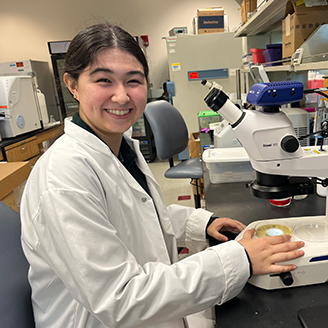
Cristal Auger, undergraduate
Cristal Auger is an undergraduate researcher at the Harriet L. Wilkes Honors College, concentrating in biology and data science with a minor in business. Within the Blakely Lab, she studies dopamine (DA) signaling using the model organism Caenorhabditis elegans. DA signaling is integral in cognitive function, with alterations leading to brain disorders including Parkinson's disease, schizophrenia, autism, and addiction. The DA-dependent phenotype swimming-induced paralysis (Swip) indicates altered DA-signaling in C. elegans. DA-dependent Swip was screened for across 300 strains of the Million Mutation Project (MMP) library, a resource of chemically mutagenized and fully sequenced C. elegans lines. Her research in the lab consists of bioinformatic evaluations, AI analysis, and experimental trials to identify novel gene candidates responsible for altered DA-signaling in MMP lines where DA-dependent Swip has been found.
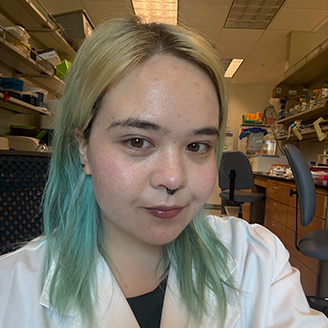
Erin Bell, undergraduate
Erin Bell is an undergraduate researcher persuing a degree in cellular neuroscience at the Harriet L. Wilkes Honors College. Copper is an essential trace mineral in the body in combating against oxidative stress and inflammation, acting as a cofactor across several biochemical pathways. Because the gene MBLAC1 has recently been identified as a risk factor for abnormal copper homeostasis, further research into the gene and its subsequent influence on copper homeostasis and neuronal health is of interest. Her research in the Blakely Lab focuses on the physiological role of the gene MBLAC1— particularly looking at how the gene influences active microglial expression and activation in relation to neuroinflammation, utilizing techniques such as immunohistochemistry and fluorescence microscopy.
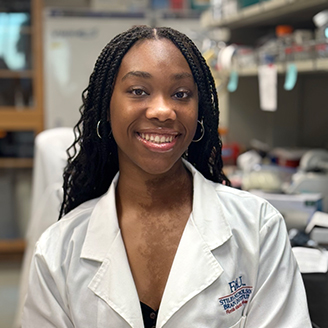
Ahmarne Hammett, undergraduate
Ahmarne Hammett is an undergraduate student at the Harriet L. Wilkes Honors College, majoring in cellular neuroscience with a minor in interdisciplinary ethics. Within the Blakely Lab, she assists with worm preparation, whether NGM agar plates or simply seeding these plates with E.coli bacteria. Alongside this, she assists with experiments and follow through with any protocols needed by her supervisor, Dr. Zaka Asif, such as performing bleach synchronization or preparing L4 worms for microscopic studies.
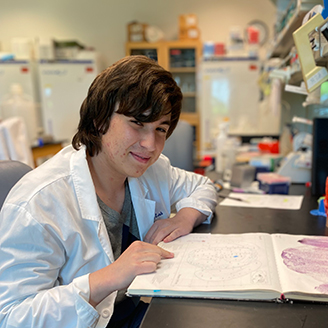
Samuel Mittleman, undergraduate
Sam Mittleman is an undergraduate student at the Harriet L. Wilkes Honors College, majoring in cellular neuroscience. Within the lab he is working to understand the connection between inflammation, the serotonin system, and neuropsychiatric disorders with a special interest in autism spectrum disorder with Dr. Paula Kurdziel. He helps with performing tasks and experiments in the lab. In his free time he enjoys reading books, playing games, and going out with friends.
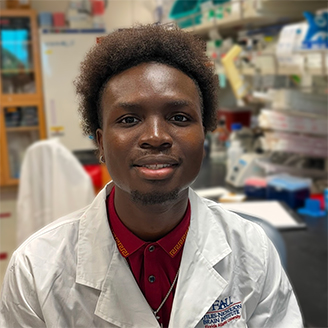
Louckens Philippe, undergraduate
Louckens Philippe is an undergraduate student at the Harriet L. Wilkes Honors College, majoring in cellular neuroscience with a minor in psychology. He conducts research in the Blakely Lab, investigating the swip-10 gene in the C. elegans model and its role in copper homeostasis. Under the mentorship of Dr. Zaka Asif, Louckens assists with experimental procedures and protocols, such as worm husbandry, genotyping, and sample preparation for experiments.
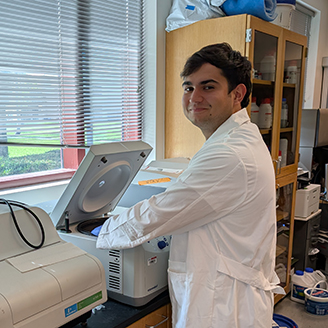
Nicolás Salas, undergraduate
Nicolás Salas is an undergraduate researcher pursuing his degree in neuroscience and behavior from the Charles E. Schmidt College of Science. His research is focused on the impact of amyloid beta accumulation in the biological model C.elegans. Amyloid beta accumulation is linked to the development and symptomatology of Alzheimer’s disease. Nicolás’ project focuses on the SWIP-10 gene deletion thought to be a gene ortholog for MBLAC1. Because the gene MBLAC1 has recently been identified as a risk factor for Alzheimer’s disease with cardiovascular comorbidities, further research into the gene is of interest. Nicolás utilizes various staining methods and confocal microscopy to visualize plaque formation in a transgenic C. elegans model.
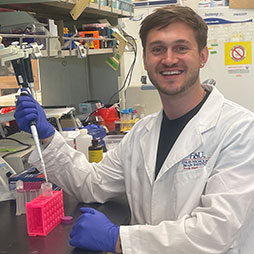
Tristan Wells - post-bac researcher - neuroscience
Tristan Wells is a post-bac earning a second degree in neuroscience and behavior from the Charles E. Schmidt College of Science. His research in the Blakely lab focuses on the physiological and behavioral consequences of genetic variation in the dopamine transporter (DAT) gene (SLC6A3). Dopamine plays an important role in motor control, motivation, attention, response to novelty, reward, and cognition, and mutations in the SLC6A3 gene have been linked to several neuropsychiatric disorders. Amongst the mutations identified, the Ala559Val substitution has been shown to trigger anomalous dopamine efflux, perturbing dopamine homeostasis and behavior in DAT Val559 mice. Tristan's project seeks to test if early intervention with clinically efficacious therapies modifies the trajectory of phenotypes, including aberrant dopamine release, cognitive function and sociability, in mice harboring this mutation. To do this, he will record changes in dopamine in the brain utilizing genetically encoded dopamine sensors and in vivo fiber photometry in awake, behaving mice.