Mitochondrial Damage by Amyloid-Beta in Alzheimer’s Disease
by Dr. Deguo Du, Dr. Yunqing Kang, and Dr. Ewa Wojcikiewicz |
Keywords: Alzheimer’s disease, dementia, amyloid-beta, mitochondria, membrane, molecular biology, neurodegeneration, neuroscience, therapeutic research
Our Research
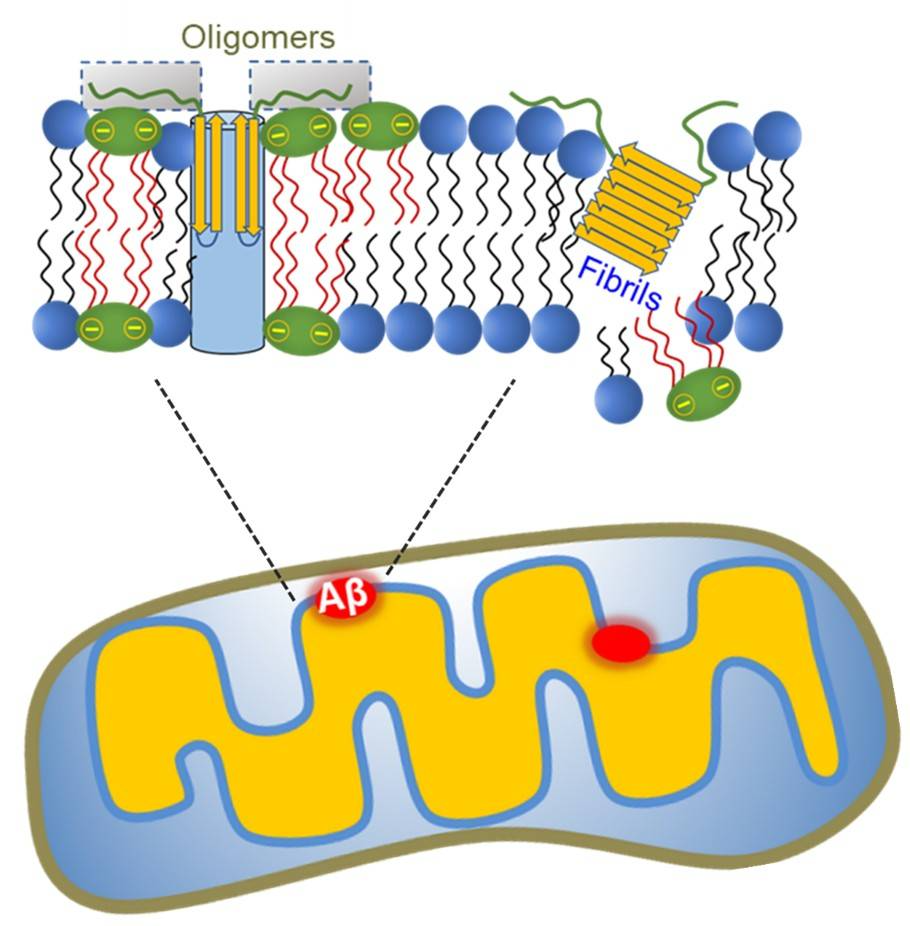
Alzheimer’s disease causes memory loss and cognitive decline. One key factor is the buildup of a protein fragment called amyloid-beta (Aβ), which can harm brain cells. While traditionally studied outside cells, Aβ also clumps inside cellular structures like mitochondria, which produce energy for cells.
Our research investigates how Aβ interacts with mitochondria and causes early cell damage. We focus on the protein’s N-terminal region, which may help it stick to membranes and form harmful clumps. Understanding this process can point toward new ways to prevent or slow Alzheimer’s progression.
Our Strategy
Students will learn and contribute to:
- Buildup of mitochondrial membrane mimics to test how Aβ binds and aggregates
- Biochemical and biophysical methods to monitor protein clumping and membrane disruption
- Testing peptide-based strategies designed to block Aβ–membrane interactions
- Computational approaches to predict molecular interactions
- Data analysis and interpretation of biochemical and cellular results
This hands-on research teaches skills in molecular biology, experimental design, and problem-solving while exploring a pressing health challenge.
Our Impact
By uncovering the early steps of Aβ toxicity, this work may:
- Lead to new targets for therapies
- Help prevent or delay cognitive decline in Alzheimer’s patients
- Improve understanding of mitochondrial health in neurodegenerative diseases
This project contributes to better prevention and treatment strategies for Alzheimer’s and related dementias.