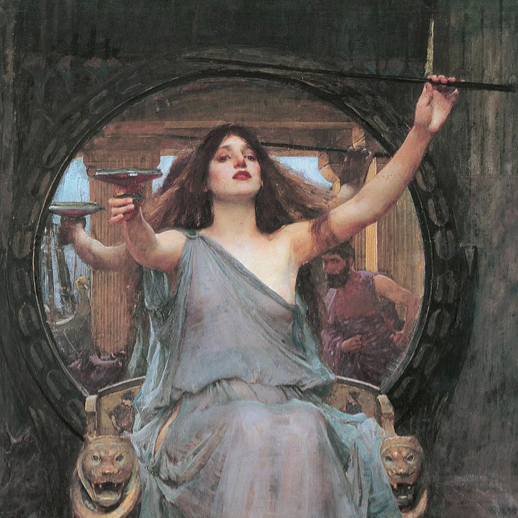
Pre-Raphaelite oil painting titled Circe Offering the Cup to Ulysses (also known as Circe Offering the Cup to Odysseus) by the English artist John William Waterhouse, 1891. Painting depicts a woman seated on an ornate throne, raising a cup and a long wand before a circular mirror.

ENG 3822.005

Introduction to Literary Studies

Taylor · Fully Online · Core

Together, we’ll delve into myths and fairytales from around the world as well as retellings and adaptations of those stories. We’ll look at a range of myths and fairytales sources, from stories many are familiar with like Snow White or the story of Circe and Odysseus, to stories that may be less familiar like that of the Maya Hero Twins or the Celtic Tuatha Dé Danann. We will also compare contemporary adaptations of these myths and fairytales across time periods from Victorian era poetry to contemporary science fiction and fantasy. Most of our readings will be short stories and poetry, but we will also read two novels: Mary Shelley’s Frankenstein and Silvia Moreno-Garcia’s Gods of Jade and Shadow.
Professional & Creative Writing Concentration students take ENG 3822 or LIT 3213 (required for all other English majors); Science Fiction & Fantasy Studies Minor & Certificate


LIT 3213.001

Literary Theory

MacDonald · Online Live Lecture · WF 2pm-3:20pm · Core

In some senses as much a philosophy class as a literature class, this course will introduce you to the names and theories attached to many of the approaches currently taken to approaching literature from an analytic perspective. While the various theorists, philosophers, linguists, and psychoanalysts may not, in their own time, have had literature at the front of their minds, later literary scholars would borrow or adapt their theories: to such an extent that anyone studying literature at the graduate level today would be expected to be at least familiar with their basic arguments and how they might be used in a critical context. As such, we will read both the birth and development of more formalist literary criticism—from Matthew Arnold in the nineteenth century through the didactic-, New Critical-, and archetypal formalisms of the mid-twentieth century as well as works by seminal figures including Marx, Saussure, Freud, Benjamin, Lacan, Foucault, and Derrida whose inquiries surrounding language and the social contexts of literature continue to inform and determine approaches to literary analysis to this day.
Professional & Creative Writing Concentration students take ENG 3822 or LIT 3213 (required for all other English majors)

ENG 3822.006

Introduction to Literary Studies

Chenovick · In-Person · TR 2pm-3:20pm · Core

This course will explore the kinds of questions literary scholars ask about literary texts and the ways different literary genres call for different kinds of questions and offer different imaginative resources. What makes a lyric poem different from an epic (aside from length)? How does comedy differ from satire? What even is an allegory? Ranging from Classical epic to modern poetry and from Shakespeare to Oscar Wilde, this class will introduce you to a variety of texts and genres and enable you to write about differing literary tropes and techniques. Some of our course themes will include the relationships between humans and the natural world and the forms of knowledge and relating produced by food and eating. But our guiding questions will how different literary texts do what they do and how to develop critical arguments about the texts and literary strategies you find most compelling.
Professional & Creative Writing Concentration students take ENG 3822 or LIT 3213 (required for all other English majors)
A vast planet with glowing turquoise rings rises above jagged purple mountains beneath a star-filled sky.

LIT 2310.001 / LIT 2310.002

Science Fiction and Fantasy

Cervone · In-Person
LIT 2310.001 · TR 12:30pm-1:50pm
LIT 2310.002 · TR 2pm-3:20pm · Featured

This writing-intensive course will introduce you to the close reading of literature through the genres of science fiction and fantasy (SFF), which reflect impulses that have always formed a key part of the Western canon. So, if you know that 42 is the answer, if you observe both second breakfast and elevenses, or if you have ever shouted “Hiiiiiii, Zev!,” then this course DOES have the droids you are looking for (or for whom you are looking). From fantastic voyages to alien invasion, the course explores themes in SFF from canonical authors of the fantastic who interrogate questions of human relations to technology, to other beings, and to interdimensional spaces.
WAC; Science Fiction & Fantasy Studies Minor & Certificate; does not count for the major, but is a WAC course and counts for the new Science Fiction & Fantasy Minor & Certificate
A laptop in an office displays 'English Internship, ENG 4940' on a red and blue screen.

ENG 4940.001

English Internship

Anderson · elective

English Internship provides practical experience working 10-15 hours per week at an internship for academic credit. Prerequisites: 18 credits in the major; 3.0 GPA overall and in English; permission of instructor.
Contact Prof. Anderson for more information.

Category 1

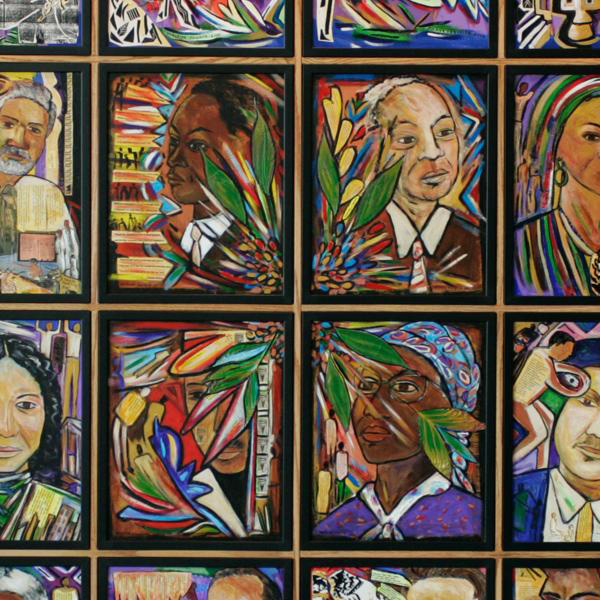
A grid of framed, brightly colored portraits features people surrounded by abstract patterns and sweeping brushstrokes.

AML 4607.001

African-American Literature 1895-Present

Dagbovie-Mullins · Online Live Lecture · TR 12:30pm-1:50pm

This class will pursue a chronological examination of African American literature, considering the historical, cultural, and social contexts that have shaped African American literary production. We will explore various literary movements (such as the Harlem Renaissance, the Protest Period, and the Black Arts Movement) and discuss ongoing debates: What is black writing? What is the role of the African American writer? What is the function of African American literary art? How does one define a black aesthetic? This course meets virtually via Zoom. Please note that each student is required to have their camera on during class.

LIT 4061.001

Comparative Literature

Ulin · Online Live Lecture · W 7:10pm-10pm

This unique course frees us to explore great writers across national boundaries. We will read myth, folklore, poetry, drama, and fiction and pay special attention to how writers respond to and adapt one another. Note: This online live lecture course requires participation as the attendance grade.
World Literature: Critical Approaches

LIT 4225.001

World Literature: Critical Approaches

Ma · In-Person · WF 9:30am-10:50am

This course offers a critical exploration of world literature through a variety of theoretical lenses, focusing on how texts reflect and contest global histories, power structures, and cultural geographies. We will examine literature not just as artistic expression but as a form of knowledge shaped by imperialism, migration, and environmental change. We will consider how narrative form, language, and genre mediate experiences of place and identity. Students will engage with critical frameworks to interrogate how literature can disrupt dominant narratives and reimagine what the “world” in world literature means.

AML 4630.001

US Latino/a Literatures

Zamora · In-Person · WF 2pm-3:20pm

Exploring texts from Latinx communities in California, New York, Texas, and Florida, and blending traditional and contemporary works, this course will explore the evolution and shifting Latinx identity discourse across media and literature. In recognition of the ever-evolving media landscape that expedites community dialogues, the course will briefly engage with streaming platform media (e.g. Netflix and YouTube).
This course focuses on questions of historical Latinx identity, intersectionalities within Latinidad (e.g. race, gender, and sexuality), as well as location to understand the reverberating questions that impact Latinidad as we understand it today. Some sample texts include Make Your Home Among Strangers by Jennine Capó Crucet, Family Lore by Elizabeth Acevedo, The Inheritance of Orquídea Divina by Zoraida Córdova, and Debí tirar más fotos by Bad Bunny.
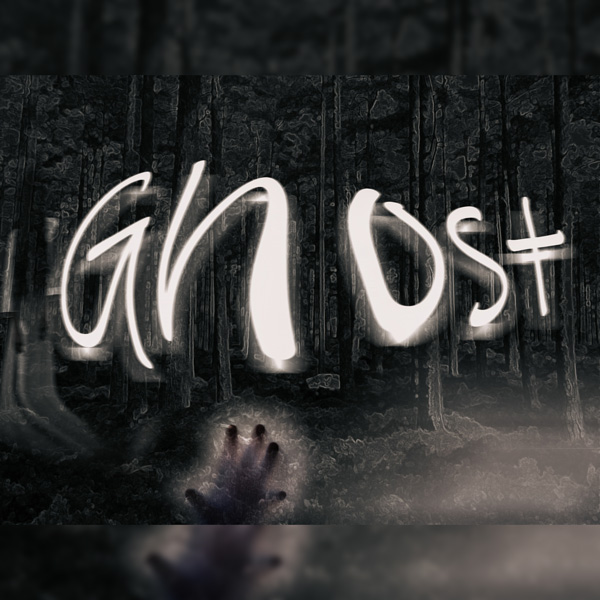
The word 'Ghost' appears in large white lettering over a dark forest, with a shadowy hand reaching upward through mist.

LIT 4233.001

Postcolonial Literature: Ghosts, Hauntings, & Hidden Histories

Lettman · Fully Online

Why do ghosts appear in literature, and what do they reveal about the past's influence on the present? This course introduces students to postcolonial studies through an exploration of ghosts, spirits, and other spectral figures in literature from Africa, South Asia, and the Americas. More than supernatural characters, ghosts often embody cultural memory, migration, loss, and unresolved histories. Readings by Toni Morrison, Nalo Hopkinson, Gabriel García Márquez, Jhumpa Lahiri, Arundhati Roy, and Edwidge Danticat examine how haunting illuminates relationships between past and present, memory and forgetting, and visibility and invisibility. Students will engage key concepts in postcolonial studies while exploring how literature reflects on history, displacement, identity, and community, and how the past continues to shape contemporary life.

LIT 4355.001

Black Literatures

Fox · In-Person · WF 11am-12:20pm

This course examines literary representations of the black diaspora, with particular attention to experiences of slavery and freedom in Ghana, Bermuda, Turks Island, Antigua, Jamaica, England, Russia, and the United States. Nineteenth-century, autobiographical works by Mary Prince and Nancy Prince will be contrasted with contemporary theory and fiction by Audre Lorde, Marlon James, and Yaa Gyasi. In what ways does this archive of antebellum slave narrative and twenty-first century neo-slave narrative make visible the consciousness and humanity of the enslaved, as well as resistance and self-reclamation? How do these works enable processes of witnessing and the transmission of cultural memory? Can they enact modes of healing or redress? In what ways do these literary works engage themes of sexuality, intimacy, and desire? Do these cultural productions illuminate contemporary complicity? And how do they influence the way we understand black diasporic identity in the present?

AML 4640.001

Native American LIterature

Medina · In-Person · TR 2pm-3:20pm

This course explores Native American prose, poetry, and oratory in tribal, regional, and national contexts. Students will closely examine how ceremony, cosmology, colonization, and community have shaped Native American literature, storytelling, history, and culture. While this course prioritizes Native America experiences, worldviews, and intellectual traditions it also empowers students to interrogate settler colonial representations of Native American history, culture, and literature. Students will explore the works and words of authors and orators that include but are not limited to: William Apess (Pequot), Louise Erdrich (Chippewa), Leslie Marmon Silko (Laguna), N. Scott Momaday (Kiowa), Layli Long Soldier (Lakota), Joy Harjo (Muscogee), Tommy Orange (Cheyenne/Arapaho), and Natalie Diaz (Mojave).

Category 2

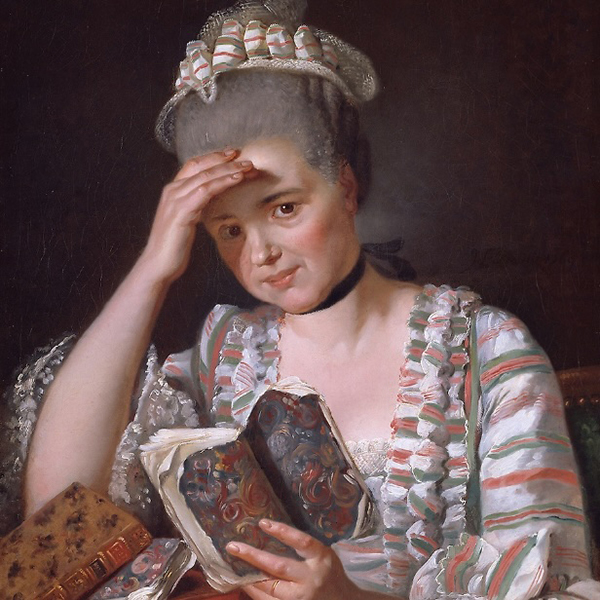
Oil-on-canvas painting created in 1769 by French artist Jacques-Louis David, titled Portrait of Madame François Buron. Painting depicts a woman in a striped dress holding an open book with one hand while resting the other against her forehead.

ENL 3112.001

British Novel: 18th Century

Kocher · In-Person · TR 12:30pm-1:50pm · Pre-1800

We’ve all read Jane Austen, but what did she read? Austen’s novels are filled with references to the books that influenced her style and social commentary. This course will start with the genre-defining Robinson Crusoe to gain an understanding of 18th-century values regarding wealth and identity before turning to a pair of scandalous society novels that shaped Austen’s representations of class mobility and marriage, Pamela and Belinda. The course will end with a dive into the Gothic tradition, looking at the novels that not only influenced the satirical Northanger Abbey but serve as the origins of the horror and fantasy genres as we know them today.
A gloved hand holds a magnifying glass displaying a fingerprint above a laboratory table covered with fingerprint samples and test tubes.

LIT 3344.001

Detective Fiction

Hagood · In-Person · TR 11am-12:20pm

From the gaslit streets of Paris and London to the foggy wharfs of Los Angeles to the sunshine-gone-dark in Fort Lauderdale, this course focuses on masters of the “who-done-it.” As we read classics of the detective genre, we will focus on techniques of plotting, questions surrounding the moral status of sleuths, historical contexts of crimes, and much. much more. Students will have the option of pursuing either a literary critical or creative approach, including the option of developing their own detective stories. Readings will include classic sleuth-creators such as Agatha Christie and Arthur Conan Doyle to mid-twentieth century crime writers Raymond Chandler and John D. MacDonald to newer more recent authors Paul Auster and Donna Leon.

LIT 4434.001

Literature and Environment

Balkan · In-Person · TR 11am-12:20pm

This course will explore the intersecting histories of literary expression, landscape ideology, environmental philosophy, and the natural sciences. We shall question popular understandings of “environment” and “nature” that have historically privileged such aesthetic traditions as “wilderness” over the economic imperatives of survival, or habitability; and we shall, consequently, consider competing notions of “environmentalism.” We shall query how, in an era marked by cataclysmic shifts to our global climate, we can begin to think collectively about the fate of our species; and we shall consider the virtue of artistic expressions that communicate our collective grief, while also imagining possible worlds beyond the inevitable collapse of current global energy systems.

AML 4311.001

Major American Writers, 19th C

Furman · In-Person · TR 2pm-3:20pm

Major American Writers: 19th Century will provide you with the opportunity to explore, in some depth, the work of several major 19th century American writers–Emerson, Thoreau, Fuller, Whitman, Douglass, Jacobs, Dickinson, and Melville–all of whom helped to forge a distinctive “American” literature. In a very real sense, these writers set about imagining, through their artistic prose and poetry, what it was to be an American. In the most general sense, our goal will be to gain a richer understanding of American culture in the 19th century than afforded by, say, popular media (movies, TV series, etc.) about rugged 19th century individualists roughing it in the woods, the “settling” of the west, slavery, the plight of women, and the rise of the industrial age.
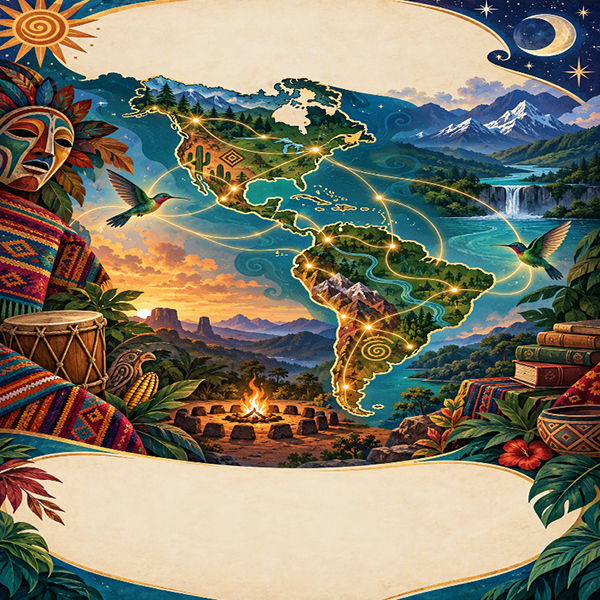
A colorful illustrated map of the Americas features glowing connections surrounded by mountains, rivers, hummingbirds, woven textiles, a mask, a drum, books, and a campfire beneath sun and moon motifs.

LIT 4001.002

Folklore: Tricksters, Spirits, & Myth-Making in the Americas

Lettman · Fully Online

Tricksters, spirits, talking animals, magical transformations, and legendary figures have long shaped cultures throughout the Americas. This course explores folklore traditions from African diasporic, Indigenous, Caribbean, and Latin American communities through folktales, legends, myths, oral narratives, and literary works that reinterpret traditional folklore in new historical and cultural contexts. Students will examine how storytelling preserves cultural knowledge, transmits values, and responds to various histories and social change. By bringing traditional folklore into conversation with modern literary texts, students will encounter both folklore itself and literary works that reinterpret and transform traditional stories for new audiences and historical moments. Through comparative analysis of stories, beliefs, and cultural practices, students will investigate the enduring power of folklore to shape identity, memory, community, and everyday life throughout the Americas.
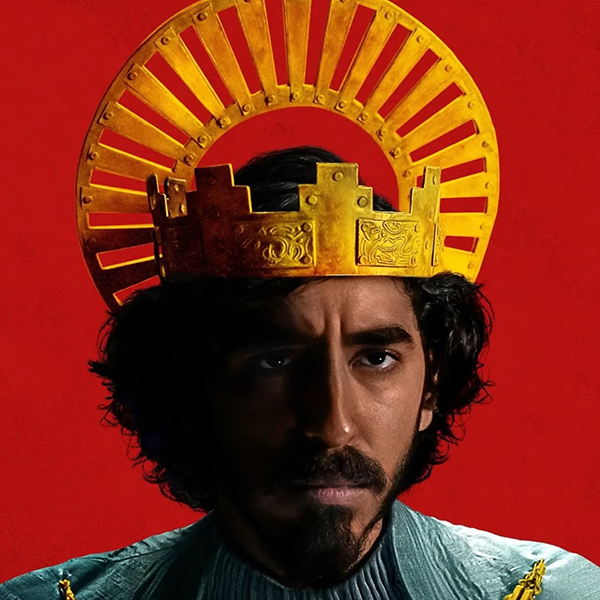
A bearded man wearing an ornate gold crown with a large circular crest faces forward against a vivid red background.

ENG 4114.001

Literature and Film

Thomas · Online Live Lecture · W 4pm-6:50pm · Second Half Term, March 13–May 5 · Pre-1800

What do screenwriters and directors do to texts like Beowulf and Sir Gawain and the Green Knight to reach contemporary audiences? Let's delve into a selection of medieval readings, ranging from Old English to Middle French, to explore literary influences, costume design, lighting choices, and more in their cinematic reimaginings. We'll attempt to determine the effects these films have on modern viewers and, most importantly, the perpetuation of (mis)conceptions of the "medieval."

LIT 3333.001

YA Literature

Fox · In-Person · WF 12:30pm-1:50pm

The aim of this course is to explore representations of adolescence, in literary texts classified as “YA” and texts that take up adolescence as theme. Participants will assess texts (drawn primarily from Black and Latinx cultural contexts) to examine conditions of adolescence and their effects. We will uncover how adolescence intertwines with matters of friendship, sexuality, and violence, as well as ways in which it involves processes of nation, including immigration and assimilation. We will also interrogate renderings of young adulthood as innocent, ignorant, even disposable. Other questions orienting this course include: How is adolescence evoked by the body? How do devices, such as flashback, mediate adolescent longings? How do religion and education regulate adolescent self-expression? In what ways does class privilege inform naiveté? In what respects do gender and race influence one’s upbringing? How might those circumstances be reimagined to alternate ends?

AML 4930.001

American Pulp Science Fiction

MacDonald · Online Live Lecture · WF 9:30am-10:50am

This course will involve a deep dive into the roots, emergence, and rise of the American era of pulp science fiction up to and during its transition into the New Wave works of the 1960s and beyond. Focusing heavily on the editorial contributions of Hugo Gernsback (Amazing Stories) and John W. Campbell’s tenure at Astounding Science Fiction. Beginning with the pre-Amazing works of figures like H.G. Wells, Arthur Conan Doyle, and Edgar Rice Burroughs, we will read the short stories that defined a genre, including seminal contributions by eventual sf grandmasters like A.E. Van Vogt, E.E. “Doc” Smith, C.L. Moore, H.P. Lovecraft, Ray Bradbury, Murray Leinster, Isaac Asimov, Arthur C. Clark, Robert Heinlein, Lee Sprague de Camp, Phillip K. Dick, James Tiptree (Alice Sheldon), Andre Norton (Alice Mary Norton), Ursula LeGuin, and Samuel Delany. We will focus almost entirely on short fiction as this was the primary medium for Golden- and Silver-age sf.
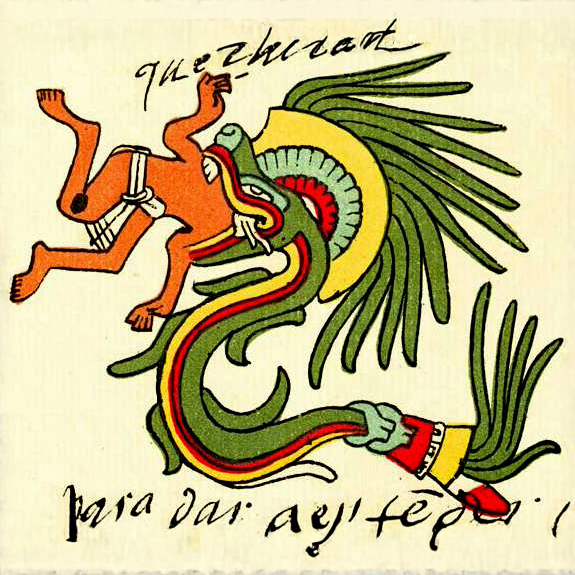
A manuscript illustration depicts a green feathered serpent with an orange human figure extending from its open mouth, surrounded by handwritten text.

ENL 3425.001

Mythology

Taylor · In-Person · WF 12:30pm-1:50pm · Pre-1800

Mythology is frequently referenced, adapted, and reimagined in British and American literature. This course will provide a background in mythology that will enable a deeper understanding of British and American literature. We will delve into a range of mythological traditions, including Greek, Norse, and Mesoamerican mythology. Readings will include classic mythological works such as The Odyssey, The Prose and Poetic Eddas, and The Popul Vuh. We will also look at some contemporary mythic adaptations from British and American literature, though our focus will be reading and studying classic mythology.
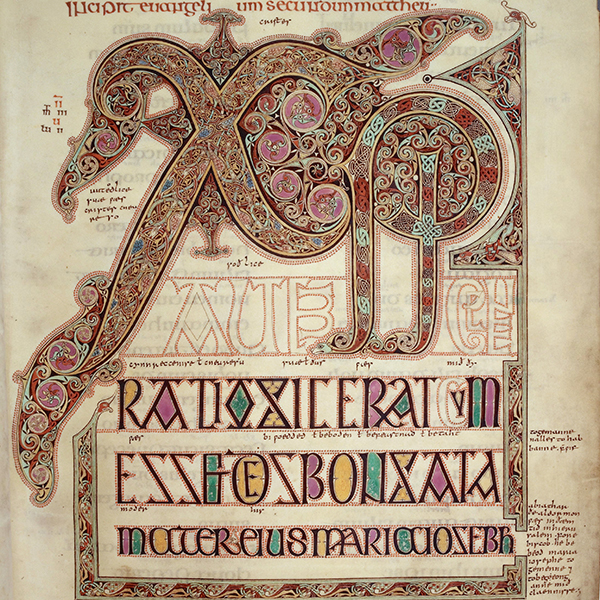
An illuminated manuscript page features elaborate interlaced initials and rows of decorative lettering in red, gold, green, and purple.

ENL 4930.001

Intro to Old English

Thomas · In-Person · WF 11am-12:20pm · Pre-1800

EVER WONDERED WHY ENGLISH IS WONKY? Join me in a language-based course that will require zero essay writing to learn the basics of the EARLIEST form of the English language!
WHAT YOU WILL LEARN: Basic Old English grammar & vocabulary; how to translate prose & poetry; Old English (500-1150 CE) history; how to explain Modern English oddities to your friends, family, & students; and how to spot medieval influence today!

LIT 4094.001

Contemporary Drama

Ulin · In-Person · W 4pm-6:50pm

Like to make a scene? We have a course for that.
This Category 2 course will explore key texts of contemporary drama that we read, annotate, and perform together in a weekly class meeting. Ideas explored include the supernatural, family conflicts, and how to represent the present world on stage. We will consider how to interpret a work of dramatic literature as well as what is involved in moving from the page to the stage.
There will be opportunities to present staged scenes in class, to meet with local theatre professionals, and to consider writing drama for public performance. This course will cover the drama of Eugene O’Neill to the present. This course welcomes students from my previous Modern Drama course as well as those interested in theatre and in writing for film and television.

ENL 4273.001

20th Century British Literature

Schwartz · Online Live Lecture · T 7:10pm-10pm

Course may include British literature from World War I to the end of the 20th century, concentrating on the major movements of modernism and postmodernism. Literary works by Lawrence, Woolf, Eliot, Pinter, Lessing and others may be studied in social and historical contexts, such as the women's and working-class movements, race and immigration and the end of empire.
American Literature from 1865

AML 2020.002

American Literature from 1865

Hagood · In-Person · TR 12:30pm-1:50pm

This course offers an overview of literature in the United States since the Civil War. It will kick off with works by Booker T. Washington, Emily Dickinson, and Walt Whitman, then move on to the Modernists, including Gertrude Stein, Langston Hughes, and William Faulkner, followed by contemporary period, which features Toni Morrison, Louise Erdrich, and James Wright. Prepare to enjoy the greatest writing in American history.
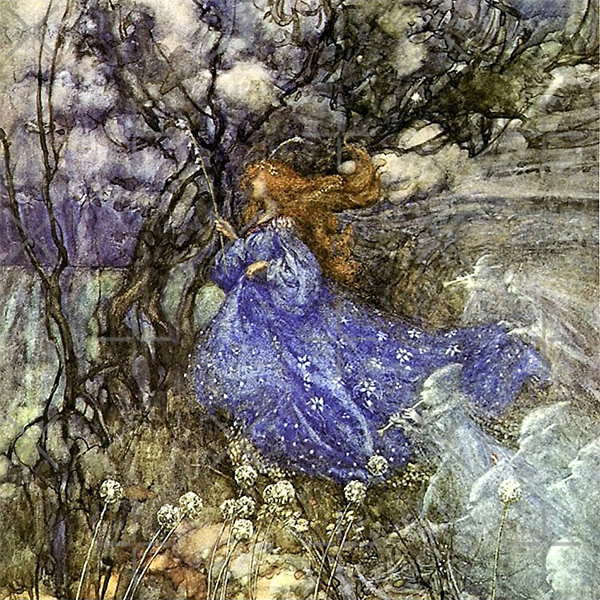
Illustration is titled 'A Fairy' (often referred to with Queen Titania imagery) by the English book illustrator Arthur Rackham created around 1908. Illustration shows a long-haired figure in a flowing blue floral dress among tangled trees, white flowers, and pale winged figures.

LIT 3312.001

Fantasy Literature

Taylor · In-Person · WF 2pm-3:20pm

Do you love adventure, suspense, and whimsy? How about fairies, dragons, unicorns, and other magical creatures? Whether you are a longtime fantasy fan or have you recently discovered a love for genre through Game of Thrones, Lord of the Rings, A Wizard of Earthsea, Children of Blood and Bone, or Fourth Wing, this class is for you! We’ll read classic and soon to be classic fantasy literature as we answer Brian Atterbery’s questions: what is fantasy and who decides? We’ll also discuss the way canonical fantasy literature has influenced other media such film and television.
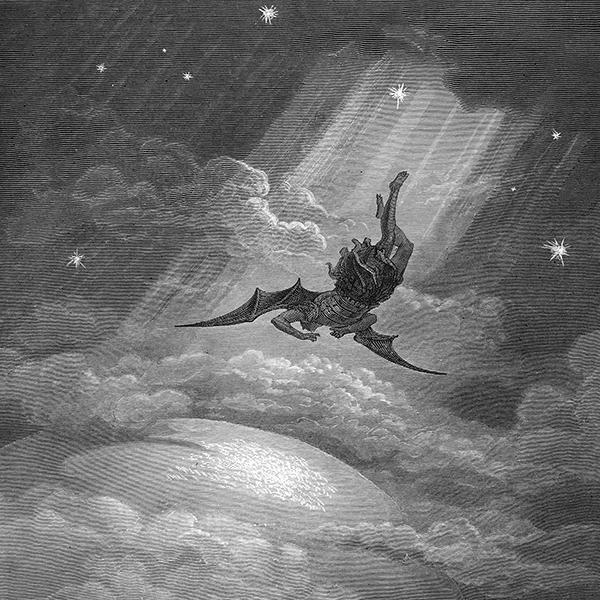
Engraving titled 'Satan Approaching the Earth' (or The Fall of Satan) created by the French artist Gustave Doré in 1866 as an illustration for John Milton’s epic poem Paradise Lost. Engraving depicts a winged figure falling headfirst through a starry, cloud-filled sky.

ENL 4341.001

Milton

Chenovick · In-Person · TR 11am-12:20pm · Pre-1800

The seventeenth-century poet John Milton is a complex figure. Lauded by some as the greatest poet to write in English, he responded to some of the most dramatic political upheavals on English soil, including the English Civil Wars, the execution of King Charles I (which Milton defended), and the restoration of the monarchy. His radical theology and politics are reflected in his portrayal of Satan as a charismatic, freedom-seeking hero in his epic poem Paradise Lost. Milton has been praised as an ardent supporter of free speech, democratic government, and freedom of divorce at a time when these views were considered dangerous, but he has also been criticized for misogyny, especially in his divorce tracts and Paradise Lost. This course will examine his complicated work and legacy in the context of his political, scientific, and theological contexts and in relation to understudied works by seventeenth-century women writers such as Margaret Cavendish, Aemilia Lanyer, and Rachel Speght.

Category 3

A solitary tree with reddish-brown leaves stands beneath a starry sky, reflected in rippling water that shifts from blue to purple.

ENC 4138.001

Principles of Research Writing

Klein · In-Person · WF 9:30am-10:50am

Research takes different shapes across disciplines, yet we share core questions: How do we solve advanced problems, choose effective tools, collaborate, define a good research problem, persuade audiences, and synthesize evidence visually? In Principles of Research Writing, you will explore these exact questions.
Contemporary research faces unprecedented disruption as generative artificial intelligence reshapes standard practices and communication. In this course, you will step into the role of a Research Consultant on FAU’s Interdisciplinary HumanAI Research Team, an advanced educational research lab. Your mission is to propose solutions to the complex challenges AI brings to your chosen major and anticipated career. As AI becomes embedded in daily life, we must research what it means for humans to learn at a time when machine-generated text increasingly selects, predicts, and shapes human ideas.

ENG 4020.001

Studies in Writing & Rhetoric

Barrios · In-Person · WF 12:30pm-1:50pm

AI writes papers. It makes art. It gives relationship advice. It confidently makes stuff up. Your professors are freaking out about it, your future employers are already using it, and everyone has opinions about whether it’s going to save humanity or destroy it. So…what is actually going on? In this class, we’ll look at what people say about AI, what AI says about us, and what happens when machines start writing. We’ll make AI write weird things. We’ll catch it lying. We’ll figure out why it sounds like *that*. We’ll argue about whether using ChatGPT is cheating, collaborating, or something we don’t have a word for yet. Then we’ll learn to use AI for ideas, research, drafting, feedback, and revision without letting it do our thinking for us. How do you stay smarter than the machine while still making the machine useful? Skepticism encouraged.

ENC 4930.001

Legal Rhetorics and Literacies

Korankye · In-Person · TR 12:30pm-1:50pm

Matters of the law affect everyone in different ways, but studies and interpretations of the law are often reserved for only legal experts. What if the law were simplified as a systematic, rhetorical, and social phenomenon so that everyone could gain legal rhetorics and literacies? In this course, students will learn to read, write, research, and design legal and quasi-legal documents, such as lease agreements, contracts, intellectual property rights, etc., as genres that encode and reproduce specific configurations of power, legitimacy, and exclusion. The course invites students to ask: Whose law is this? Who designs the law and for what purpose? Whose interests does it serve or work against? Students will redesign legal documents that prioritize inclusion, accessibility, usability, user experience, and justice for marginalized populations.
Colorful swirls, geometric shapes, flowers, and a bird emerge from the tip of a fountain pen.

CRW 4211.001

Creative Writing: Nonfiction

Anderson · In-Person · TR 11am-12:20pm

Are you interested in telling true stories in a way that grabs readers and doesn't let them go? Or using research to link your personal experiences to broader issues or subjects in our world? You probably already share your life and perspectives on platforms like TikTok and Instagram, but are you ready to turn that storytelling into something even more resonant?
If this sounds exciting, then enroll in Creative Writing: Nonfiction. This workshop-style course will teach you how to use the craft tools of fiction and poetry – figurative language, metaphor, setting, character, and voice – to shape your personal stories and other true narratives into engaging prose. We will study compelling personal essays, topic essays, literary journalism, and memoirs for inspiration, and we will provide feedback on each other’s writing. And we will read past and contemporary examples of short- and long-form creative nonfiction to further shape our understanding of how to write in this exciting genre.

ENG 4910.001

RI: Honors Research

Ma · In-Person · F 2pm-4:50pm

Honors Research builds upon the work completed in Honors Seminar and facilitates the writing of a 20-40 page honors thesis that makes an original intellectual contribution to the discipline. You will continue your training in identifying, reading, evaluating, and contextualizing literary scholarship while adhering to the standards and best practices of research-level literary scholarship. The course may include library research visits, presentations on different research and analytical methodologies, and peer editing workshops. We will work through successive drafts of the thesis in workshops focused on content, style, structure, and tone. Throughout this course, you will be strengthening your argument in dialogue with existing scholarship in order to produce a thesis that can be communicated effectively in its written form and in a conference-style presentation.

CRW 3010.004

Creative Writing

McKay · In-Person · WF 12:30pm-1:50pm

The writer Toni Morrison once said, “If there is a book that you want to read, but it hasn't been written yet, you must be the one to write it.” And, similarly, the poet Ezra Pound said, “Any work of art which is not a beginning, an invention, a discovery is of little worth.” The best kind of creative writing—poem, story, essay—comes when we can find fresh and unexpected ways to present language. Stories and poems are only as strong and fresh as the language they contain, and only through strength and originality of language we can achieve depth in our writing. In this course we will approach creative writing in several ways: through exercises designed to help you find new approaches to writing prose and poetry; by reading and discussing works of fiction, creative nonfiction, and poetry; by spending significant time on writing as well as on the revision process; by developing your critical eye and ear as you read and critique each other’s work.
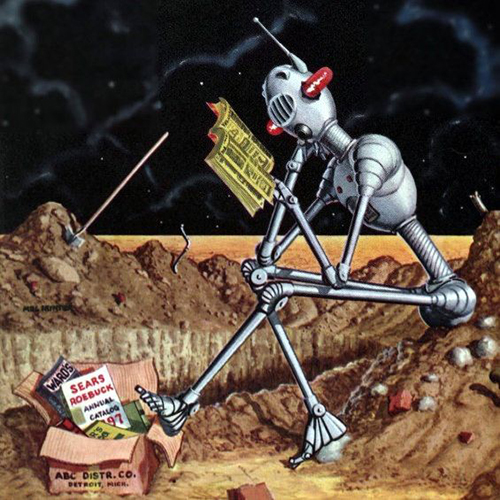
lllustration by Mel Hunter, titled Sears Roebuck Ordering Robot (or featuring his recurring 'Lonely Robot' character), which appeared on the cover of The Magazine of Fantasy and Science Fiction in July 1957. Illustration shows a silver robot seated on rocky terrain, reading a yellow publication beside a box containing a Sears Roebuck catalog.

CRW 4930.001

Writing Science Fiction & Fantasy

Miller · In-Person · TR 2pm-3:20pm

Do you dream of aliens, fairies, and vampires? Science fiction, fantasy, and horror remain some of the most popular genres of narrative fiction, along with all of the other subgenres and hybrid forms that we can group together under the umbrella term "speculative fiction." In this creative writing course, we will experiment with building new fictional worlds and exploring new realities across the many genres of speculative fiction. In addition to workshopping our own short pieces, we will read some contemporary examples of speculative stories as well as craft essays specific to genre fiction.

ENC 3213.024

Professional Writing

Korankye · In-Person · TR 11am-12:20pm

Through a rhetorical approach to writing, this course is designed to help students become critical writers, readers, and researchers in their professional fields by practicing with the rhetorical tools, composing techniques, and writing technologies they need to adapt to different workplaces, social situations, and public/civic contexts. Specifically, they will explore the genres of professional writing (e.g., proposals, emails, memos, reports, résumés/CVs, press releases, etc.); develop rhetorical techniques for analyzing professional writing situations and communicating effectively for different audiences/users; and experiment with writing technologies (AI, multimodal tools, and social media) to prepare them become well-rounded professional writers and effective public intellectuals.

CRW 4932.001

Honors Creative Writing Seminar

Oriogun · In-Person · W 2pm-4:50pm

This is an advanced course where we will be reading and crafting fiction, poetry, and narrative non-fiction, paying special attention to how form and technique contribute to meaning. We’ll consider questions such as: What makes a story or poem interesting? How do we develop an early vision into a finished work, through the process of revision? And how do the choices we make as writers shape what the reader experiences? Through studying poems, short stories and essays that employ elements of craft in service of the whole, we will acquire techniques for our own writing.
We will generate new works of fiction, poetry, and non-fiction to be shared within the workshop space, provide thoughtful and generous written critique of peers’ work, complete weekly writing exercises, participate in discussion of weekly reading assignments, and attend public readings on campus. The class will culminate in a portfolio of revised writing, new work, and a reflection letter. Since all writing is a gradual process of thinking and discovery, greater emphasis will be placed on the revision of your work. More info at See Creative Writing Honors.
A fountain pen rests diagonally across an open lined notebook filled with handwritten notes.

CRW 4121.001

Fiction Workshop 2

Garber · In-Person · TR 9:30am-10:50am

In Fiction Workshop 2, students will gain a deeper understanding of how fiction writers create compelling stories using a variety of craft techniques. Through thoughtful close readings, discussions, writing exercises, and revision workshops, students will experiment with various storytelling techniques, structures, and writing styles while also considering deeper questions about what makes fictional stories, characters, and worlds engaging for the reader. This class will expose students to what’s possible formally, stylistically, and topically in their writing and inspire them to capture the vibrancy of their own voices and experiences on the page.

Department of English

The Department of English proudly fulfills its mission through excellence and innovation in teaching, outstanding research and creative activities, public engagement and distinctive cultural alliances, all within an environment that fosters inclusiveness.

Department of English

location_on
CU Ste. 306
777 Glades Road
Boca Raton, FL 33431

Connect with us