Health and Behavior: Wearable Sensors and Data Analytics for Therapeutic Management
Led by Behnaz Ghoraani, Ph.D.
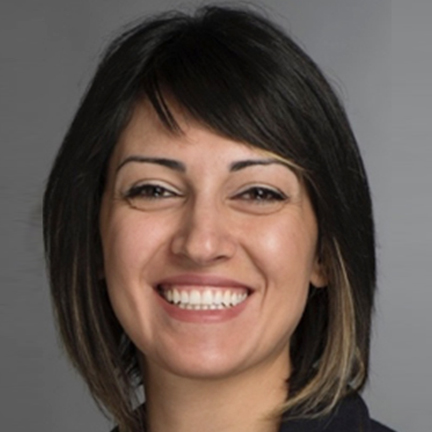
Dr. Behnaz Ghoraani is a Faculty Fellow at the Institute for Sensing and Embedded Network Systems Engineering at Florida Atlantic University (FAU). Dr. Ghoraani completed her Ph.D. in Electrical and Computer Engineering at Ryerson University, Toronto, Canada, in 2010. Dr. Ghoraani is the founder and director of the Biomedical Signal and Image Analysis (BSIA) Lab at FAU. The multidisciplinary research at BSIA lab has largely focused on developing innovative signal analysis solutions to tackle big bottlenecks in data analytics with an emphasis on automated and reliable clinical decision-making systems and effective therapeutic techniques.
Dr. Ghoraani has served at the organizing committee of several conferences including the IEEE International Symposium on Computer-based Medical Systems (CBMS) in 2017 and 2018 and the IEEE Life Sciences Conference (LSC) in 2016 and 2018. Dr. Ghoraani has served as the session Chair in several conferences including the IEEE Engineering in Medicine and Biology Conference (EMBC) in 2017 and 2018. Her students' work was recognized as the best paper award of the IEEE EMBC in 2016 and the Gordon K. Moe Young Investigator Award in 2015 as well as NSF travel award in 2016. Dr. Ghoraani and her students recently filed two patent applications for developing methods for guiding sensing catheters to locate cardiac arrhythmia sources.
This project focuses on the design and evaluation of new algorithms to translate inertial measurement unit data from wearable devices into clinically actionable information about Parkinson's disease (PD) patients' response to medication. The objective is to enable personalized therapeutic adjustments outside hospital settings. The intellectual merit of the proposed REU project is in developing the algorithmic and engineering foundations necessary to realize the envisioned data analysis tools on battery-powered wearable sensors under bandwidth and processing constraints. In situ identification of sparse areas of diagnostically relevant activity across large, high-density datasets is a key challenge. The guiding approach relies on an efficient sensing and computation framework that distributes computationally intensive algorithmic components to high-performance cloud servers, reducing on-device computational load. The Broader Impacts of the project could be profound, with the potential to make fundamental contributions to the nation's precision medicine objectives. The algorithms under development could play a significant role in yielding fundamentally new, individualized therapy adjustment strategies. The approach holds promise for improving healthcare delivery and quality of life for millions of patients afflicted by PD [28, 54, 64]. The project will involve two REU participants each summer. The participants will investigate computational methods for improving the runtime performance of a lightweight, on-device feature extraction algorithm. One participant will focus on on-device computational enhancements, while the second participant wil focus on cloud-based offloading strategies. Participants will be trained in wearable sensor data analysis and gain exposure to program optimization techniques and cloud-based architectures for computation offloading. Under Dr. Ghoraani's leadership, participants will have the opportunity to help realize a new system for analyzing PD patients' movement data in their natural living environments, enabling personalized treatment management.