FAU Logo
FLORIDA ATLANTIC UNIVERSITY
  • students
  • faculty/staff
  • alumni
  • families
  • apply
  • visit
  • give
  • FAU Home
  • Institute for Smarter Cities, Spaces, and Health
  • REU Program in Sensing and Smart Systems
  • 2018 Projects
  • REU - Geochemical Sensing
Institute for Smarter Cities, Spaces, and Health
  • Home
  • About Us
People
  • Leadership & Faculty Fellows
  • Affiliate Faculty
  • Postdocs
  • Student Assistants
Events & Media
  • Newsroom
  • Events
  • Videos
 
  • REU (Undergraduate Research Opportunity)
  • Funding & Awards
Institute for Smarter Cities, Spaces, and Health
SUB MENU
  • Institute for Smarter Cities, Spaces, and Health
    • About Us
    • People
      • Leadership & Faculty Fellows
      • Affiliate Faculty
      • Postdocs
      • Student Assistants
    • Newsroom
    • Events
    • Videos
    • Opportunities
 

Marine and Environment: Geochemical Sensing

Mentor: Jordon Beckler, Ph.D.

Scholar: Zachary Wilhelm

Home Institution: University of Utah

PROJECT

We propose to construct a modified electrode array to perform continuous, long-term in situ voltammetric observations. Our array will have eight vertical pads each with three electrodes (i.e. triplicate redundancy) and the electrodes will be made from Au. Our array will be inexpensive to manufacture and easy to reproduce. The electrodes can be operated with or without the Hg amalgam, depending on the analytes of interest. This design will eliminate the requirement of polishing each electrode, allow for faster data acquisition, and enable long-term, continuous observations from a fixed position in sediments. Unlike our current electrode, we will physically insert the electrode array into the sediment before taking any readings and the electrode will remain at a fixed-position for the duration of the monitoring experiment. This will allow for us to take both dissolved O2 measurements in the overlying water, while also allowing measurement of reduced anaerobic metabolites within the sediments. A series of voltammetric experiments will be conducted at each of the eight pads in succession. The measurements will ultimately generate an eight-point depth profile. While this is of much coarser vertical resolution than that produced by the microprofiling technique, it should be possible to resolve the relative depths of aerobic, metal, and sulfate respiration. These processes provide information regarding the rates of organic carbon degradation, sediment oxygen consumption and overlying water column hypoxia, the potential for nutrient release from sediments and eutrophication of the water column, and the generation of “toxic” sulfide which may adversely affect burrowing organisms and plant health.

View presentation.   View video presentation.
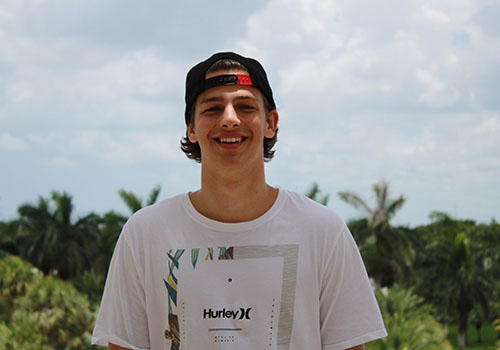
Zachary Wilhelm
Florida Atlantic University Owlhead Logo
Florida Atlantic University
777 Glades Road
Boca Raton, FL 33431
Campuses
  • Boca Raton
  • Dania Beach
  • Davie
  • Fort Lauderdale
  • Harbor Branch
  • Jupiter
Resources
  • Academic Calendar
  • Employment Opportunities
  • Program Search
  • Parking
  • Report a Concern
  • Transcripts
Info
  • Contact Us
  • Directory
  • Emergency & Safety
  • FAU Schools
  • Media
Social
  • facebook
  • twitter
  • youtube
  • instagram
  • linkedin
  • Search Programs
  • Request Info
  • Visit Our Campuses

If you are experiencing difficulty accessing information on the Florida Atlantic University website due to a disability, visit the website accessibility page.

Florida Atlantic University embodies a culture of strategic and collaborative community engagement that results in mutual benefit to the institution and the internal and external communities that it serves.

  • Privacy Policy
  • Regulations & Policies
  • Consumer Information
  • Get Help
  • Site Index
  • Student Accessibility
  • Public Records
2026 Florida Atlantic University
©