El Niño Held the Atlantic to One Hurricane in 2026, Fewest Since 1925
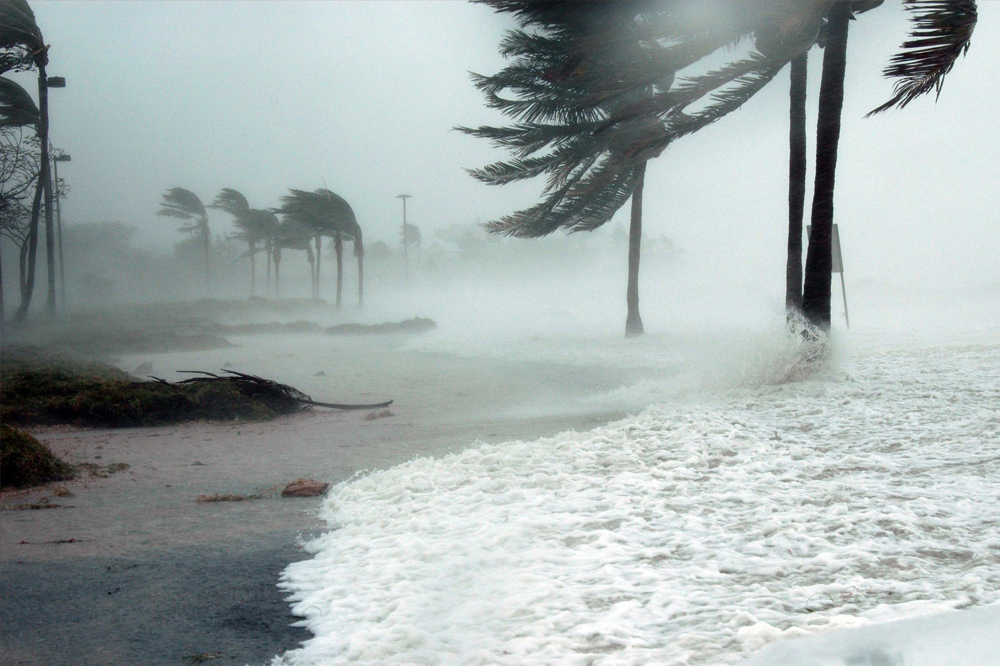
BOCA RATON, Fla. – The 2026 Atlantic hurricane season, which officially ends Nov. 30, will go down as one of the quietest on record. The basin produced 10 named storms but only one hurricane, Isaias, which did not form until October. That made it the latest first hurricane in 121 years and the first season since 1925 with a single hurricane.
The driving force was a historically strong El Niño. It increased wind shear across the Atlantic’s main development region while fueling record-breaking activity in the eastern Pacific.
“This season shows how far El Niño’s influence can reach,” said Yijie Zhu, Ph.D., an assistant professor in the Department of Geosciences within Florida Atlantic University’s Charles E. Schmidt College of Science. “The same pattern that warmed the eastern Pacific produced strong wind shear over the Atlantic, which tilts and disrupts developing storms before they can organize. Conditions in the Atlantic simply never allowed storms to take hold.”
Zhu studies what happens to hurricanes after they reach land, including how quickly they weaken after landfall and how far their damaging winds penetrate inland. His research, published in journals including Geophysical Research Letters and the Bulletin of the American Meteorological Society, provides information needed to improve forecasts of storm intensity and wind radius changes after landfall. He also has used accumulated cyclone energy, a measure that combines a storm’s strength and duration, to estimate how often Florida can expect tropical cyclone activity of a given magnitude. By that same measure, 2026 ranks among the least active Atlantic seasons on record.
“A quiet season is not the same as a safe season,” said Zhu. “Isaias was the only hurricane this year, and it still made landfall in Florida. It only takes one storm, and a hurricane’s impacts can extend far beyond where the center comes ashore.”
In July, Zhu and his team received the WLW-ECOS Interdisciplinary Research Award for their project “Integrated Solutions for Hurricane Flooding and Seawater Intrusion in Southeast Florida.” The work focuses on hurricane resilience, flooding and seawater intrusion in coastal communities.
To arrange an interview, contact Yijie Zhu, Ph.D., directly at yijiezhu@fau.edu, or contact Brittany Wise at 850-323-0353 or wiseb@fau.edu.
About Florida Atlantic University:
Florida Atlantic University is one of the nation’s fastest-rising public research universities, serving more than 32,000 students in South Florida. Ranked among the Top 100 Public Universities by U.S. News & World Report, Florida Atlantic is also one of only 13 institutions nationwide to hold Carnegie Foundation designations for R1 research, opportunity and community engagement. Guided by its strategic plan, “2031FAU: Where Tomorrow Begins,” the university is focused on delivering career-ready education and experiential learning, driving scholarly inquiry that creates healthier, safer and more prosperous communities, strengthening institutional excellence, and elevating its impact across South Florida and beyond. Florida Atlantic continues to advance its position as Florida’s first quantum university, integrating research, education and industry partnerships around next-generation computing technologies. Through other signature strengths in neuroscience and healthy aging, environmental, ocean and coastal innovation, and national defense and autonomous systems, Florida Atlantic expands knowledge, fuels economic opportunity and fulfills its mission as South Florida’s hometown university.