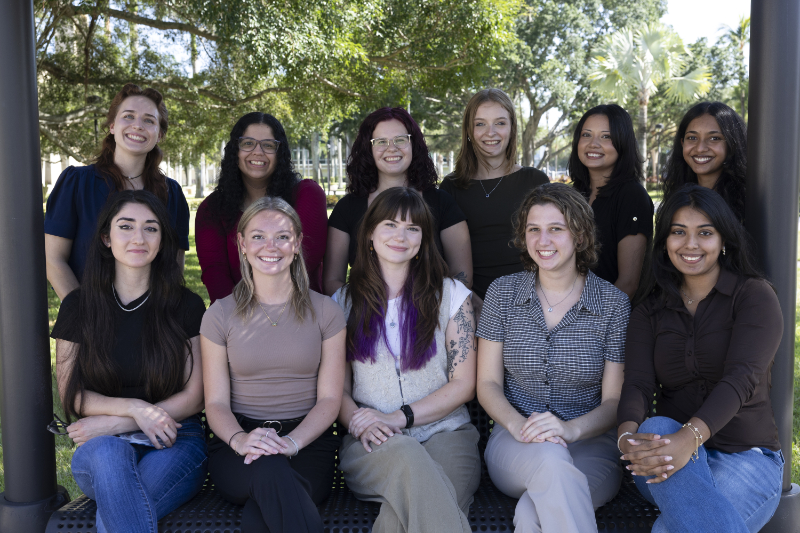
Institute Neuroscience Graduate Trainees (NGP) 2026
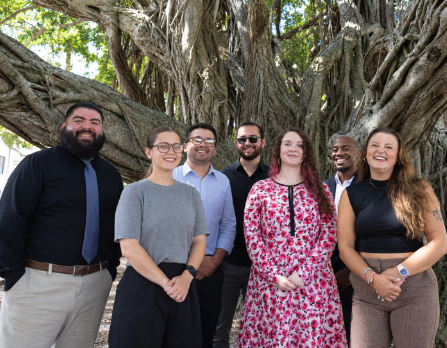
Institute Neuroscience Graduate Trainees (NGP) 2025
Institute Neuroscience Graduate Trainees (NGP) 2024
Institute Neuroscience Graduate Trainees (NGP) 2023
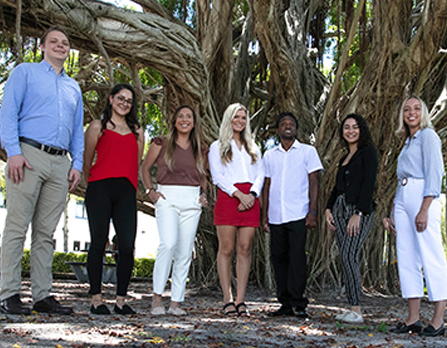
Institute Neuroscience Graduate Trainees (NGP) 2022
INSTITUTE NEUROSCIENCE GRADUATE PROGRAM TRAINEES (NGP)
|
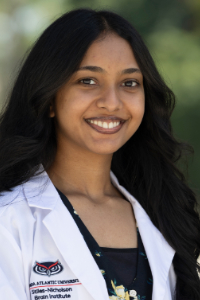
Shaina Binu Entered: Neuroscience Graduate Program NGP 2026 "I majored in Neuroscience, with minors in Psychology and Pre-Health, at Nova Southeastern University. My overall goal is to better understand how different environmental and lifestyle factors can influence brain health and contribute to the development of neurological diseases. During my undergraduate studies, I had the opportunity to join the lab of Dr. Lisa Robison at NSU, where we used mouse models to study how diet and exercise can influence brain health and the risk of Alzheimer's disease and related dementias. Through this experience, I developed a strong interest in researching mechanisms that impact disease risk and identifying ways to promote long-term brain health. I was drawn to the FAU Neuroscience Graduate Program because of its interdisciplinary and collaborative partnership with the Max Planck Florida Institute for Neuroscience, as well as the wide range of faculty research interests that align with my own. I learned about the program while exploring Ph.D. programs with strong research emphases on lifestyle factors and neurodegenerative diseases. The program’s collaborative research environment and diverse faculty expertise strongly align with my academic and professional goals of becoming a well-rounded neuroscience researcher. " |
 |
|
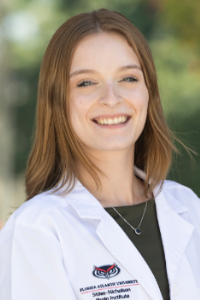
Ella Burch Entered: Neuroscience Graduate Program NGP 2026 "In my undergraduate program I worked in a lab that examined neurodevelopmental differences between wildtype and transgenic mouse models of 22q11.2 Deletion Syndrome, both behaviorally and molecularly. My overall goal is to contribute to the advancement of neuroscience research while maintaining a path in neurodevelopmental research with topics of interest expanding into the areas of maladaptive stress and addiction. I was initially drawn to the NGP after speaking with FAU faculty at the Society for Neuroscience conference. I was drawn to the diversity of research and institutional partnerships that allow access to state-of-the-art equipment and research. Once I interviewed, I could feel that the NGP community was something that I wanted to be a part of! " |
 |
|
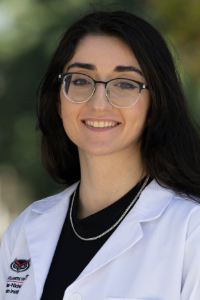
Dalia Elkhatib Entered: Neuroscience Graduate Program NGP 2026 "I majored in Neuroscience with a minor in Psychology at Indiana University Indianapolis (formerly IUPUI). My most recent project has been with Dr. Oberlin at the Indiana University School of Medicine, where I’ve been investigating the efficacy of a virtual reality intervention aimed at increasing abstinence in subjects recovering from substance use disorders. In this intervention, subjects interact with two future versions of themselves, age-progressed 15 years–one still suffering from addiction, and another who has remained in recovery, visibly healthier. Inspired by promising pilot study results, I have been exploring how physiological responses throughout this paradigm might predict reduced impulsivity post-intervention, as well as other psychological measures implicated in improved treatment outcomes. Moving forward, I am most interested in understanding the neural bases of decision-making, meta-awareness, perception, and other higher-order cognitive tasks–how these shape the human experience, what they reveal about the nature of our consciousness, and how some of these mechanisms might be leveraged in the treatment of psychiatric disorders. I was drawn to the Neuroscience Graduate Program at FAU for its diverse range of research opportunities that appealed to the whole spectrum of my interests. The Center for the Future of AI, Mind, and Society also resonated with my passion for the integration of neuroscience with philosophy, as I believe no field of science is complete without a healthy skepticism of the basic assumptions underlying existing frameworks of research. I am so grateful for the opportunity to participate in this program and grow my skills as a scientist!" |
 |
|
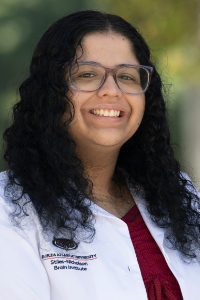
Angelica Garzon Entered: Neuroscience Graduate Program NGP 2026 "I decided to stay at my home institution as they offer many opportunities to grow in the discipline, I value the most. In participating in lab rotations, I believe I will be able to learn new techniques I would not normally retain from a direct admissions lab. During my undergraduate studies, I participated in Dr. Summer Sheremata’s "Visual Perceptions and Memory" lab, where I conducted tasks pertaining to non-language stimuli in relation to visual crowding. Results of this project showed that there was a crowding effect more evident in the left visual field than the right. Following this, I initiated my own independent research project utilizing language-related stimuli to compare results between both projects. This research allows for learning disabilities, such as dyslexia, to be assessed through a simple visual attention processing approach rather than a language processing approach. In attending FAU’s NGP, I aim to explore the interdisciplinary nature that the program has to offer and revel in it. I am eager to pursue research in this program and broaden my knowledge in neuroscience as a whole. |
 |
|
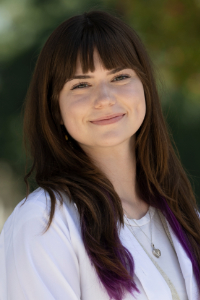
Kamryn Graveman Entered: Neuroscience Graduate Program NGP 2026 "I majored in Psychological Science at Austin Peay State University. My overall goal is to better understand the neural and psychological mechanisms that underlie cognition, behavior, and neurodegenerative diseases, particularly how biological and environmental factors interact to influence brain health and functioning. In my undergraduate program, I worked in research labs focused on psychology and animal behavior research. My experiences included studying emotional affect, sleep, neuropsychological functioning, and avian behavioral models, which strengthened my interest in translational neuroscience research and the relationship between brain function and behavior. I was drawn to the NGP because of its collaborative and interdisciplinary approach to neuroscience research, as well as the diversity of faculty interests within the program. I chose FAU because of the welcoming environment, supportive faculty, and the opportunity of explore different areas of neuroscience through lab rotations before selecting a mentor." |
 |
|
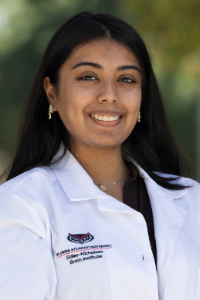
Sarah Haque Entered: Neuroscience Graduate Program NGP 2026 "I majored in Neuroscience with a minor in Computer Science at Wayne State University. My overall goal is to bridge the gap between medical science and technology through a focus on biotechnology—specifically, by refining computational or neuroimaging methods to detect and diagnose neurodegenerative disorders. During my undergraduate program in the heart of Detroit, I spent three years in the Insolera Lab. Working with Dr. Ryan Insolera, we investigated how defects in the autophagy pathway impact neuronal health in Drosophila. Using genetic and molecular techniques, we modeled traits of Amyotrophic Lateral Sclerosis (ALS) to understand how manipulating specific autophagy genes affects the fly's phenotype. I was drawn to FAU's Neuroscience Graduate Program because of its state-of-the-art imaging resources and the immense diversity of research being conducted by its PIs. This program provides endless possibilities to blend computational data and neuroscience, allowing me to tailor my rotations across imaging, data science, or cellular biology. Finally, while I will always love Midwest hospitality, I certainly couldn't say no to South Florida's beautiful weather and world-class research facilities." |
 |
|
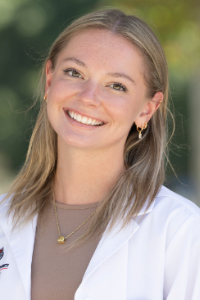
Galina Knysh Entered: Neuroscience Graduate Program NGP 2026 "At Florida State University, I majored in Behavioral Neuroscience and Business Management with a minor in Chemistry. My overall goal is to better understand how neural systems influence behavior, motivation, and decision-making, particularly in the context of neurobiological disorders. In my undergraduate program, I worked in the Spector Lab, where I assisted in projects using rodent behavioral models, lickometry, and pharmacological manipulation to examine how chronic semaglutide exposure alters ingestive behavior and reward-related processes. I was drawn to the NGP because of its collaborative and interdisciplinary research environment, as well as the opportunity to complete lab rotations before selecting a mentor. I was especially attracted to the program’s connection with the Max Planck institute. I chose the program because I felt it would provide an excellent environment to grow as a researcher and explore a wide range of neuroscience topics before committing to a specific area of study." |
 |
|
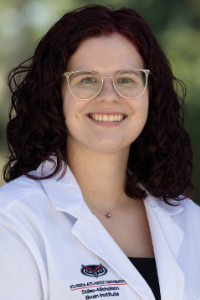
Molly Poore Entered: Neuroscience Graduate Program NGP 2026 After completing my B.S. in Neuroscience at the College of William & Mary, I went on to receive a M.S. in Biochemistry at Virginia Commonwealth University in the lab of Dr. Carmen Sato-Bigbee. Here I explored the role of the endogenous peptide nociceptin on oligodendrocyte development and how this peptide could be involved in neurodegenerative diseases. At FAU, I am hoping to continue to focus on neurodegenerative research, particularly areas relating to dementias. I was drawn to the NGP by the multitude of research opportunities available to continue exploring my interests. I am also excited by the many outreach initiatives and hope to become involved with the surrounding community! |
 |
|
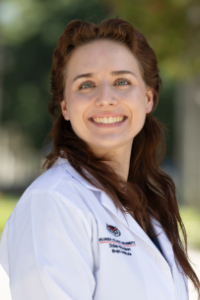
Kylie Quann Entered: Neuroscience Graduate Program NGP 2026 "My overall goal is to contribute meaningfully to Alzheimer's disease research through the use of animal models and translational neuroscience approaches. During my undergraduate studies, I completed an honors thesis in the laboratory of Drs. Bruce and Galizio using Sprague-Dawley rats to investigate the effects of multiple comparison stimuli in a three-dimensional span task as a measure of working memory, including the generalization of learned behaviors to novel stimuli. This research strengthened my skills in behavioral experimentation, data collection, and analysis. I also worked in the laboratory of Dr. Todd Peterson, where I assisted with tracking the progression of photothrombotic-induced stroke in mice treated with a GLP-1 receptor agonist using cryosectioning and immunohistochemical techniques. I was drawn to the Neuroscience Graduate Program because of the strong overlap between my research interests and those of the faculty, the collaborative and welcoming environment, and the access to advanced research technologies. I am particularly excited by the program's interdisciplinary approach, which provides opportunities to integrate perspectives from multiple areas of neuroscience to strengthen future research." |
 |
|
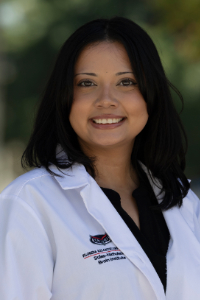
Alexa Rodriguez Entered: Neuroscience Graduate Program NGP 2026 "My overall goal is to pursue a career in medical research, with a particular interest in understanding the biological mechanisms underlying substance use disorders and how stress influences relapse vulnerability. In my undergraduate program, I worked in a research lab studying retinal development and degeneration. There, I built a strong foundation in wet-lab techniques, including tissue processing, immunostaining, and imaging. I was drawn to the NGP for its wide range of research opportunities and interdisciplinary approach to neuroscience. I look forward to exploring the different areas of research while working with faculty whose interests align with my own." |
 |
|
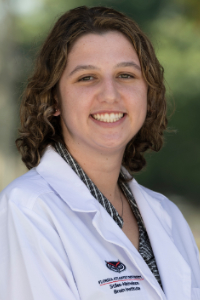
Samantha Winick Entered: Neuroscience Graduate Program NGP 2026 "I majored in Neuroscience and Psychology with a minor in Spanish at Tulane University. During my undergraduate program, I worked in Dr. Galazo's lab, where I assisted with her ZMIZ1 project. This work mainly focused on the cerebral cortex, specifically developmental mechanisms and the cortical neurons they create, as well as the connections these neurons form between each other and their resulting activity. The research I conducted focused on how disruptions to these developmental mechanisms (at the genetic and cellular levels) lead to dysfunction in pathologies. The ZMIZ1 project analyzes the effects of the Zmiz1 gene in neurodevelopmental disorders by conducting developmental and motor assessments with mice. It was in this lab where I developed my passion for behavioral testing and analysis. Through this lab, I gained numerous wet lab and data analysis skills. My research interests focus on animal models of disease. My hope is to partake in translational research that can eventually be used for the betterment of humans that struggle with neurodegenerative or neuropsychiatric conditions. I was drawn to the NGP for the different research areas, but specifically because of its neurobehavior core, which aligns with the research I hope to pursue. NGP has access to new technology and advanced behavioral techniques. I was interested in the community outreach opportunity through MobileMinds, which brings STEM education to children in schools. I am excited to work in a collaborative environment amongst such expert faculty." |
 |
|
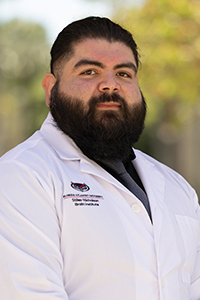
Juan Alas Entered: Neuroscience Graduate Program NGP 2025 "Under the mentorship of Dr. Elan Barenholtz, I am investigating how information is maintained, retrieved, and integrated across extended sequences in large language models. Using computational approaches, we examine how specific sentences influence the prediction of future content and how contextual information contributes to discourse coherence over long distances. This research aims to better understand the mechanisms underlying memory, information retrieval, and sequential organization in both artificial and biological systems, with broader implications for cognition, learning, and the representation of knowledge. I am also involved in research with the National Drug Early Warning System (NDEWS), using machine learning and computational approaches to analyze online drug-related discussions as an early indicator of emerging substance use trends and public health concerns. My broader research interests center on understanding how environmental, cultural, and informational systems shape brain development, behavior, decision-making, and health outcomes. I am particularly interested in integrating perspectives from neuroscience, behavior analysis, cognitive science, and complex systems theory to study how higher-order cognitive processes emerge from structured interactions across multiple levels of organization, as well as questions at the intersection of cognitive science, philosophy of mind, and contemporary physics concerning how physical structure and information dynamics relate to cognitive function and the emergence of mind-like properties in complex systems. I was drawn to the Neuroscience Graduate Program at Florida Atlantic University because of its commitment to interdisciplinary research, collaborative training, and exposure to diverse scientific perspectives. The program's partnership with the Max Planck Florida Institute for Neuroscience, combined with its rotational structure, provided a unique opportunity to explore multiple approaches to studying the brain and behavior. During my first year, I completed rotations in the laboratories of Dr. Alan Kersten, Dr. Anne van Zelst, and Dr. Elan Barenholtz. These experiences exposed me to a wide range of research environments, methodologies, and analytical approaches. Gaining exposure to different lab cultures and techniques not only helped me refine my research interests and identify a path for my dissertation work, but perhaps more importantly, provided multidisciplinary skills and perspectives that will better prepare me as a scientist capable of addressing complex questions from multiple levels of analysis." |
 |
|
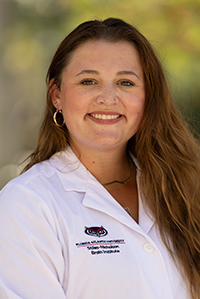
Anna Cook Entered: Neuroscience Graduate Program NGP 2025 "I will be pursuing my research in Dr. Eric Parise's lab in the college of medicine. I am interested in exploring the effects of stress and drug use on the brain's extracellular matrix, specifically how glial cells interact with and modulate the ECM. We are interested in modeling depression in mice to better understand the molecular mechanisms of stress susceptibility and resilience across both sexes. I graduated with a degree in Psychology at Coastal Carolina University with Honors, with a concentration in Behavioral Neuroscience and a minor in Biology. While I was there, I did research with Dr. Ryan Yoder and Dr. Scott Parker on the effects of temporary anoxia/hypoxia in ovo on juvenile leopard gecko brain development and behavior. I also worked to create the first brain atlas for the geckos. I then completed an internship with Dr. Nadia Eckert at GSK in the immunology research unit, focused on investigating treatments for severe cystic acne. I chose FAU because of the diverse research being done and the amazing opportunities available to students. I was also excited about FAU because of the opportunity to do rotations in my first year, which I completed with Dr. Randy Blakely, Dr. Larry Toll, and Dr. Eric Parise." |
 |
|
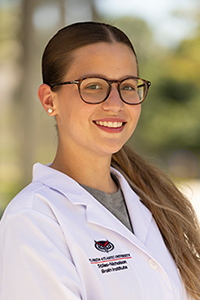
Carla Delgado Entered: Neuroscience Graduate Program NGP 2025 "Under the mentorship of Dr. Lasmezas, I am investigating bioenergetic dysregulation in Parkinson's disease models to better understand the mechanisms underlying neurodegeneration. Through this work, I aim to explore factors that contribute to disease pathogenesis and progression, with the broader goal of advancing our understanding of Parkinson's disease. I am particularly interested in translational neuroscience and the development of therapeutic strategies that may ultimately improve outcomes for individuals living with neurodegenerative disorders. I majored in Biomedical Sciences and Biotechnology with a minor in Psychology. During my undergraduate studies, I worked in an applied industrial microbiology laboratory studying Acetobacter contamination in beer tap lines, which strengthened my foundation in experimental design and data analysis. After completing my undergraduate education, I earned a master's degree in Microbiology and Cell Science at the University of Florida. There, I conducted a literature review focused on microbial infections as a potential risk factor for Parkinson's disease, deepening my interest in neurodegeneration and disease pathogenesis. My role as a Clinical Research Coordinator at the Parkinson’s Disease and Movement Disorders Center in Boca Raton has provided me with hands-on experience conducting Phase I–IV clinical research trials focused on investigational therapies for patients with Parkinson’s disease and related movement disorders. This position has allowed me to engage closely with patients and contribute directly to research that evaluates the safety and efficacy of emerging therapies. Witnessing the real-world impact of these studies has deepened my understanding of the urgent need for innovative treatments and strengthened my commitment to advancing therapeutic research in neurodegenerative diseases. I was drawn to the Neuroscience Graduate Program because of its interdisciplinary training and the opportunity to work with faculty conducting cutting-edge research. I learned about the program while exploring graduate programs recognized for their strong emphasis on neurodegenerative disease research and therapeutic innovation. The faculty's publications and the impactful work highlighted by the university demonstrated a collaborative and dynamic research environment that closely aligns with my academic and professional aspirations." |
 |
|
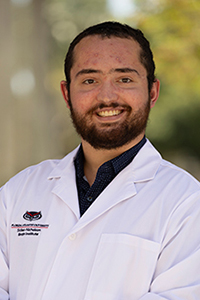
Andrew Goldbaum Entered: Neuroscience Graduate Program NGP 2025 "I am currently working with Dr. Susan Schneider on investigating metastability, a state where neural network activity flexibly transitions between distinct configurations without losing overarching integration and coherence. I am running computational analyses on rich datasets to determine whether proxies of metastability in the brain can track the differences in conscious engagement between distinct behavioral tasks. I am excited by this and related questions because of the wide-ranging implications, from potentially helping settle long-standing philosophical debates on consciousness to giving us insight into the possibility of AI sentience. At the University of St Andrews in Scotland, I worked in a research lab which used immunohistochemistry and behavioral techniques to study adult neurogenesis and memory in mice, though I specifically utilized those techniques to study the effects of environmental enrichment on indicators of anxiety in mice. These ideas intrigued me due to their implications in how influential the environment is in shaping the development of emotional processes, something that would be very important for embodied artificial agents. I chose the NGP because of the cutting edge, interdisciplinary environment - the distinct fields within neuroscience are not only well represented but are in constant collaboration. The faculty are open minded and highly knowledgeable. I found this to be demonstrated by my rotations with Dr. Rodrigo Peña, Dr. William Alexander, and Dr. Susan Schneider. Given my computational interests, I felt I received valuable background in distinct yet complementary perspectives. With Dr. Peña, I got a close, detailed look at co-transmission by simulating its various aspects. With Dr. Alexander, I gained insight into the bigger picture, brain-level models of cognition like active inference. With Dr. Schneider, I got a highly interdisciplinary view relating neuroscience, physics, and AI." |
 |
|
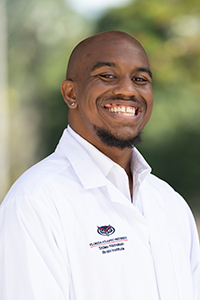
Michael Robinson Entered: Neuroscience Graduate Program NGP 2025 "I am pursuing my research in Dr. Simon Pieraut’s lab. Using transgenic mouse models, I investigate the molecular and cellular mechanisms controlling the development and organization of the inhibitory networks, as disruptions in these processes have been implicated in numerous neurodevelopmental and neurological disorders. I am particularly interested in understanding how Slit2 signaling contributes to the formation and plasticity of neuronal connections. My early work shows that the Slit2 pathway influences the development and connectivity of parvalbumin interneurons, a key neuronal population involved in regulating brain activity and information processing. Through this work, I hope to gain a deeper understanding of the molecular mechanisms that shape inhibitory circuit formation and how their disruption may contribute to brain disorders. During my undergraduate studies, I majored in Neuroscience at the University of Miami, where I developed a strong interest in how both biological mechanisms and social experiences influence brain health, particularly in marginalized communities. As a research assistant in Dr. Sannisha Dale’s SHINE Lab, I supported projects examining how microaggressions, stigma, and systemic discrimination affect mental and physical health outcomes in Black women living with HIV. Through this work, I gained valuable experience in behavioral assessments, survey data collection, and applying trauma-informed, intersectional research frameworks. I also served as a NIH-funded Summer Undergraduate Research Fellow in Dr. Helen Bramlett’s lab at The Miami Project to Cure Paralysis, where I investigated the role of Gasdermin D knockout in reducing neuroinflammation after traumatic brain injury. In this role, I developed technical skills in tissue processing, histology, microscopy, and the analysis of inflammatory markers in mouse models. I was attracted to the Neuroscience Graduate Program because of its multidisciplinary approach to neuroscience research. My laboratory rotations included working with Dr. Rodrigo Pena, Dr. Tanja Godenschwege, and Dr. Pieraut, which exposed me to diverse areas of neuroscience and a wide range of experimental approaches. Because my interests span neural development, circuit function, and behavior, the opportunity to explore different research environments helped me identify the scientific questions I am most passionate about pursuing for my dissertation work. I am grateful for the opportunity to train within such a collaborative community and to utilize the exceptional resources available as I continue to grow as a neuroscientist and prepare for a career in research." |
 |
|
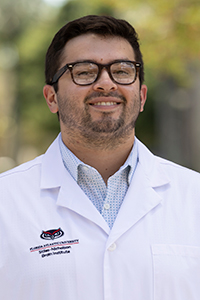
Omar Rodriguez Entered: Neuroscience Graduate Program NGP 2025 "Under the mentorship of Dr. Luke Rosedahl, I am actively researching the neural systems involved in learning and memory. To investigate the roles of specific brain regions in these complex cognitive tasks, I utilize computational methods and neuroimaging techniques such as fMRI. Our lab’s goals are to develop an understanding of how the brain learns and performs, and how we can apply that to human training. At Baylor University, I earned a bachelor’s degree in Neuroscience. I was drawn to the interdisciplinary nature of the field and knew early on that I wanted to pursue further education with the ultimate goal of helping individuals with neurological disorders. During my time at Baylor, my initial exposure to research came through a clinical project that assessed the effects of live musical performances as an alternative therapy for depression and agitation in older adults with dementia. After graduation, I became the lab manager for Dr. Tracy Centanni’s GAPP Lab at the University of Florida, supporting projects involving neuroimaging (EEG) and interventions for communication disorders. I was drawn to the NGP for its broad opportunities to explore neuroscience across multiple domains. I aspire to become a well-rounded scientist and to develop my skills across the various areas of emphasis within the program. The program’s structure, including first-year lab rotations and a wide range of coursework, offers the ideal environment for this growth. My rotations with Dr. Behnaz Ghoraani, Dr. Kevin Darby, and my advisor Dr. Luke Rosedahl, all provided a premier learning environment for me to perform high-quality research." |
 |
|
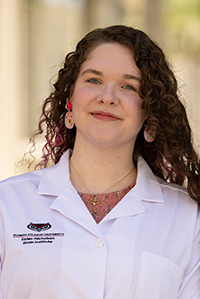
Katherine Willis Entered: Neuroscience Graduate Program NGP 2025 "I am pursuing my research with Lyonna Parise investigating peripheral immune modulation of the blood brain barrier using a mouse model. Using immunohistochemical staining and behavioral tests I will be elucidating the role of leukocyte infiltration during chronic stress and alcohol consumption on Blood brain barrier dysregulation. I received my BS in Psychology with a minor in biology and a certificate of neuropsychological testing at Arkansas State University. During undergrad, I worked in two Laboratories: Dr. Lorin Neuman-Lee’s herpetological physiology lab, where I examined immunocompetency and hormone levels in a range of reptiles and Dr. Maureen Dolan and Mr. Shea Harris’s mentored NASA SPOCS team at A-State, which sent plastic biodegrading waxworms to the International Space Station. After undergrad, I began working in industry at a small biotech company doing gene therapy work on lysosomal storage disorders. Studying these neurodegenerative diseases helped fortify my resolve to work in neuro research. My overall goal at FAU is to study the complex interplay of the Nervous system and the Immune system. I was drawn to FAU NGP because of the diverse research topics and supportive, collaborative mentors. I had wonderful rotations with Dr. Mare Cudic investigating the physical interaction of tau and amyloid beta, Dr. Simon Pieraut investigating the role of c1q on perineuronal nets in the hippocampus, and Dr. Lyonna Parise investigating the role of neutrophil elastase on tight junction degradation in the blood brain barrier. I am excited to continue to learn new techniques and form strong connections. I will be attending the inaugural Neurophotonics Summer School: Neurovascular imaging across scales in animals and humans at Boston University 2026." |
 |