Ecosystem Impacts
The goal of this objective is to assess how HAB toxins enter coastal food webs and better understand ways that they are transferred through trophic levels to key species.
|
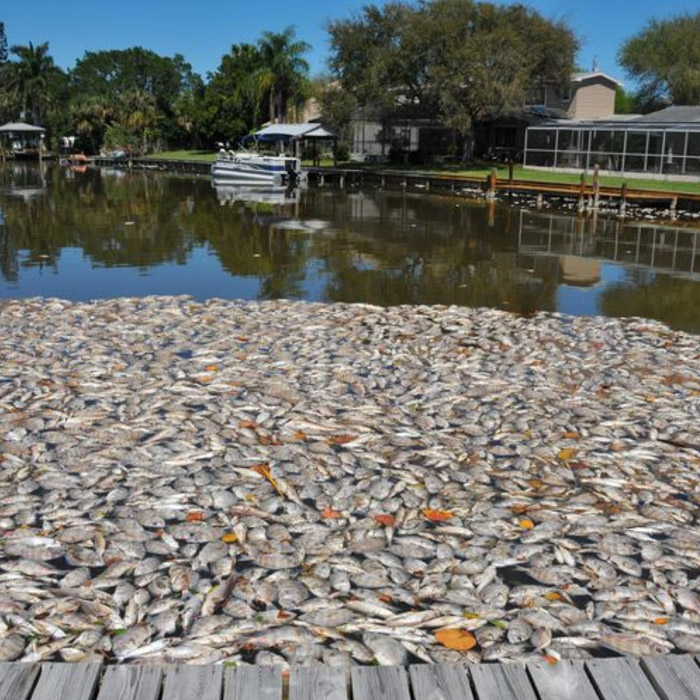
In recent years, the Indian River Lagoon has experienced several extreme and unprecedented harmful algal blooms that have impacted many different levels of the ecosystem. Deteriorating water quality, loss of seagrass and large-scale fish kills have occurred in response to these growing HAB events. In addition, the toxins produced by HAB species are largely undescribed and may have pronounced impacts on the animals and people throughout the IRL region. |
|
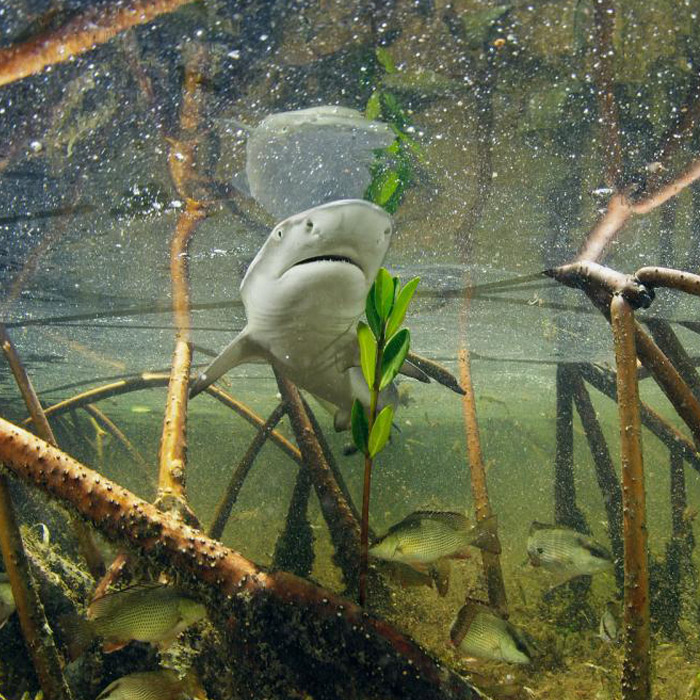
Florida's coastal waters are home to a variety of large-bodied marine vertebrates, like sharks, sea turtles and dolphins, that are also impacted by HABs. Because they share similar exposure to HAB toxins, wildlife can serve as an important indicator for public health. These animals consume many of the same fish and shellfish species, inhabit waters used for recreation and have similar life histories as humans. Understanding how these organisms are exposed to harmful toxins and the concentrations that accumulate in their tissues, can give researchers more information on how Florida residents are impacted during HAB events. |
|
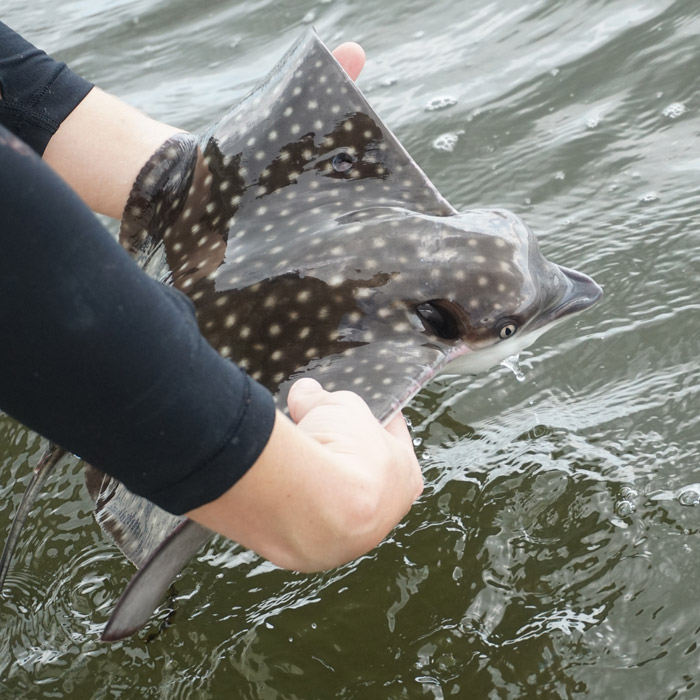
Lead PI: Matthew Ajemian The Indian River Lagoon is home to 17 different species of sharks and rays. These animals play a key role in estuarine food webs and are indicators of both environmental and human health. This project aims to evaluate the exposure of two common species, bull sharks and spotted eagle rays, to HAB toxins in the Indian River Lagoon during bloom and non-bloom events. Because these species represent different trophic levels, researchers are also learning more about how toxins are transferred up the food chain. |
|
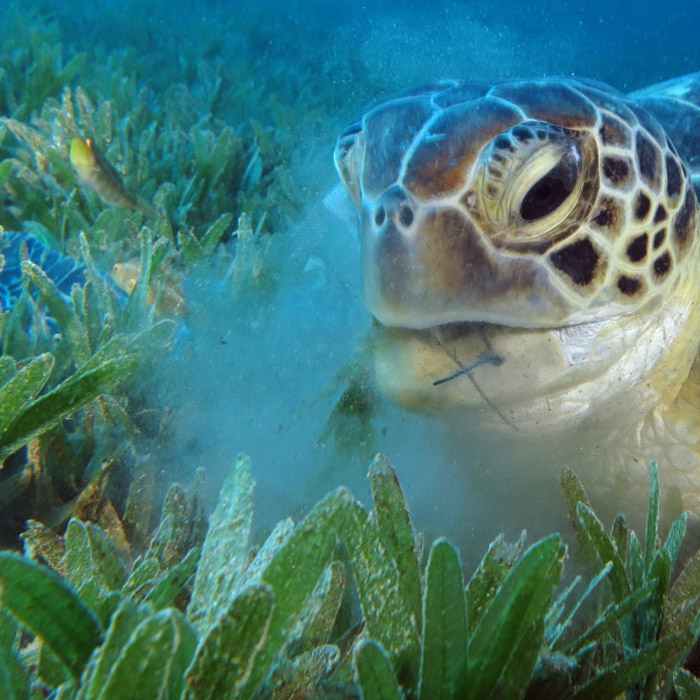
Lead PI: Annie Page The health of long-lived animals, like sea turtles, serves as a proxy for the health of the environment that they live in. This project uses a field-based bio-monitoring program to quantify the exposure of green sea turtles to HAB toxins in the Indian River Lagoon. In addition, researchers are assessing the health of these animals to gain a better understanding on long-term impacts that blooms may have on the health of local sea turtle populations. |
Seagrass Habitats
|
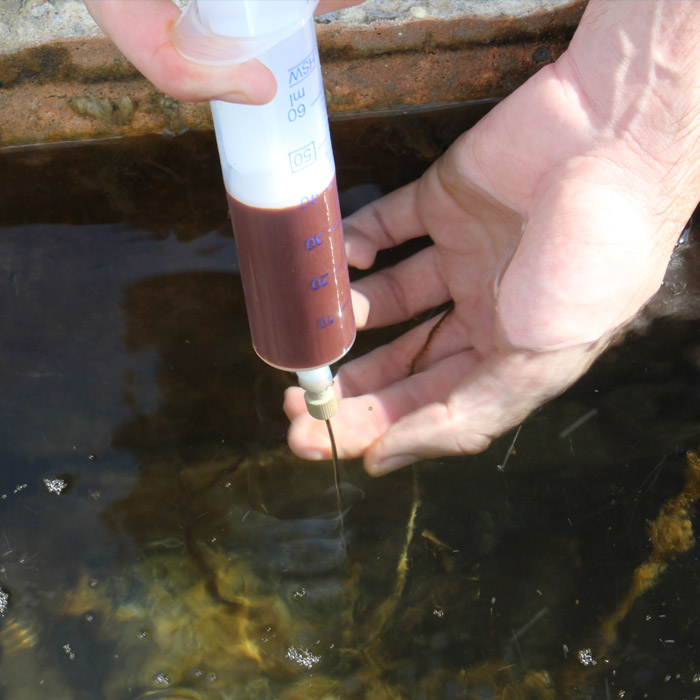
Harmful Algal Blooms can deplete oxygen in the surrounding water and deposit organic carbon into sediments. This often causes bacteria to produce a toxic compound called sulfide, which is well-known for it’s “rotten egg” smell. Sulfide production within sediments can make it difficult for seagrass to survive or recolonize impacted areas. This project aims to determine if the addition of iron into sulfide rich sediments can help to mitigate its toxic effects and make the substrate more suitable to seagrass growth and restoration.
For more information: Geochemistry Geochemistry and Geological Sensing Lab Blog Marine Botany |