
Economics at Florida Atlantic University is the study of how individuals, businesses, and governments make choices in a world of limited resources. You’ll explore how markets work, how policies shape outcomes, and how data drives decision-making. Economics gives you a powerful framework to analyze real-world problems—whether you’re interested in business, public policy, or global issues. At Florida Atlantic, you’ll learn to think critically, solve complex problems, and understand the forces that shape our society and economy.
About Economics at FAU
Florida Atlantic’s economics programs stand out for their flexibility, small class sizes, and strong connections to South Florida’s dynamic economy. You’ll learn from faculty with Ph.D.s from leading institutions, engage in hands-on research, and have opportunities to participate in initiatives like the Business & Economics Polling Initiative and the Center for Economic Education. The department offers a friendly, collaborative environment and encourages students to get involved in research seminars, speaker series, and the Economics Club. Exceptional students can pursue the Honors in Economics program or accelerate their path with the combined B.B.A./B.S. to M.S. degree.
Degrees Offered at Florida Atlantic
Undergraduate
- Bachelor of Business Administration (B.B.A.) in Economics
- Bachelor of Science (B.S.) in Economics (General or Business Economics concentration)
- Minor in Economics (for business and non-business majors)
- Minor in International Economics (for non-business majors)
- Honors in Economics (for exceptional students)
Graduate
- Master of Science (M.S.) in Economics (tracks: General Economics, Econometrics and Data Analytics, Financial Economics)
- Combined B.B.A./B.S. to M.S. in Economics (earn both degrees in as little as five years).
Explore Degree Programs in Economics
Educational Objectives & Student Outcomes
2. Prepare students for careers in business, government, and research, or for graduate study.
3. Foster analytical and critical thinking skills to solve real-world economic problems.
4. Encourage engagement with research, data analysis, and policy evaluation.
2. Use quantitative and data analysis tools to interpret economic data.
3. Communicate economic ideas clearly in written and oral form.
4. Evaluate the impact of economic policies on businesses, individuals, and society.
5. Demonstrate readiness for professional roles in economics-related fields or for advanced study.
Explore the Latest News in Economics
Join us for a variety of events, from campus visits and career fairs to concerts and competitionsGet Involved in the College
Professor College of Business Economics Professor & Director of the Center for Economic Education College of Business FAU Center|Economics Associate Professor College of Business Economics Boca Raton Campus | Office Depot Center Room 201B Assistant Professor College of Business Economics Boca Raton Campus | Office Depot Center Room 210 Professor and Director of the Business and Economics Polling Initiative College of Business Economics Professor College of Business Economics Stone Fellow & Professor College of Business Economics Associate Professor College of Business Economics Boca Raton Campus | Office Depot Center Room 203D Associate Professor College of Business Economics
Kuntal Banerjee, Ph.D.

William Bosshardt, Ph.D

Christopher Boudreaux, Ph.D

Bryan Cutsinger, Ph.D, MA, BA

Monica Escaleras, PhD, M.S., B.A.
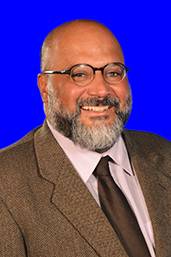
Joao Ricardo Faria, Ph.D, MA, BA

Suman Ghosh, Ph.D, MA, BS

Long Liu, Ph.D
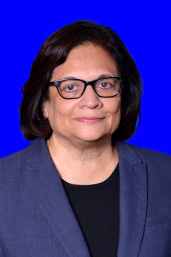
Neela Manage, Ph.D.