Seagrass, Science and Summer: Externs Tackle Coastal Conservation in Woods Hole Marine Lab
The picturesque New England village of Woods Hole, Massachusetts, rests at the southmost point of Cape Cod. Despite feeling like a quiet, secluded coastal getaway, the area has attracted researchers from around the globe to study at this epicenter for marine science since the mid-1800s. Today, more than five major scientific institutions are headquartered in Woods Hole, including the Marine Biological Laboratory (MBL).
Founded in 1888, the MBL is dedicated to scientific discovery – exploring fundamental biology, understanding biodiversity and the environment, as well as informing the human condition through research and education. From early-career scientists to Nobel Laureates, the MBL draws a unique mix of researchers throughout the year, whose interactions have led to multiple transformative breakthroughs in our understanding of biology.
Three Charles E. Schmidt College of Science undergraduates – Holyn Hahn, Matthew Davis and Robert “Land” Johnson – immersed themselves in the region’s rich scientific and historical roots as WLW-ECOS summer externs at the MBL for nine extraordinary weeks.
Holyn Hahn
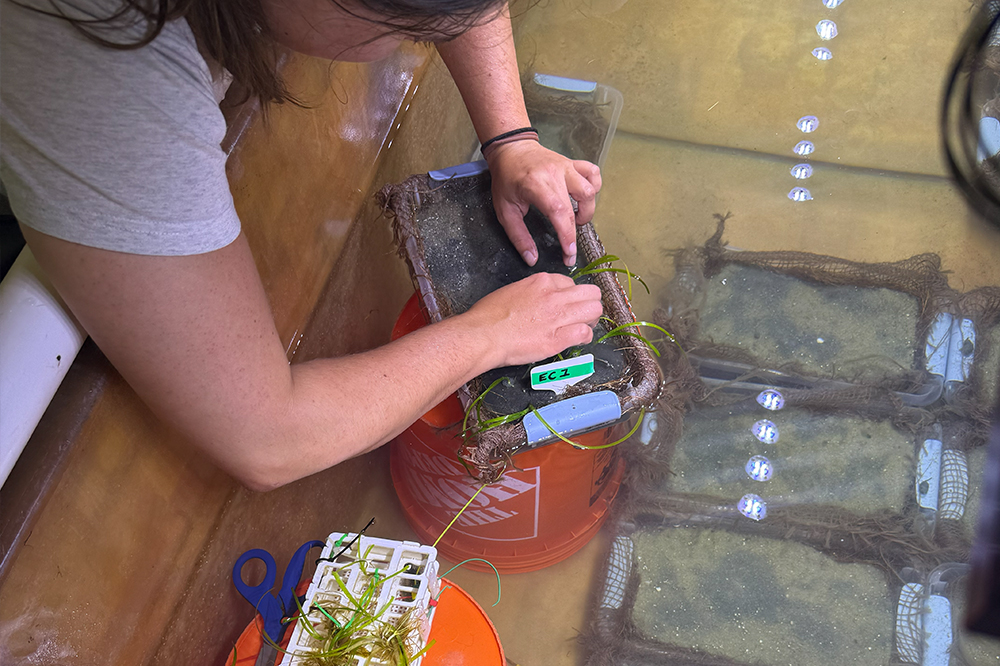
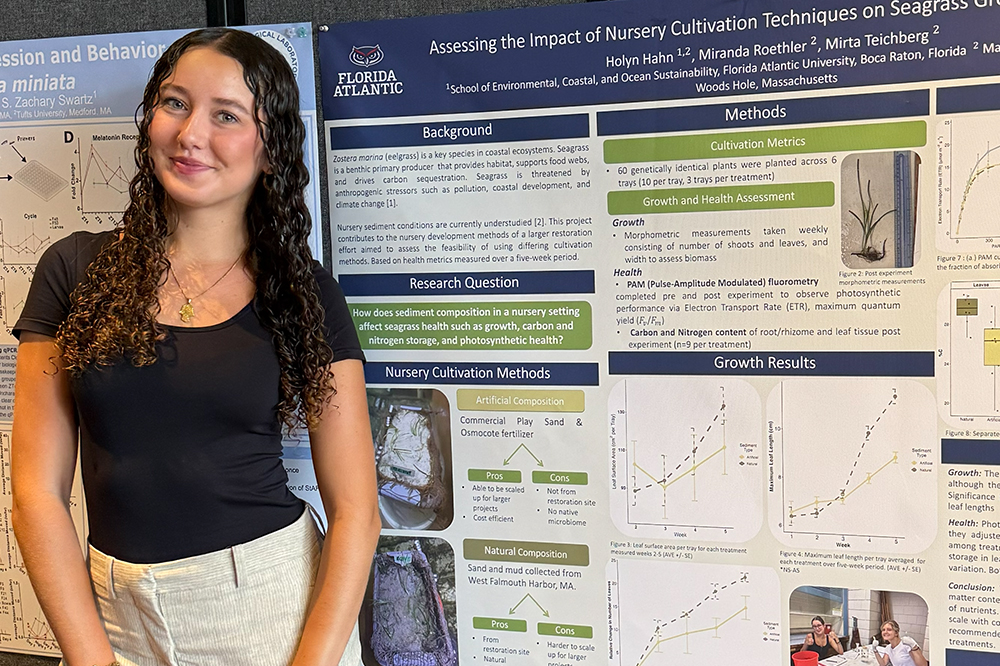
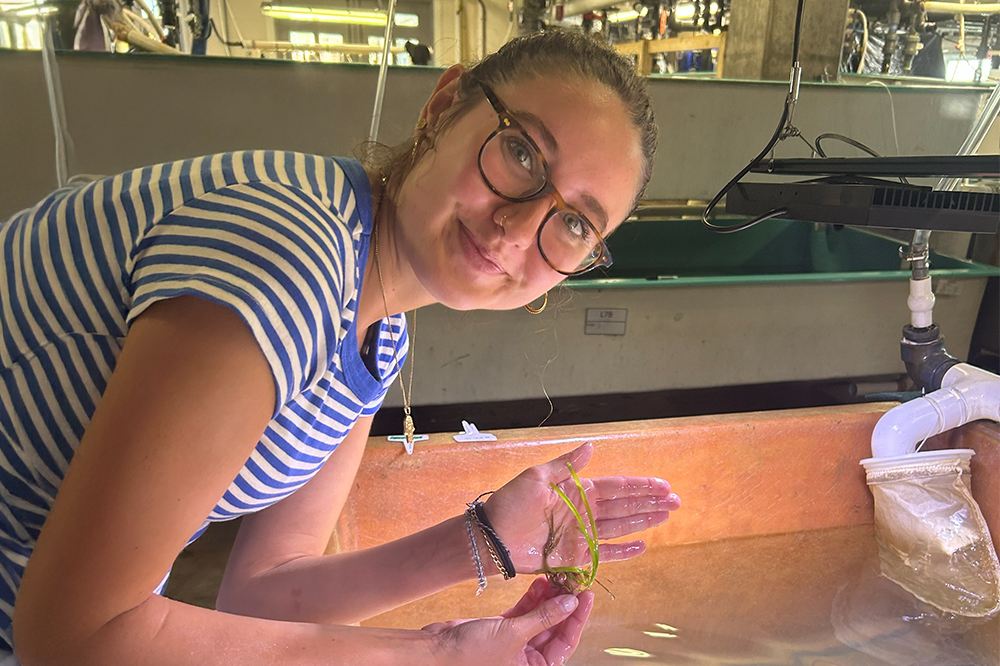
Biological sciences major Holyn Hahn pursued an independent research project to observe and analyze the overall health of seagrass in a nursery setting. She planted 60 genetically identical plants in two sediment types: natural (local sand and mud) and artificial (play sand with fertilizer). Over the summer, Hahn measured plant growth weekly and monitored photosynthetic rates. Finally, she destructively sampled plants to assess carbon and nitrogen storage in above-ground (leaves) and below-ground (roots and rhizomes) tissues.
“My research contributed to the world of seagrass restoration and which approaches to use when deciding on a nursery level of restoration,” said Hahn. “Seagrass is being threatened worldwide from anthropogenic aggravations, so restoration is key in combating these stressors – especially finding and refining the methods of restoration. My hope is that my data and experience will help inspire or guide other restoration efforts.”
|
|
Robert “Land” Johnson
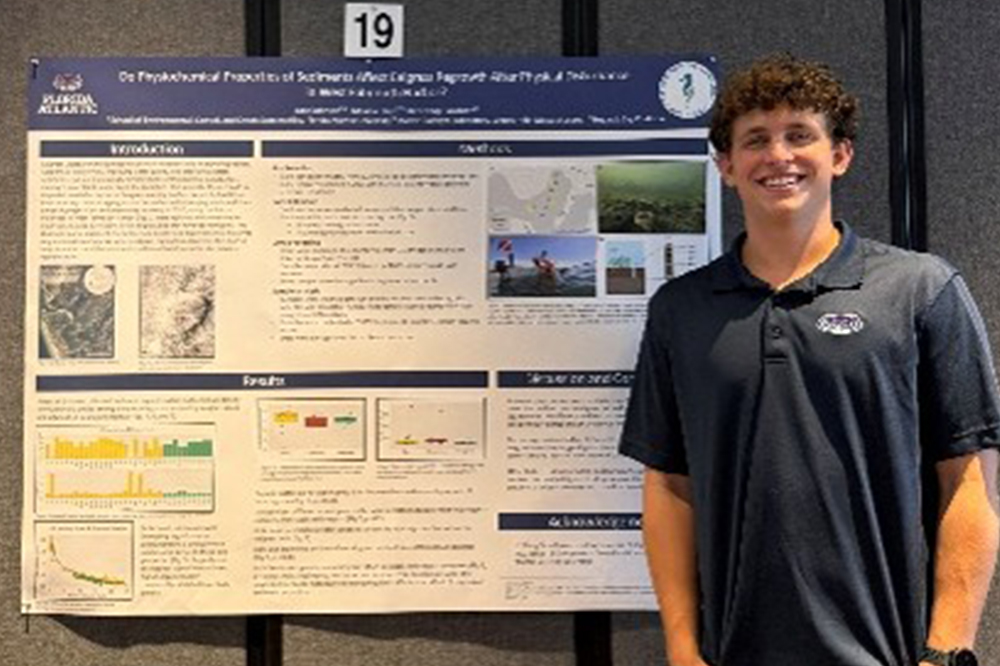
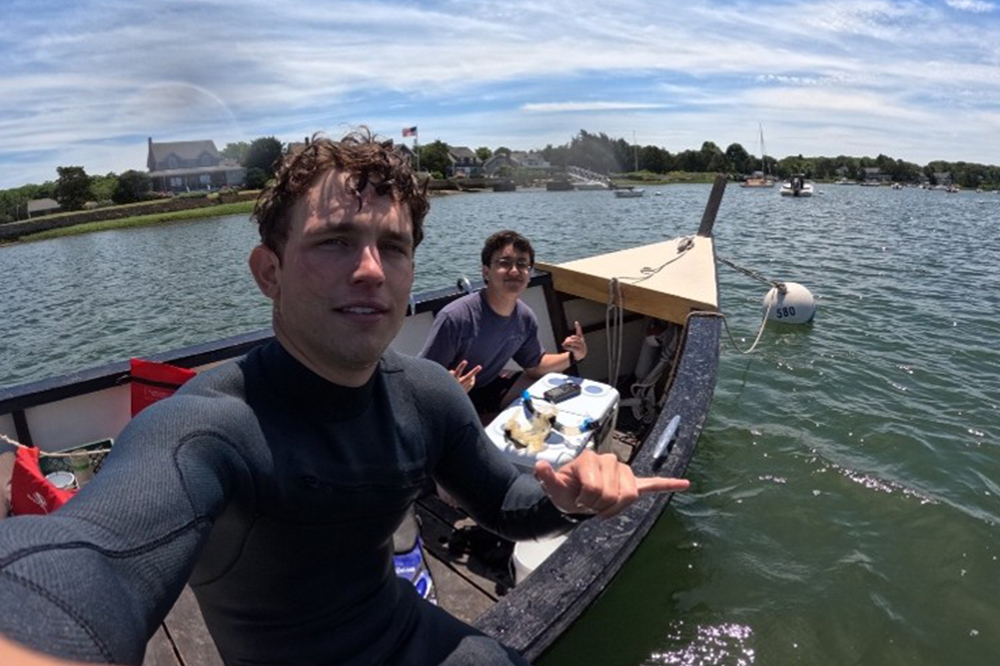
While Hahn’s project focused on sediment compositions in a lab setting and its possible effects on seagrass health, geosciences major Robert “Land” Johnson observed sediment in the field to see where seagrass was present or absent. Working out of West Falmouth Harbor, Johnson looked at the sediment chemistry within the mooring scars to better understand the physical and chemical properties responsible for the growth of Zostera Marina, a specific type of seagrass. Specifically, he examined why eelgrass was not growing back within the mooring scars. Johnson also snorkeled in the harbor to shoot video surveys, as well as collect and analyze sediment cores.
“This research is important on a broader scale because all around the world there has been a decrease in suitable areas for eelgrass to grow,” noted Johnson. “Eelgrass is vital in terms of ecology, biodiversity and water dynamics.”
|
|
Matthew Davis
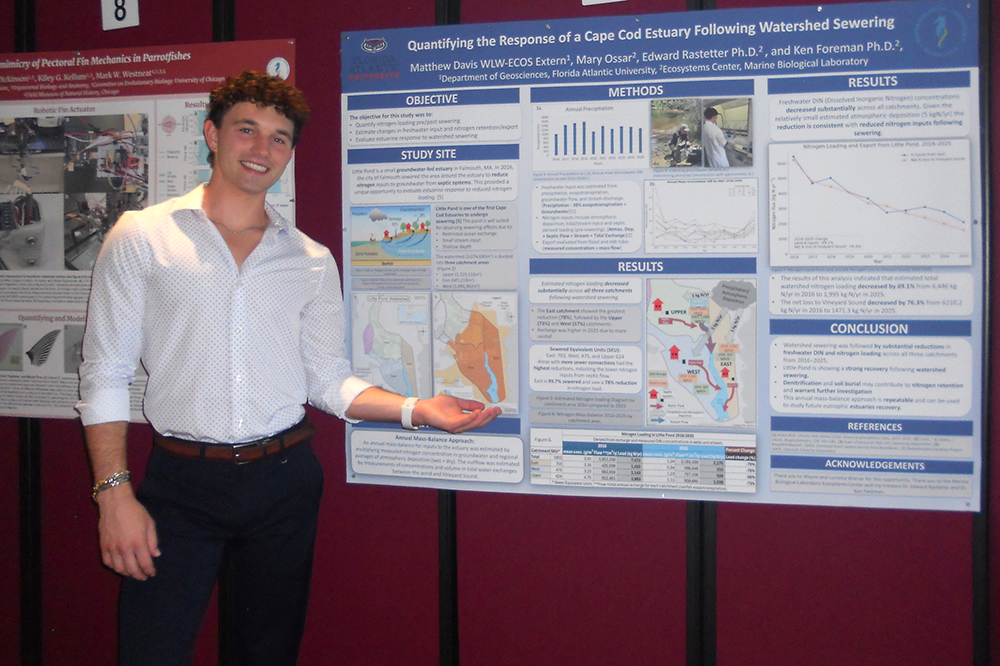
Little Pond, a recovering Cape Cod estuary, is the area geosciences major Matthew Davis focused on researching. His project aimed to better understand how freshwater and nitrogen inputs changed after the removal of septic systems around the estuary.
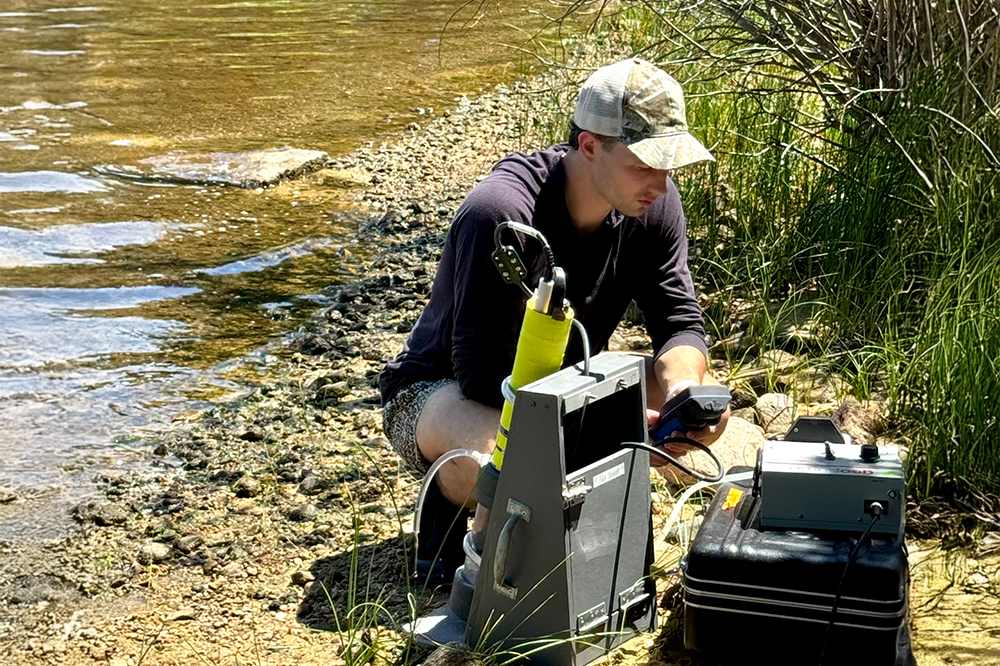
Davis straddled analyzing data using Python to sort through hundreds of water quality, tidal level and ground water measurement datasets from Little Pond, with collecting water quality samples and groundwater well measurements from the estuary. By the end of his time at MBL, he successfully created a mass-balance model of the entire estuary’s freshwater and nitrogen input, which can be recreated to understand the responses and recovery times of estuaries with similar issues.
“Estuaries are vital breeding and nursery habitats for many marine and coastal species. Globally, excess nitrogen from human activities – such as wastewater discharge, runoff and atmospheric deposition – threatens these water bodies,” said Davis. “Cape Cod estuaries are particularly vulnerable due to groundwater-fed systems and widespread septic intrusion. Elevated nitrogen levels trigger algal blooms which deplete oxygen in the water. This causes seagrasses and other plants to die off and negatively effects the entire ecosystem.”
|
|
Off the Clock on the Cape
Outside of their externship research responsibilities, the three Florida Atlantic Owls frequently explored Cape Cod, Nantucket and Martha’s Vineyard. Sometimes they stayed local and took long walks, watched the sunset on the beach or enjoyed biking on scenic paths.
“I haven’t had many chances to travel, and I’ve never been up north before, so exploring New England and Cape Cod was amazing,” shared Davis. “Being at the MBL surrounded by scientists was inspiring. Spending my summer there was truly a once-in-a-lifetime experience.”
Discover New Skills and Opportunities
All three students whole-heartedly encourage students to participate in future WLW-ECOS summer externship opportunities.
“I highly recommend this experience to FAU students who are interested in hands-on research and environmental studies,” stated Hahn. “Every day, MBL offered exposure to top-tier research from around the world through ongoing seminars. This remarkable opportunity allows you to build a strong professional network and connect with the global scientific community.”
“My MBL experience greatly strengthened my interest in a career in conservation and sustainability,” shared Johnson. “The enthusiasm of everyone at the lab, and their emphasis on the abundance of opportunities in the field, reassured me and eased my doubts about pursuing this path.”
“Before this summer, I was interested in climate and environmental science but lacked experience with real research,” said Davis. “Working with environmental data and seeing how fields like hydrology, oceanography, geology and climate science connect showed me I enjoy interdisciplinary research. It also introduced me to new career paths and made me consider graduate school more seriously. I would 1,000% recommend it!”
Ready to be a WLW-ECOS summer extern? Learn more here.