Where Bone Meets Gold
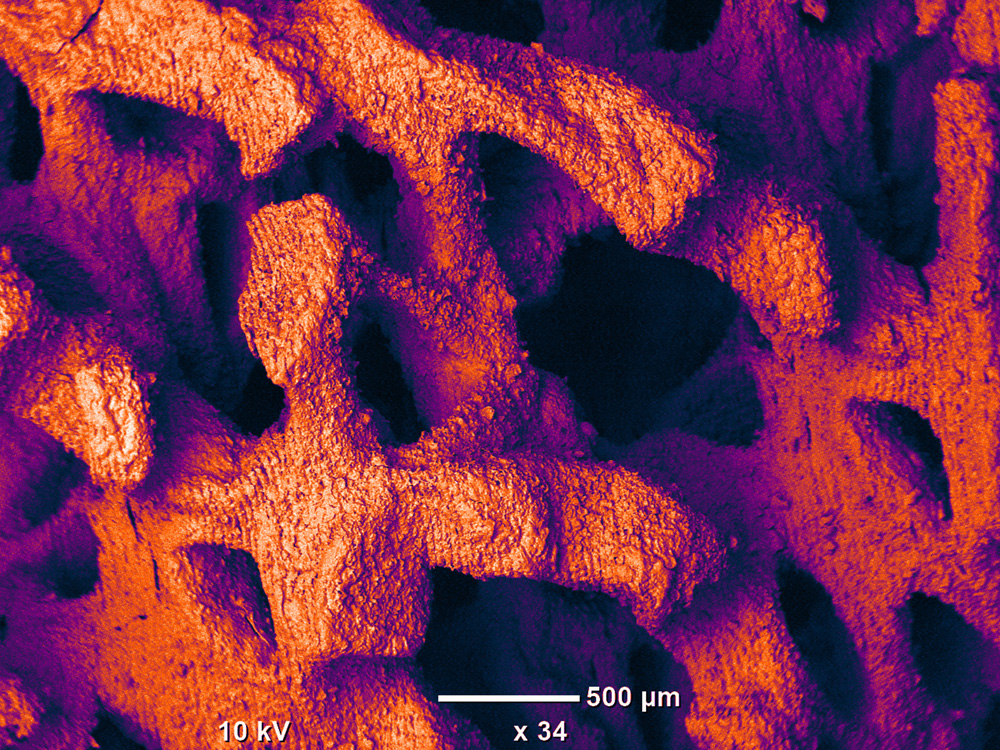
False-colored SEM image of 3D-printed beta-tricalcium phosphate (β-TCP) for bone regeneration. Bone has an incredible, but limited, ability to repair itself. In cases of severe injury, infection, or tumor removal, large bone defects require assistance to regenerate. Traditionally, the gold standard treatment is bone transplantation from another healthy site in the same patient. However, this involves a second surgery, increasing the risk of complications and treatment costs. This image shows a synthetic alternative: 3D-printed β-TCP, a ceramic material with a calcium-phosphate composition similar to natural bone. The structure has a multi-scale interconnected porous architecture (350–1500 µm) and fine supporting struts (230–550 µm). The manufacturing of such complex geometry is only achievable through 3D printing, resulting in an implant that is both beautiful and functional. The scaffold supports nutrient flow, oxygen diffusion, new blood vessel formation, and provide mechanical support to the neighboring bone, creating a microenvironment where new bone can grow. Over time, the β-TCP biodegrades and is naturally replaced by the patient’s own bone. It is fascinating how biologically inspired design can give rise to such geometric and artistic beauty.