Skeletal Secrets
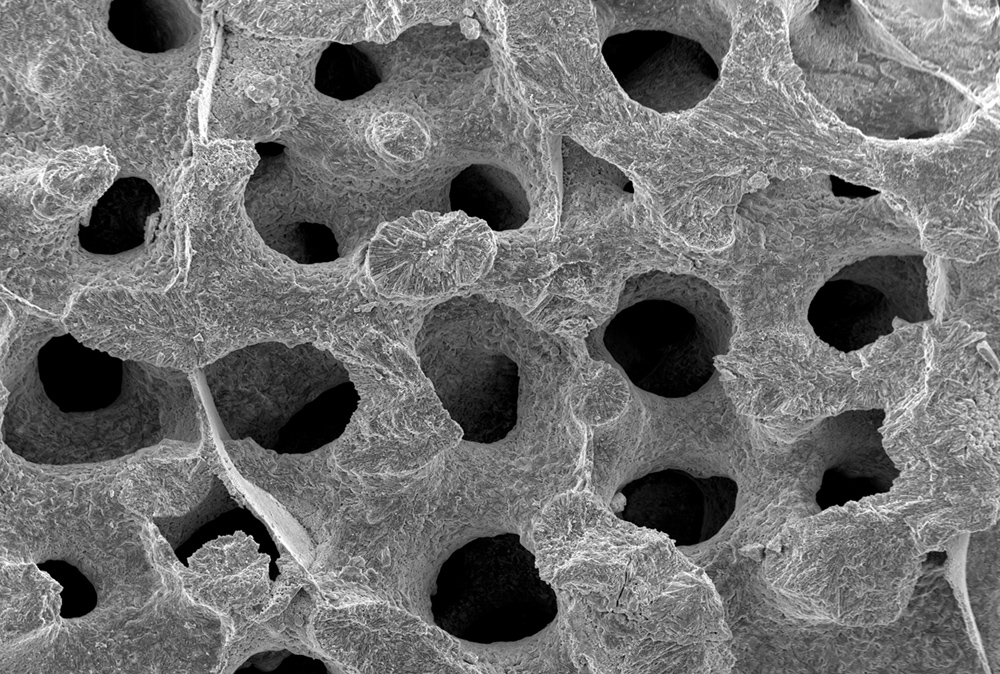
Coral reefs are crucial players for their marine ecosystems by protecting coastal areas, promoting biodiversity and providing a plethora of ecological benefits for cohabitating wildlife. Reef-building stony coral species like Porites astreoides, native to South Florida, help contribute to our local coastlines. This is an Scanning Electron microscope image of P. astreoides at 120x magnification depicting the morphology and microstructures of its skeleton. Stony corals protect their soft polyps by building an exoskeleton from aragonite, a polymorph of calcium carbonate, through a hierarchically assembly. This process is known as spherulitic growth, where the aragonite fibers grow and extend radially beginning at nucleation sites called Centers of Calcification. The mineralization process of healthy coral skeletons has been studied extensively, but while many aspects of nucleation and growth are not yet fully understood, even less is known about the effect of diseases on the mineralized skeleton. Our work focuses on elucidating aspects of skeletal growth in the context of disease, specifically Stony Coral Tissue Loss Disease, which has affected coral communities across South Florida. Using materials characterization techniques like Electron Microscopy and X-ray Diffraction, we can contribute to the understanding of coral skeleton biomineralization and the transformation processes undergoing in diseased stony corals, which can help guide conservation efforts and restoration strategies.