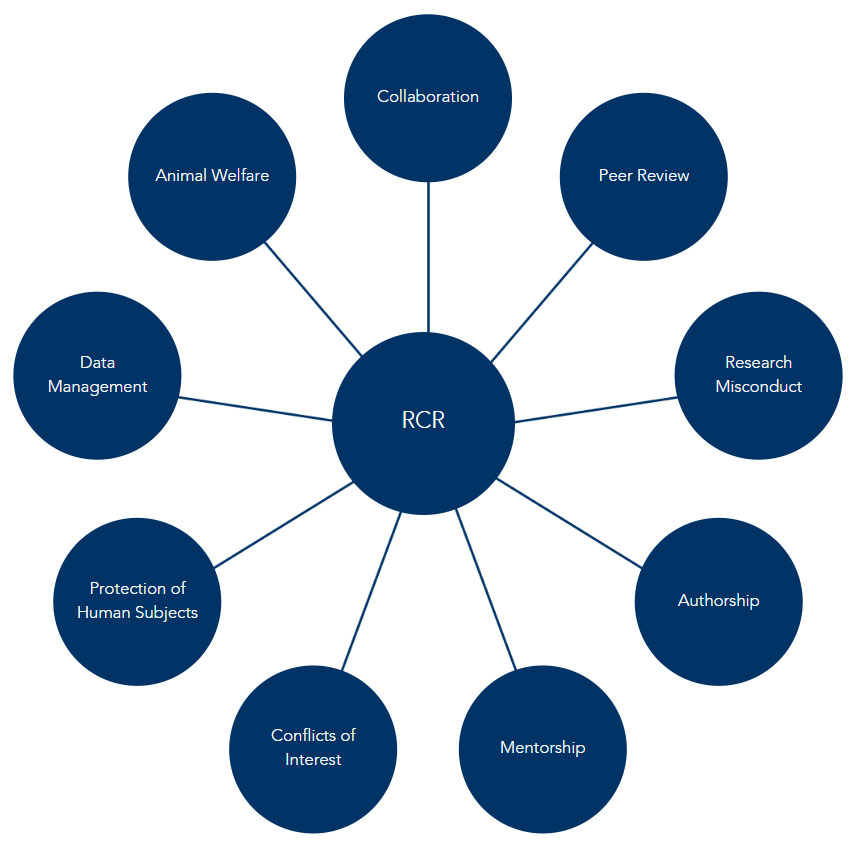
Collaboration:
This element of Responsible Conduct of Research concerns collaborations between different teams on a shared research plan and issues that may arise from such collaborations, both within and external to FAU. This includes setting ground rules, sharing materials, fair decision-making, and allocation of credit and authorship.
Peer Review:
This element of Responsible Conduct of Research concerns the purpose and importance of peer review in determining merit for research funding and publication. This includes participation in a Scientific Review Committee process (undergoing review or serving as a reviewer) and other formal and informal review activities, such as reviewing journal articles or colleagues' research proposals.
Research Misconduct:
This element of Responsible Conduct of Research concerns formal research misconduct as defined by regulations that govern research funded or conducted by the U.S. government. Formal research misconduct refers to plagiarism, fabrication, or falsification of research data; it does not refer to honest errors or differences of opinion.
Authorship:
This element of Responsible Conduct of Research concerns the purpose and importance of scientific publication and the responsibilities of authors. This includes assigning appropriate credit, acknowledgments, handling corrections and retractions, and managing the pressure to publish.
Mentorship:
This element of Responsible Conduct of Research concerns research mentors’ responsibilities to more junior researchers and to trainees in predoctoral and postdoctoral research programs. This includes the role of a research mentor, managing conflict, selection of a mentor, and appropriate boundaries of the mentor/mentee relationship.
Conflicts of Interest:
This element of Responsible Conduct of Research concerns the different types of conflict encountered by researchers and institutions and how to handle conflicts of interest. This includes identifying different sources of conflict (financial, professional, or personal) and appropriate strategies for disclosing, managing, and mitigating conflicts among various researchers and collaborators.
Protection of Human Subjects:
This element of Responsible Conduct of Research concerns the appropriate conduct of research involving human subjects. This includes differentiating between human subjects research and other activities (such as public health or program evaluation), ethical principles for human subjects research, and regulatory oversight.
Data Management:
This element of Responsible Conduct of Research concerns best practices for acquiring, analyzing, and maintaining research data. This includes appropriate methods of data collection, statistical analysis, data sharing, and storage in scientific research.
Animal Welfare:
This element of Responsible Conduct of Research concerns the appropriate conduct of research involving animals. This includes ethical principles for conducting research on animals, government regulations for animal research, institutional animal care and use committees (IACUCs), and humane treatment of animals.