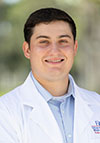
Entered: Neuroscience Graduate Program NGP 2023
Mentor: Ning Quan, Ph.D.
Thesis Topic: TBD
MS Neuroscience, Tulane University
BS Neuroscience/Cognitive-Computational, Ohio State University
“I am pursuing my research with Dr. Ning Quan, investigating the role of IL-1 in the progression of psychopathic and neurodegenerative disorders, and how its modification affects cell survival. I will be helping to achieve these goals using state of the art transgenic mouse models, IHC and behavioral tests. I am currently working to develop my thesis project, collecting data on a familial Alzheimer’s model.
My goal is to improve the understanding of neurodegenerative disease progression by studying the brain's immune response. I obtained my undergraduate degree in neuroscience from Ohio State University, where I actively participated in research projects within Andy Fischer's lab, specifically focusing on retinal regeneration. During my time in the lab, I was deeply involved in projects centered around investigating cell fate changes and proliferation.
Furthermore, I successfully completed Tulane University's esteemed Neuroscience Master’s program. During my time there, I had the privilege of collaborating with Dr. Rebecca Solch-Ottaiano on her studies exploring the intricate relationship between diet, the resulting microbiome, and cognitive function to identify risk factors for Alzheimer's disease.
My interest in the Neuroscience Graduate Program (NGP) was sparked during my master’s program at Tulane, as my advisors highly recommended it. The program further captured my attention due to its emphasis on students' growth through rotations and the vibrant collaborative environment fostered by the faculty and fellow students, as I experienced during my visit. I was able to rotate in three labs in my first year with Dr. Ning Quan, Dr. Randy Blakely, and Dr. Greg Macleod. I learned not only of the highly cooperative space that FAU fosters through joint lab grants, but also dopaminergic and serotonergic functional/developmental interplay in Dr. Blakely’s Lab, the function of calcium and mitochondria in fundamental neuroscience using a drosophila model with Dr. Macleod, and the intersection of the central and peripheral immune system in mice with Dr. Quan’s lab.”
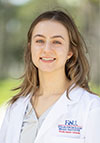
Entered: Neuroscience Graduate Program NGP 2023
Mentor: Laura Fontenas, Ph.D.
Thesis Topic: TBD
BS Biochemistry/Psychology, University of New Mexico, Albuquerque
"I am currently pursuing my research with Dr. Laura Fontenas. Using zebrafish as a model organism, I am investigating glial migration at the interface of the central nervous system and peripheral nervous system to elucidate potential demyelinating pathologies and gain a better understanding of myelination mechanisms. Studying glia fascinates me, as they are not well understood, but are implicated in numerous neuropathologies. Specifically, my motivation lies in exploring the medical applications of glia and neuroscience, delving into therapeutic interventions for neurodegenerative diseases.
I graduated from the University of New Mexico with a BS in Biochemistry and a minor in Psychology. As an undergraduate and then as a post-baccalaureate, I worked as a research technologist in the labs of Drs. Anne Ruffing and Chuck Smallwood at Sandia National Laboratories. Here, I used genetic engineering and machine learning based approaches to study and develop energy efficient biofuels.
FAU's NGP excited me because of the compelling research on its campuses, and I knew I wanted to join an interdisciplinary program with lab rotations. In my first year of the NGP, I rotated in the labs of Dr. Gregg Fields, Dr. Randy Blakely, and Dr. Laura Fontenas. In particular, the NGP stood out for its highly collaborative campus located within a growing neuroscience hub.”
Entered: Neuroscience Graduate Program NGP 2023
Mentor: Patrick Grant, Ph.D.
Thesis Topic: TBD
BA Biology/Spanish, Eckerd College, St. Petersburg, FL
"I am pursuing my research in Dr. Patrick Grant's lab in the College of Medicine.
This research is focused on studying the epigenetic mechanism that underlies Sex differences in Addiction as well as looking at how exercise can prevent relapse in Addiction via epigenetic mechanisms.
As an Undergraduate, I majored in Biology and conducted research at Eckerd College. I worked with the model organism Caenorhabditis elegans to study different compounds and their ability to ameliorate Alzheimer's pathology. I am particularly interested in studying Neurological Disorders such as Addiction and how factors such as diet, sex, and exercise influence the propagation of such pathologies. My ultimate goal is to provide knowledge that could create new therapeutic outlets for people struggling with Addiction.
I was attracted to the Ph.D. Neuroscience program at FAU because of its multidisciplinary approach, the opportunity to collaborate with institutions such as Max Planck, and the ability to conduct research rotations during the first year, where I gained crucial and very insightful experience rotating in the labs of Dr. Randy Blakely, Dr. Patrick Grant and Dr. Henriette Van Praag.”
Entered: Neuroscience Graduate Program NGP 2023
Mentor: Rodrigo Pena, Ph.D.
Thesis Topic: TBD
BS Cell & Molecular Neuroscience, Florida State University
”As an undergraduate, I majored in Cell and Molecular Neuroscience at Florida State University. During my time there, I assisted with several different research projects. The first project was looking into the effects that the parietal cortex and anterior thalamic nuclei have on connecting egocentric action to allocentric orientation toward a goal location in the environment. In the same lab, I assisted as well with looking at the coordination and memory of Alzheimer's versus sham rats. My interests include neurodegenerative diseases such as Alzheimer's and Parkinson's, sleep and memory, and machine learning.
The Ph.D. Neuroscience program at FAU attracted me with its outstanding faculty, cutting-edge research, and collaboration with the Max Planck Institute. I was particularly excited about the opportunity to rotate through different labs and learn new techniques during my first year in the program. I had the pleasure of rotating with Dr. Elan Barenholtz, Dr. Rodrigo Pena, and Dr. William Hahn, each of whom provided valuable insights and guidance.
"I am now pursuing my research with Dr. Rodrigo Pena, focusing on modeling the interplay between hippocampal place cells, parvalbumin interneurons, and theta and gamma rhythms which are responsible for encoding and retrieval of spatial memories, and enhancing plasticity within the hippocampus, respectively. Understanding the role of place cells has far-reaching implications, including developing novel strategies for treating neurological disorders affecting spatial navigation and memory, such as Alzheimer's Disease and age-related cognitive decline.
Entered: Neuroscience Graduate Program NGP 2023
Mentor: Jenny Wei, Ph.D.
Thesis Topic: TBD
Membership Coordinator Neuroscience Student Organization
BS Behavioral Neuroscience, University of Kansas
“Under the mentorship of Dr. Jianning Wei, I will be elucidating the molecular pathogenesis of Huntington's Disease. The goal of my research is to aid in the discovery of therapeutic targets and translate scientific insights into clinical applications to benefit patient outcomes. We aim to do so by using human-induced pluripotent stem cells (hIPSCs) as a model to investigate deviations in protein translation and synthesis of this complex disease.
I received my BS in Behavioral Neuroscience from The University of Kansas. Throughout this time, I had the privilege to work in the laboratory of Dr. Zijun Wang, on a variety of projects relating to drug addiction and substance use disorder. Employing a wide range of neuroscience techniques such as whole brain imaging, microscopy, behavioral paradigms, and biochemical assays our work focused on discovering novel therapeutic targets for Opioid Substance Use Disorder. My current research interests are centered on the molecular mechanisms underlying neurodegenerative diseases, particularly Huntington’s disease; a rare, but fatal neurodegenerative disease comprised of progressive degeneration of Medium Spiny Neurons in the Basal Ganglia.
I was attracted to the NGP at FAU because of its unique partnership with Max Planck as well as the ability to conduct research rotations during the first year with Dr. Greg Macleod, Dr. Alan Kersten, and Dr. Jianning Wei. During these rotations I was able to gain first-hand experience of lab environments and mentorship style in addition to learning a variety of techniques such as Calcium Imaging, Biochemical Assays, and Next Generation Sequencing.